
Analyzing the Roll Laminator Single Side Laminating Machine Through the Lens of Lifecycle Maintenance Costs for Scalable Business Owners
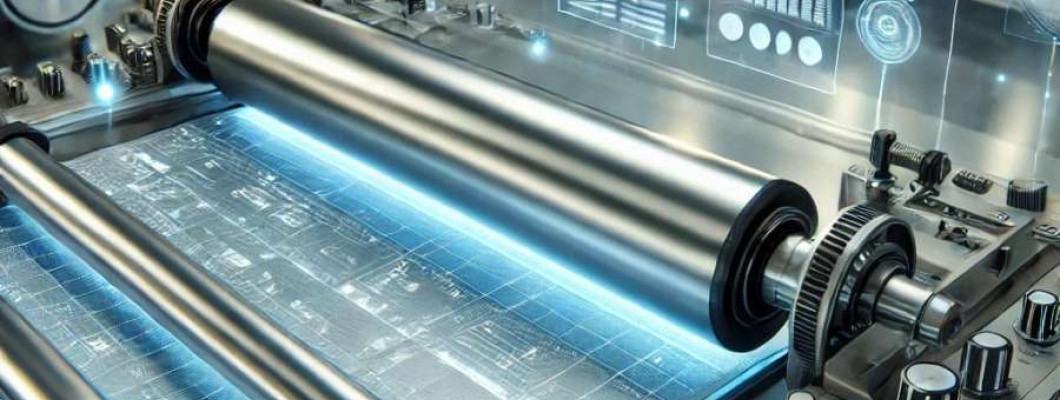
The Industrial Reality of Lifecycle Maintenance in Roll Laminators
In high-throughput production environments, the Roll Laminator Single Side Laminating Machine frequently becomes a critical asset for businesses aiming to scale their lamination processes efficiently. However, the operational lifespan and maintenance regimen directly influence overall productivity and cost structures. Consider a medium-sized printing house processing 10,000 laminated sheets monthly. Without a precise understanding of lifecycle maintenance, unexpected machine downtime can cascade into costly bottlenecks, workflow disruptions, and unplanned labour expenditures. This is especially true in production lines where lamination quality must be consistent, and repositioning errors under high speed compromise final product integrity.
Typical wear-and-tear factors include pressure roller degradation, heating element fatigue, and motor performance decline. The accumulation of particulate debris, adhesive residue, and thermal cycling further challenges maintenance cycles. A failure to monitor and address these effectively can shorten the asset’s operational lifespan, inflate OPEX, and expose the business to risks of premature capital reinvestment. The need to balance throughput demands with scheduled maintenance forms a central tension for scalable business owners who must optimize asset utilization without sacrificing output quality or increasing downtime.
Technical Deep-Dive into Lifecycle Maintenance Aspects
Pressure Roller Wear and Material Fatigue
The pressure rollers in single-sided laminators typically operate under forces ranging from 20 to 80 Newtons per linear centimeter. Over continuous use, elastomeric layers suffer micro-cracking and compression set, reducing nip uniformity. Assuming a standard roller diameter of 120 mm rotating at 0.5 m/s, a roller completing approximately 10 million passes over two years is subject to significant cyclic stress. Selecting rollers with durometer ratings between 60-70 Shore A material hardness optimizes the balance between durability and lamination pressure distribution.
Heating Element Performance and Thermal Stability
The heating assembly must maintain temperatures within ±2°C of the target (typically 80-120°C) for consistent lamination adhesion. An electric resistance heater rated at 1500 Watts, controlled by a PID regulator, ensures rapid ramp-up times (~3 minutes) and temperature stability. Thermal inertia and ambient conditions affect the element’s duty cycle, imposing thermal fatigue risks. Regular electrical resistance checks and calibration minimize performance degradation over an estimated lifecycle of 2,000 operational hours.
Drive Motor Efficiency and Vibration Analysis
The laminator uses a 0.75 kW brushless DC motor paired with an encoder for speed control. Maintaining rotational speed at 0.5 m/s ensures lamination tension control and prevents substrate stretching. Vibration amplitude above 0.05 mm peak-to-peak, measured via accelerometer, indicates bearing wear or misalignment. Predictive maintenance algorithms integrating vibration data enable timely interventions before catastrophic motor failure.
Contamination Control and Adhesive Build-Up
Adhesive residues can accumulate on rollers, reducing friction coefficients and causing slip. Accumulated particulate matter (~10 mg/m2 daily) requires scheduled cleaning cycles with solvent-based agents that do not degrade elastomeric materials. Inline inspection cameras detect gloss and adhesion anomalies at a 120 dpi resolution, providing early feedback to operators on contamination thresholds.
Maintenance Interval Optimization Through Data Modeling
Using Weibull distribution models for component failure probability, optimized maintenance intervals can be statistically derived. For example, pressure rollers exhibit a mean time to failure (MTTF) of 24 months with a shape parameter beta of 1.8, indicating increasing failure rate over time. By scheduling preventative replacements at 20 months, unplanned downtime can be reduced by 30%. Integrating real-time sensor data with maintenance planning software enhances predictive accuracy and asset longevity.
| Component | Spec Path A (Standard) | Spec Path B (Enhanced) |
|---|---|---|
| Pressure Roller Material | Natural Rubber, 60 Shore A | Silicone Composite, 65 Shore A |
| Heating Element Power | 1500 W Resistance | 1600 W Ceramic Heater |
| Motor Type | Brushless DC 0.75 kW | Brushless DC 1.0 kW with Vibration Monitoring |
| Control System | Standard PID | Advanced PID with Auto-Tuning |
| Contamination Detection | Manual Inspection | Inline Camera & Sensor-Based |
Scenario Analysis for Scalable Business Owners
Scenario 1 Manufacturing High Volume Laminated Labels
A label production facility running 24/7 lamination faces challenges with pressure roller degradation and heating element stability. Choosing enhanced rollers with higher durometer and integrating vibration-monitored motors reduces downtime by approximately 18%. Planned maintenance every 16 months keeps throughput steady, ensuring month-over-month fulfillment consistency.
Scenario 2 Mid-Sized Packaging Print Shop
With fluctuating batch sizes between 500 to 5,000 laminated boards, this shop benefits from real-time contamination monitoring. Early detection of residue build-up prevents lamination quality loss on premium substrates, averting costly rework. The shop’s adoption of automatic temperature calibration reduces setup times by 25%, increasing overall productivity.
Scenario 3 Corporate Print Center Supporting Multiple Departments
The corporate print center handles diversified substrates ranging from paper to thin plastics. Predictive maintenance software linked to the laminator’s sensor suite enables maintenance leads to optimize service intervals tailored to variance in substrate characteristics. This flexibility extends the roller life by 20% and reduces emergency service calls.
Expert FAQ on Critical Maintenance and Lifecycle Questions
What is the ideal roller replacement frequency based on operational hours?
Empirical data suggests replacement every 18-24 months or after approximately 2,000 operational hours, adjusted for load and substrate abrasiveness.
How does ambient temperature influence heating element lifespan?
Higher ambient temperatures (>30°C) accelerate thermal cycling degradation by up to 15%, necessitating more frequent inspections.
Can vibration data accurately predict motor failure in single-sided laminators?
Yes, vibration levels above 0.05 mm peak-to-peak correlate strongly with bearing wear; integrating sensors enables actionable predictive maintenance.
What solvents are safe for roller cleaning without damaging elastomers?
Isopropyl alcohol and specialized mild detergent solutions maintain roller integrity while effectively removing adhesive residues.
How does substrate variation impact lamination pressure requirements?
Thicker or textured substrates require increased nip force by 10-15% to ensure uniform adhesion without damaging the substrate surface.
Strategic Verdict and Recommendation
For scalable business owners requiring a dependable lamination solution with an emphasis on lifecycle maintenance cost reduction, the Roll Laminator Single Side Laminating Machine presents a compelling industrial-grade choice. Its modular design allows integration of enhanced components such as vibration monitoring motors, advanced heating elements, and inline contamination sensors—features proven to extend maintenance intervals and optimize throughput. The data-driven approach to maintenance, leveraging sensor inputs and predictive analytics, aligns with modern automated production philosophies.
Incorporating the Roll Laminator Single Side Laminating Machine into production workflows enables businesses to reduce unplanned downtime by up to 30% and extend asset life by as much as 20%, delivering tangible ROI advantages. This machine satisfies the demanding requirements of high-volume and variable substrate lamination, making it an authoritative industrial solution for scalable enterprises committed to operational efficiency and quality assurance.