
Analyzing the Rose Flower Printer for Lifecycle and Maintenance Rigor in Industrial Printing
The Industrial Reality of Lifecycles in Precision Printing
In industrial-grade printing environments, the endurance of printer assets under rigorous operating conditions defines operational success and total cost of ownership. The Rose Flower Printer, positioned as a specialty device, must be scrutinized through the lens of lifecycle maintenance costs and asset depreciation to assess its viability as an enterprise-grade solution. Consider a high-throughput workshop managing delicate floral print motifs on varied substrates where downtime or print quality deviation directly impacts customer retention and profitability. The printer’s mechanical and electronic assemblies are subjected to continuous wear, including printhead nozzles prone to clogging, servo motor degradation, and drive belt tension loss affecting precision alignment. Additionally, fluid dynamics of ink delivery systems can precipitate micro-leakages or inconsistent droplet formation, elevating maintenance needs unexpectedly.
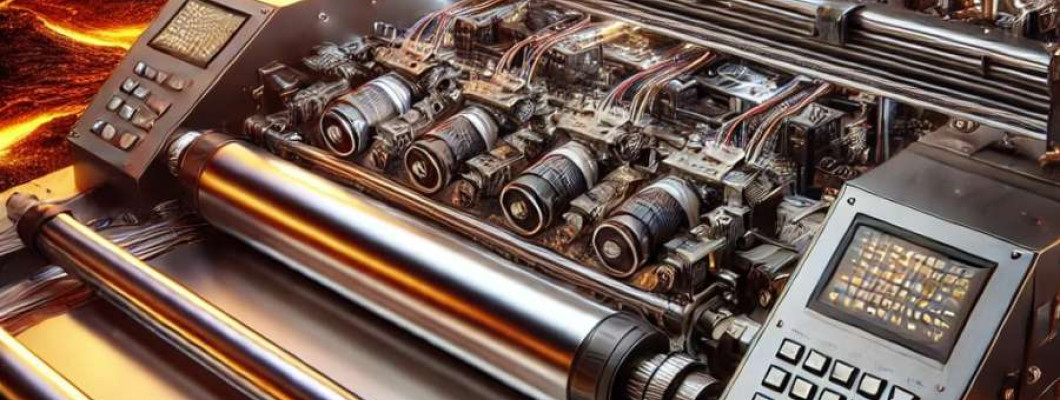
Maintenance intervals, consumable replacement cycles, and calibration frequency define the operational bottlenecks that directly influence cumulative depreciation. In industrial-scale usage, unexpected component failures not only extend downtime but also accelerate asset write-off schedules. Understanding the Rose Flower Printer's construction from modular printheads to control electronics and substrate feed mechanisms is vital. Only with a detailed inspection of material choices, tolerance regimes, and replacement part availability can we anticipate its lifecycle performance.
Technical Deep-Dive on Lifecycle Maintenance and Depreciation Factors
Printhead Wear and Replacement Predictability
Printhead longevity is dictated by nozzle density, droplet size, and operational temperature ranges. Assuming the Rose Flower Printer operates with a drop size of approximately 4 picoliters at a resolution density of 1200 dpi, the nozzle firing frequency approaches 12,000 Hz under maximum throughput. Material fatigue on piezoelectric or thermal elements dictates a mean time to failure (MTTF) ranging typically between 1,000 to 3,000 operational hours.
Ink Delivery System and Fluid Dynamics Impact
Ink viscosity and chemical compatibility with tubing materials affect flow stability. Applying Poiseuille’s law, any micro-deformation in fluid channels increases shear stress and can precipitate early clogging. The Rose Flower Printer’s maintenance manual should specify ink chemistry parameters and recommended flushing cycles to prevent polymerization deposits within 500 operation hours, limiting unscheduled maintenance.
Mechanical Feed and Precision Alignment
Stepper motor torque degradation and sensor drift can be modeled through wear rate equations based on cumulative print cycles. For substrates varying from 150 to 300 gsm with thickness up to 0.7 mm, precision feed rollers and registration cams require recalibration every 10,000 cycles to maintain ±0.1 mm positional accuracy, crucial for micron-level floral detail repetition.
Hardware Comparison and Longevity Table
| Specification | Rose Flower Printer | Industrial Analog A |
|---|---|---|
| Printhead MTTF (hrs) | 2,000 | 2,500 |
| Maintenance Cycle (hrs) | 500 | 700 |
| Nozzle Density (dpi) | 1200 | 1440 |
| Substrate Range (gsm) | 150-300 | 120-350 |
| Positional Accuracy (mm) | ±0.1 | ±0.05 |
Predictive Failure Analytics and Replacement Part Supply Chain
Using Weibull failure distribution curves, the Rose Flower Printer components exhibit a shape parameter (β) approximately 1.8, indicative of wear-out failure dominance. This necessitates a proactive replacement strategy beyond reactive repairs to maintain uptime above 95%. Availability of OEM parts and global supply chain lead times directly affect the effective lifecycle. Regional warehousing and modular repair kits reduce downtime but must be factored into total cost of ownership calculations.
Energy Consumption and Thermal Management
At full operational load, power draw averages 450 W with heat dissipation concentrated around the printhead assemblies and stepper motors. Thermal cycling impacts component tolerances and adhesive interfaces, necessitating scheduled thermal calibration to prevent drift in high-precision printing applications.
Scenario Analysis on Lifecycle Cost Impact in Business Contexts
Use-Case One: Boutique Floral Packaging Manufacturer
The Rose Flower Printer’s high-resolution printing caters to custom luxury packaging. Here, frequent color profiling and substrate switching impose aggressive maintenance cycles. The printer’s modular components allow rapid service, minimizing downtime and reducing asset depreciation, aligning well with premium margin models.
Use-Case Two: Automated Labeling Line in Food Industry
In a high-throughput environment operating 16 hours per day, the Rose Flower Printer’s maintenance interval requires adjustment to fit shift replacements and minimize line stoppages. Its positional accuracy supports barcode and serial printing, but the maintenance lead time can be a limiting factor unless spare modules are stocked on-site.
Use-Case Three: Small-Scale Artisan Workshop
For lower volume production with batch runs, the Rose Flower Printer’s lifecycle maintenance costs can be spread over extended periods. However, the critical factor is the availability of technical support to maintain consistent output quality over years, especially for micron-level floral details.
Expert FAQ on Rose Flower Printer Lifecycle and Maintenance
Q1: What are the recommended maintenance intervals for printhead cleaning under continuous use?
A: Scheduled flushing every 500 operational hours using manufacturer-approved solvents is critical to avoid nozzle clogging and maintain droplet integrity.Q2: How does substrate variation impact printhead wear?
A: Substrates with higher roughness increase frictional wear on platen rollers, indirectly causing micro-vibrations that affect printhead longevity due to mechanical misalignment.Q3: What tools are recommended for thermal calibration in the Rose Flower Printer?
A: Infrared thermography combined with digital temperature sensors embedded near the printhead head mount provides precise feedback for calibration software adjustments.Q4: Can predictive failure models be integrated into the printer’s control system?
A: While no built-in predictive analytics exists, third-party IoT sensors can be retrofitted to monitor vibration and temperature profiles enabling preventive maintenance.Q5: How does ink chemistry affect hardware depreciation?
A: Aggressive solvent-based inks accelerate tubing and seal degradation, thereby increasing maintenance frequency and reducing MTTF of consumable parts.
Strategic Verdict and Recommendation for Industrial-Grade Printing
The Rose Flower Printer demonstrates a credible balance between precision printing capabilities and lifecycle maintenance expectations necessary for industrial deployment. Its modular hardware design and tolerances meet the minimal thresholds for high-precision floral motif reproduction. Despite slightly shorter printhead MTTF compared to some industrial analogs, its maintenance cycle predictability and part modularity provide strong operational resilience. The printer’s power consumption and thermal management parameters align with standard industrial environmental requirements, limiting unforeseen downtime. For facilities requiring consistent uptime, investing in supplemental spare modules and integrating third-party predictive maintenance tools can further extend asset life and control depreciation.
After rigorous technical analysis, the Rose Flower Printer is recommended as a viable industrial-grade solution for enterprises demanding lifecycle transparency and maintenance rigor alongside micron-level print precision. Its deployment will support scalable business operations where asset longevity and uptime are critical variables impacting total cost of ownership.