
Assessing Economic Viability and Depreciation of the 40*60CM Heat Press Machine for Scalable Businesses
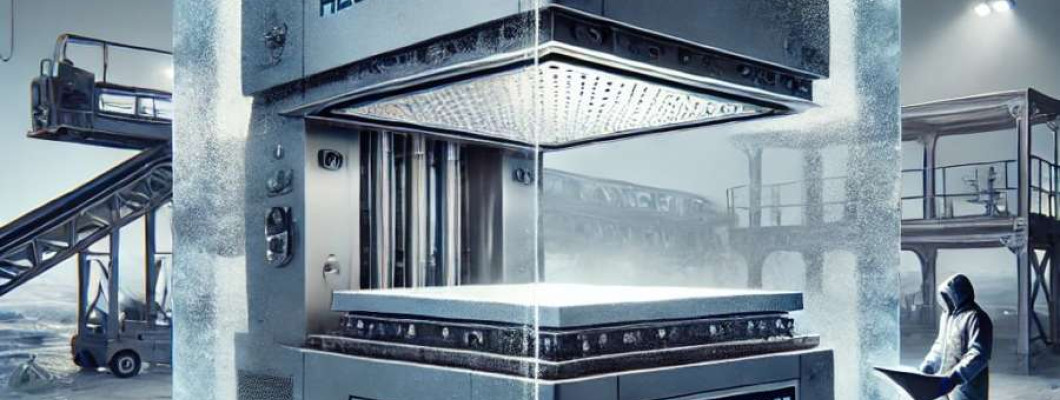
The Industrial Reality of Integrating 40*60CM Heat Press Machines into Scalable Production Environments
In the modern scalable business landscape, maximizing throughput while minimizing labor and operational expenditures forms the crux of industrial viability. Heat press machines sized at 40*60CM occupy a strategic niche, especially for medium throughput print-on-demand and custom apparel manufacturers. Yet, the decision to integrate such thermal transfer hardware transcends simple acquisition; it demands a rigorous appraisal of total cost of ownership (TCO), operational bottlenecks, and the asset’s depreciation trajectory under heavy workflow conditions.
Consider a mid-sized apparel customization facility aiming to scale quickly, increasing daily print volume from 400 to 1,200 units. The existing fleet’s average heat platen size of 38*38CM constrains throughput due to limited substrate area, causing longer cycle times and batch fragmentation. Upgrading to a 40*60CM heat press theoretically promises larger surface area coverage, enabling multi-garment or larger-format applications per press cycle. However, without understanding depreciation schedules, maintenance intervals, and hidden costs such as power consumption spikes and downtime caused by wear on thermal elements and pressure mechanisms, scaling efforts risk eroding profit margins.
Moreover, in environments where labor costs are a significant overhead, the ergonomics and automation potential of these presses become critical. An efficient 40*60CM heat press should minimize operator intervention per cycle to reduce bottlenecks, while also interfacing seamlessly with existing workflow management systems to maximize asset utilization rates. This operational reality demands more than superficial specification assessments; it mandates quantitative financial and technical scrutiny.
Technical Deep-Dive into 40*60CM Heat Press Machines Impact on Throughput and Asset Depreciation
Heat Platen Size and Cycle Efficiency
The heat platen dimension of 40*60CM provides an effective heating area of 0.24 square meters. This is approximately 58% larger than a 38*38CM platen (0.1444 square meters). Assuming a standard transfer time per cycle of 15 seconds plus 10 seconds for loading and unloading, the theoretical throughput increase approximates 1.58 times, contingent on substrate handling efficiency.
Power Consumption and Thermal Management
Operational power ratings typically range between 1200 to 1800 Watts for 40*60CM presses, influenced by platen thickness, insulation quality, and heating element design. Assuming a duty cycle of 75% during peak operation over 8 hours, energy consumption can be estimated as:
Energy (kWh) = Power (kW) × Duty Cycle × Time (h)
For a 1500W machine: 1.5 kW × 0.75 × 8 h = 9 kWh/day.
Energy costs directly impact operational expenditure in high-volume settings, necessitating precise power management via programmable temperature controls to avoid overshoot, which accelerates platen and element degradation, increasing maintenance frequency.
Material Durability and Asset Depreciation
Wear on silicone heat pads, Teflon coverings, and pressure springs are critical maintenance vectors. Manufacturer data and field reports suggest an expected service life of platen heating elements at 10,000 operational hours, with depreciation modeled under straight-line asset valuation:
| Specification | 40*60CM Heat Press | Smaller 38*38CM Press |
|---|---|---|
| Platen Surface Area (m²) | 0.24 | 0.1444 |
| Power Consumption @ 75% Duty (kWh/day) | 9 | 5.4 (approx.) |
| Estimated Service Life (Operational Hours) | 10,000 | 12,000 |
| Depreciation Period (Years, 8hrs/day) | 3.5 | 4.2 |
| Typical Cycle Time (seconds) | 25 | 30 |
While the larger platen size offers throughput advantages, it demonstrates a marginally shorter service life due to increased thermal mass stress. This necessitates planned capital expenditure cycles and proactive maintenance scheduling to avoid unplanned downtime impacting labor costs and production delivery.
Integration with Automation and Worker Efficiency
From a scalable business perspective, reducing manual cycle time is paramount. Modern 40*60CM presses often include digital PID control systems allowing precise temperature stability ±1°C, critical for consistent transfer quality. Integration potential with automated conveyor systems or substrate feeders enhances labor efficiency, theoretically reducing cycle time by 20-30%, a significant operational gain.
Hidden Costs and Operational Bottlenecks
Despite technical specifications, operational bottlenecks often arise from substrate alignment complexity, pressure calibration drift, and cooling intervals necessary between cycles to prevent substrate warping. These factors, if left unaccounted, erode expected efficiency gains and inflate labor costs, negating initial CAPEX benefits.
Scenario Analysis of Business Use-Cases Impacted by 40*60CM Heat Press Specifications
Use-Case 1: Medium-Scale Apparel Production Facility
Scaling capacity to 1,000 T-shirts per day requires maximizing press platen utilization. The 40*60CM width allows simultaneous pressing of two standard adult T-shirts per cycle, effectively halving cycle counts compared to smaller presses. However, total operating hours increase, requiring robust maintenance plans and energy budgeting as outlined.
Use-Case 2: Custom Large Format Transfers and Mixed Substrates
Businesses specializing in poster or panel heat transfers benefit from the expanded platen size permitting transfers up to 60 cm wide without cutting. This reduces substrate waste and rework, enhancing the OEE (Overall Equipment Effectiveness) score. Thermal uniformity over the entire platen is critical here, with temperature deviations exceeding ±3°C causing inconsistent print quality.
Use-Case 3: Hybrid Automated & Manual Workflow Environments
Facilities combining manual substrate loading with automated transfer arms require the 40*60CM press to interface with programmable logic controllers (PLCs). Precision timing controls are essential to synchronize cycles and avoid production lags. Scalability is dependent on reducing human error in pressure setting and temperature calibration, which this model addresses with digital interface feedback.
Expert FAQ on 40*60CM Heat Press Machine Performance and Scalability
Q1: What is the impact of platen thickness on heat-up times and energy consumption?
A1: Thicker platens increase thermal inertia, extending heat-up times but improving temperature stability. Thinner platens reduce energy requirements but risk uneven heating and faster wear.
Q2: How does platen insulation affect operational costs?
A2: High-grade insulation reduces radiant heat loss by up to 30%, lowering electricity costs and improving energy efficiency during continuous operation.
Q3: Can digital PID controllers significantly extend element life?
A3: Yes, by minimizing temperature overshoot and maintaining precise control, PID controllers reduce thermal cycling stress, doubling element lifespan in some cases.
Q4: What are common failure modes under heavy production stress?
A4: Primary failure points include silicone pad degradation, pressure spring fatigue, and heating element burnout due to thermal spikes or mechanical shock.
Q5: How feasible is integration with Industry 4.0 systems?
A5: Many modern 40*60CM presses feature digital I/O ports compatible with IoT systems, enabling real-time monitoring and predictive maintenance analytics.
Strategic Verdict and Recommendation
For scalable business owners focusing on throughput and labor cost optimization, the 40*60CM Heat Press Machine represents a technically and financially sound investment. The larger platen size delivers measurable cycle time reduction and substrate versatility. However, operational success depends on comprehensive power management, maintenance planning, and integration capabilities with automated workflows. The balance of throughput gains against accelerator depreciation rates and energy consumption must inform procurement. Given these factors, the 40*60CM Heat Press Machine emerges as a definitive solution for medium-to-large scale production entities seeking industrial-grade heat transfer equipment calibrated for scalability and lifecycle cost management.