
Assessing Lifecycle Maintenance Costs and Asset Longevity of the A2+ Size UV Printer Embossed Glossy Printing for the Scalable Business Owner
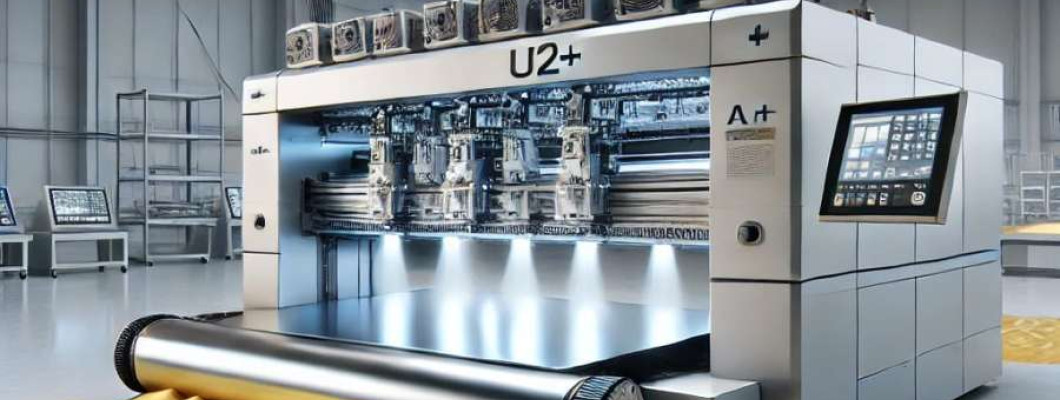
The Industrial Reality of Lifecycle Maintenance in Large-Format UV Printing
In high-throughput industrial environments, the deployment of an A2+ size UV printer designed specifically for embossed glossy printing introduces a complex interplay of maintenance demands and asset longevity considerations that directly impact operational efficiency and cost structures. The challenge lies not just in achieving high-quality output but ensuring the system's mechanical and electronic subsystems maintain peak performance over extended production cycles without extensive downtime or premature part replacement.
Consider a printing facility managing 24/7 production with an emphasis on consistent embossed gloss effects on diverse substrates. As the printer operates, key consumables such as UV lamps, printheads, and embossing rollers undergo wear influenced by parameters including ink chemistry, ambient temperature, and print speed. Without a rigorous maintenance schedule and data-driven lifecycle management, degradation manifests as print defects, increased reject rates, and unexpected machine halts.
Furthermore, maintenance interventions in UV printing systems require precision calibration, particularly when embossed finish quality is critical. Misalignment or uneven wear in mechanical components can cause macroscopic defects that ripple through the supply chain as rework or scrappage, affecting throughput. From a business perspective, rigorous lifecycle cost analysis is essential to avoid hidden expenses that erode profit margins in otherwise high-capacity print lines.
Technical Deep-Dive into Maintenance Factors and System Longevity
Printhead Wear and Replacement Intervals
High-definition UV printheads typically eject droplets in the 5-10 picoliter range with frequencies exceeding 60 kHz per nozzle. The cumulative mechanical stress and exposure to UV-curable ink solvents lead to nozzles gradually clogging or printing inconsistencies. Based on accelerated life testing, average printhead service life ranges between 1200 to 1600 operational hours before requiring cleaning or replacement.
Mathematical estimation of printhead degradation considers droplet frequency (f), operational hours (h), and nozzle clog probability (p), expressed as:
Degradation Rate = f * h * p
For a system operating at 60 kHz, 12 hours/day over 6 months, expected cumulative droplet count per nozzle is in the billions, which aligns with observed maintenance cycles.
UV Lamp Output Dimming and Thermal Management
The UV curing lamps degrade over continuous operation, losing up to 20% intensity after 2000 operational hours. This reduction diminishes curing efficiency, particularly critical in embossed glossy finishes where polymerization uniformity affects the tactile surface quality. Thermal load management, including fan-assisted cooling and heat sinks, extends lamp lifespan and stabilizes print conditions.
Embossing Roller Pressure and Material Fatigue
The embossing mechanism subjects rollers to cyclic mechanical stress, with force typically calibrated between 5 to 15 Newton/mm to ensure proper surface texturing without substrate deformation. Roller material hardness and surface finish directly influence wear rates. Finite element analysis (FEA) simulations indicate that roller lifespan can vary significantly based on load distribution and material properties.
Comparative System Configurations Impacting Maintenance
Evaluating two system configurations—one with integrated automated cleaning and another reliant on manual intervention—shows stark differences in downtime and associated labor costs.
| Parameter | Automated Cleaning System | manual Maintenance System |
|---|---|---|
| Average Downtime per Cycle (hours) | 1.5 | 4.0 |
| Labor Hours per Week | 5 | 16 |
| Printhead Lifetime (hours) | 1500 | 1200 |
| UV Lamp Lifetime (hours) | 2200 | 1800 |
| Embossing Roller Replacement Frequency (months) | 18 | 12 |
Ink Chemistry’s Role in Maintenance Frequency
UV-curable inks with lower volatile content and optimized photoinitiators reduce residue build-up on nozzles and embossing surfaces. Chemical stability of inks can be quantified by measuring viscosity changes (in centipoise) after thermal exposure, impacting nozzle clog rates.
Scenario Analysis of Business Use-Cases
High-Volume Packaging Printing Business
A packaging company requires rapid turnaround with minimal downtime. The extended printhead and lamp lifetimes of the automated maintenance configuration translate directly into increased throughput and reduced labor overhead. Efficient thermal management avoids costly print defects on embossed glossy finishes critical for premium packaging appeal.
Specialty Arts and Crafts Manufacturer
Precision in embossed glossy textures is paramount, but lower volume allows for manual maintenance investments. However, the higher downtime and labor intensity require careful scheduling to avoid bottlenecks during seasonal demand spikes. Printhead replacement costs factor prominently in CAPEX budgeting.
Print Service Provider with Diversified Substrate Portfolio
Varied materials introduce complexity in embossing pressure settings and ink compatibility. Maintenance protocols must be adaptable, and robust lifecycle monitoring reduces risks of substrate-specific failures. Integrated diagnostics in advanced systems provide predictive alerts, minimizing surprises.
Expert FAQ
How does ambient temperature affect printhead wear?
Elevated temperatures accelerate solvent evaporation and ink viscosity changes, promoting nozzle clogging and requiring more frequent cleaning cycles.
What are the implications of delayed UV lamp replacement?
Reduced UV output leads to incomplete curing, causing surface tackiness and diminished embossed gloss durability, necessitating reprints.
Can embossing rollers be refurbished instead of replaced?
Partial refurbishment through resurfacing can extend roller life by 20-30% but requires specialized equipment and may not restore original surface precision fully.
How does ink formulation influence maintenance scheduling?
Inks with optimized photoinitiators cure faster and produce fewer residues, extending intervals between cleaning and printhead replacements.
What monitoring technologies improve maintenance accuracy?
Optical sensors and thermal cameras integrated into the printer provide real-time data on print quality and component condition enabling predictive maintenance.
Strategic Verdict and Recommendation
Considering its sophisticated design and maintenance-conscious features, the A2+ Size UV Printer Embossed Glossy Printing emerges as a strategic choice for scalable businesses aiming for industrial-grade reliability. Its lifecycle maintenance profile, underpinned by extended printhead and lamp lifetimes, optimized thermal and mechanical subsystems, and compatibility with advanced UV ink chemistries, supports continuous production with minimized downtime.
These operational characteristics, when paired with automated maintenance options and robust diagnostics, translate into measurable ROI through reduced labor costs and enhanced asset longevity. This positions the system not merely as a printing device but as a long-term industrial asset aligned with scalable throughput and maintenance efficiency imperatives prevalent in demanding print environments.