
Assessing Lifecycle Maintenance Costs of Smart Coffee Printer Machines for Scalable Business Owners
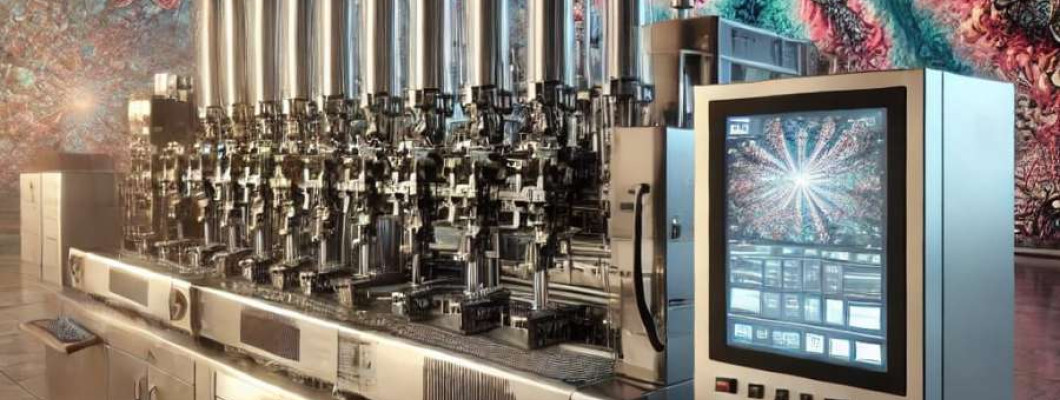
The Industrial Reality of Maintaining Smart Coffee Printer Machines at Scale
In a commercial coffee shop environment aiming for high throughput, the introduction of a Smart Coffee Printer Machine presents both an innovative allure and a complex operational challenge. Unlike traditional espresso machines, this printer integrates precise mechanical movements with advanced inkjet technology adapted to edible inks on liquid surfaces. As throughput demands increase, so do the stresses on precision motors, printheads, and ink delivery systems. Daily uptime is critical, as downtime directly translates into lost revenue and customer dissatisfaction.
Consider a mid-sized café chain aiming to deploy the Smart Coffee Printer Machine across ten locations, each serving up to 200 printed coffees daily. Maintenance windows must be minimal to avoid disrupting peak hours. Component wear, particularly printheads and automated cleaning mechanisms, can become bottlenecks. Moreover, maintaining consistent print quality without frequent nozzle clogging or mechanical misalignment requires an integrated maintenance strategy informed by real-time diagnostics and predictive analytics.
Environmental factors such as ambient temperature, humidity, and ink chemistry variations further complicate maintenance schedules. Without a clear understanding of lifecycle costs and failure modes, operators risk unpredictable downtimes and increased operational expenditure. This reality demands a rigorous approach to lifecycle maintenance costing that transcends initial purchase price, focusing on tangible operational metrics and part longevity under industrial conditions.
Printhead Technology Comparison and Failure Mode Analysis
The core of the Smart Coffee Printer Machine's functionality lies in its precision printhead. Typically, these units utilize piezoelectric or thermal inkjet technology adapted for edible inks. Each technology variant brings different wear characteristics. Piezoelectric printheads offer longer lifespans with fewer clogging risks but require more complex electronics and higher initial costs. Thermal inkjet heads are cheaper but prone to faster degradation when exposed to viscous coffee emulsions mixed with edible inks.
The physics of droplet formation involves precise modulation of nozzle pressure and temperature. For the coffee surface, maintaining droplet volume between 10-20pL ensures sharp image resolution near 600 dpi. However, daily operational stress leads to nozzle erosion and micro-clogging, particularly when particles from milk froth or sugar crystals accumulate.
Statistical analysis of printhead lifespan under typical operating conditions reveals a mean time to failure (MTTF) of approximately 1,500 hours for piezoelectric heads, versus 800 hours for thermal heads. Factoring in a 10% uptime loss during scheduled cleaning and recalibration cycles, the effective operational availability per head varies significantly. Deployment at scale must consider redundancy or quick-swap mechanisms to maintain throughput.
Maintenance Scheduling and Predictive Analytics Integration
A granular view of maintenance requires modeling ink viscosity changes, mechanical wear rates, and environmental conditions. Mathematical models using Weibull distributions estimate component failure likelihood, guiding maintenance intervals that minimize unexpected downtime. Additional sensor integration measuring printhead temperature, nozzle pressure, and vibration signatures can feed machine learning models to predict failures before performance degrades visibly.
Infrastructure-wise, the printer’s embedded control systems support remote diagnostics and automated maintenance alerts. This allows scalable businesses to optimize scheduling, maximizing asset utilization while minimizing unnecessary maintenance cycles that increase operating costs.
Energy Consumption and Thermal Management Under Industrial Use
Thermal management is critical for consistent print quality. The combined demands of heating ink reservoirs and powering piezoelectric actuators create a load profile averaging 75 watts per machine under continuous use, spiking to 120 watts during cleaning cycles. Effective dissipation via integrated heat sinks and fan arrays is necessary to maintain operational stability.
Comparatively, machines using thermal inkjet heads run cooler but increase maintenance frequency, tipping energy vs maintenance cost balance. Energy consumption over a 12-hour operational day can accumulate to 900 Wh, a non-trivial contributor to ongoing expenses in multi-machine deployments.
Component Replacement Costs and Long-Term Asset Depreciation Analysis
| Component | Piezoelectric System (USD) | Thermal Inkjet System (USD) |
|---|---|---|
| Printhead Replacement | 450 (every 1,500 hours) | 250 (every 800 hours) |
| Cleaning Supplies | 15/month | 25/month |
| Energy Cost | 0.12 kWh per hour | 0.08 kWh per hour |
| Average Uptime Between Maintenance | 45 days | 22 days |
| Depreciation Over 3 Years | 40% of initial cost | 50% of initial cost |
This comparative data highlights the tradeoff between upfront capital intensity and ongoing operational costs, underscoring the importance of comprehensive lifecycle maintenance planning.
Scenario Analysis for Scalable Business Owners Using Smart Coffee Printer Machines
Scenario 1: High-Volume Urban Café Chain - Prioritizes minimal downtime during peak hours. Piezoelectric printheads are preferred for longer lifespan and reduced maintenance frequency. Predictive maintenance integration leads to 15% less unscheduled downtime, maintaining customer wait times under 60 seconds per order.
Scenario 2: Boutique Coffee Shop with Premium Menu Offerings - Requires high-resolution prints with micron-level precision on diverse substrates like oat milk foam and cold brew surfaces. Increased maintenance cost is offset by premium pricing. Scheduling maintenance during off-hours is viable due to lower throughput demands.
Scenario 3: Multi-Site Franchise Rollout - Emphasizes uniform operational parameters across remote locations, leveraging centralized diagnostics and standardized part replacement schedules. Balancing printhead cost and energy consumption becomes critical as fleet size increases.
Expert FAQ on Smart Coffee Printer Machine Maintenance and Operations
Q1: How do variations in milk foam consistency affect nozzle clogging rates?
A1: Higher protein and fat content increase viscosity and particulate load, accelerating nozzle wear and frequency of micro-clogs. This necessitates more frequent cleaning cycles.Q2: What are the thermal expansion tolerances tolerated by the printer’s mechanical frame?
A2: The aluminum frame design allows for ±0.05 mm thermal expansion without impacting printhead alignment accuracy at 600 dpi resolution.Q3: Can the ink pumping system handle intermittent airflow interruptions?
A3: The system integrates pressure sensors and adaptive valves to compensate, but extended interruptions over 5 seconds degrade droplet size consistency.Q4: What is the impact of hard water scale buildup on cleaning cycles?
A4: Scale deposits on nozzles increase cleaning cycle duration by 30-50% and reduce printhead lifespan by an estimated 15%.Q5: Are remote firmware updates safe to implement without manual recalibration?
A5: Updates include self-calibration protocols, but critical firmware affecting droplet ejection patterns require periodic manual verification to maintain output precision.
Strategic Verdict and Recommendation for Scalable Business Owners
The Smart Coffee Printer Machine stands as a formidable industrial-grade solution when evaluated through the prism of lifecycle maintenance costs and operational scalability. While upfront investment and maintenance complexity are significant, the machine’s integrated diagnostics, flexible printhead technology options, and thermal management systems provide a resilient platform designed to support high throughput with minimal disruption.
For scalable business owners, adopting this technology requires a disciplined maintenance strategy leveraging predictive analytics and standardized part replacement schedules to optimize uptime and extend asset longevity. The comparative data strongly favors piezoelectric printheads in larger deployments despite higher initial costs due to their superior durability.
Overall, the Smart Coffee Printer Machine is recommended as the definitive solution for enterprises demanding precision, consistent output, and manageable lifecycle costs in coffee printing technology that integrates seamlessly into high-volume commercial settings.