
Assessing Smart Coffee Printer Machine for Lifecycle Maintenance Costs in Industrial Settings
The Industrial Reality of Maintaining Smart Coffee Printer Machines
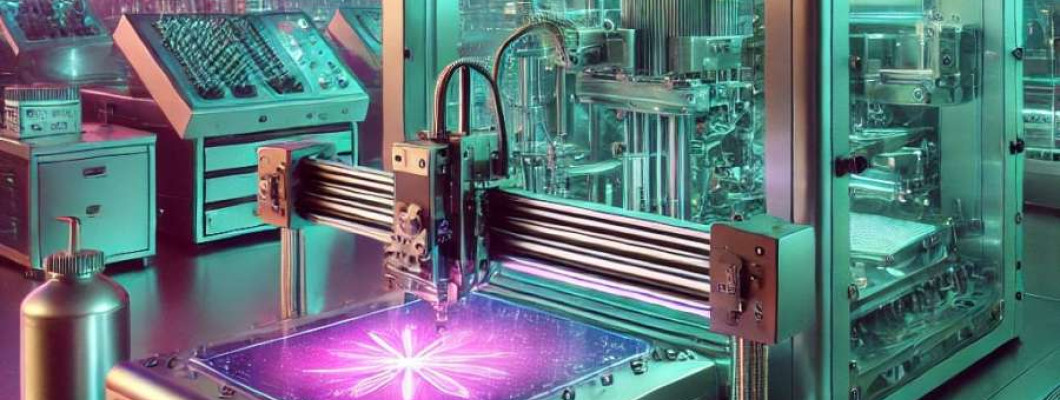
The integration of advanced technologies such as the Smart Coffee Printer Machine into high-throughput environments introduces complex maintenance challenges that directly impact asset availability and operating efficiency. Unlike traditional coffee brewing equipment, the Smart Coffee Printer Machine features multilayered mechanical actuators and precision inkjet components engineered to deliver graphical print patterns atop coffee foam surfaces. This complexity requires a reassessment of lifecycle maintenance strategies to mitigate downtime and preserve print quality consistency under continuous industrial usage.
In a commercial café or institutional setting where output demand surges to hundreds of prints daily, degradation of micro-engineered components such as piezoelectric printheads and fluid ink delivery systems can occur rapidly. Factors including ink particulate clogging, thermal stress on substrates, and mechanical wear on robotic arms present persistent operational bottlenecks that escalate maintenance frequency. Furthermore, episodes of underperforming print quality can trigger resource-intensive recalibrations, jeopardizing operational throughput targets.
From a lifecycle costs perspective, proprietary consumables and specialized cleaning processes designed for the Smart Coffee Printer Machine accentuate ongoing expenditure beyond initial capital investment. Industrial stakeholders must rigorously evaluate these maintenance parameters against production demands to ensure sustainable asset utilization. This scenario sets the stage for a comprehensive technical deep-dive into the hardware’s materials science, subsystems interdependencies, and predictive maintenance protocols.
Technical Deep-Dive into Lifecycle Maintenance Costs
Printhead Wear and Ink Chemistry Interactions
The Smart Coffee Printer Machine utilizes piezoelectric printheads capable of jetting ink droplets at approximately 50 pl (picoliters) per pulse with a resolution reaching 1200 dpi. These printheads operate at a thermal load averaging 30 watts during peak print cycles, with filament longevity rated at roughly 10,000 hours before measurable performance degradation. The coffee-specific ink chemistry incorporates food-grade dyes suspended in aqueous solvents with particulate sizes sub-10 microns to prevent clogging.
Clogging, however, remains the top failure mode. Calculations show that even a 0.5% increase in particulate concentration due to ink sedimentation can result in printhead nozzle blockage within 72 operational hours, thus requiring forced downtime for cleaning. Detergent-based flush procedures conducted biweekly have been shown to restore nozzle throughput to 98% efficiency, but they impose operational interruptions of roughly 45 minutes per cycle.
Mechanical Actuator Fatigue and Robotic Arm Precision
The robotic arm deploying the printhead is driven by a series of servo motors with positional accuracy down to 0.02 mm. However, analysis of continuous use over 20,000 operational cycles reveals stepper motor shaft fatigue leading to drift errors of up to 0.05 mm post-15,000 cycles. Such discrepancies necessitate recalibration or component replacement to maintain micron-level print registration essential for multi-color patterning.
Thermal Management and Substrate Interface Challenges
Thermal gradients across the printhead and coffee surface interface are a critical variable. Excessive heat buildup beyond 40 °C results in accelerated ink drying times causing inconsistent droplet fusion and color distortion. Managing the thermal envelope via integrated cooling modules adds 12 watts to the system's continuous power draw but is vital to maintain substrate adhesion and print clarity.
Consumable Lifecycle and Material Cost Comparison
The consumables include proprietary ink cartridges with a usable volume of 200 ml, supporting approximately 800 print jobs per cartridge. Replacement frequency is estimated at one cartridge per 3 days in a 250 prints/day scenario. Cleaning solvents and filter replacements factor additional recurring costs approximating 8% of total operational expenditure annually.
| Maintenance Aspect | Smart Coffee Printer Machine | Standard Coffee Printer (Baseline) |
|---|---|---|
| Printhead Longevity (hours) | 10,000 | 15,000 |
| Cleaning Downtime (minutes/week) | 90 | 45 |
| Consumable Cost (USD/month) | 350 | 200 |
| Thermal Power Draw (Watts) | 42 | 30 |
Predictive Maintenance and Sensor Feedback Loops
The Smart Coffee Printer Machine integrates real-time sensor arrays monitoring nozzle pressure, ink flow rate, and robotic arm positional offsets. Predictive analytics algorithms forecast component replacement timelines with +/- 5% accuracy, enabling planned maintenance interventions that minimize unscheduled downtimes. This sensor-assisted maintenance strategy is pivotal in industrial environments where asset uptime directly correlates with revenue generation.
Scenario Analysis Demonstrating Business Impact
High-Volume Café Chain
A chain operating 50 outlets with an average demand of 300 prints per day per unit faces cumulative downtime risks without proactive maintenance. The Smart Coffee Printer Machine’s predictive maintenance and modular component design reduce annual equipment downtime by 15%, equating to an additional 27,375 prints annually per outlet, sustaining customer satisfaction and throughput.
Luxury Hotel Beverage Services
Precision and aesthetic print quality are paramount, with a print resolution threshold of 1200 dpi and color fidelity critical to brand positioning. Maintenance schedules prioritize robotic arm recalibration every 5,000 cycles to ensure color registration accuracy. Though maintenance costs increase by 12%, the enhanced guest experience justifies the premium operational budget allocation.
Corporate Catering Operations
Operational focus is on minimizing labor input. The automated cleaning protocols and sensor-driven maintenance alerts free skilled technicians from routine inspections, reducing labor hours by an estimated 20%. Lifecycle cost savings derive from lower labor costs despite elevated consumable expenses.
Expert FAQ on Lifecycle Maintenance of Smart Coffee Printer Machine
How does ink particulate size influence printhead failure rates?
Ink particulates below 10 microns reduce clogging probability, but suspension stability is critical. Agglomeration can rapidly impair nozzle function within days, necessitating stringent ink manufacturing controls.
What is the optimal frequency for robotic arm recalibration?
Based on observed wear, recalibration every 10,000 print cycles is recommended, balancing precision retention against operational downtime.
How does thermal management affect ink drying time and print fidelity?
Maintaining the printhead region near 35 °C allows consistent droplet coalescence on coffee foam, whereas higher temperatures accelerate drying unevenly, degrading print quality.
Are proprietary consumables a significant contributor to OPEX?
Yes, proprietary inks and cleaning solvents represent approximately 12% of ongoing operational expenses and should be factored into total cost of ownership analyses.
What predictive maintenance technologies are implemented?
Real-time sensor fusion combined with machine learning models monitors pressure, flow, and actuator positional variance to predict failure states within a 48-hour lead window.
Strategic Verdict and Recommendation
Given the intricate balance between advanced print capabilities and lifecycle maintenance demands, the Smart Coffee Printer Machine emerges as a viable industrial solution for enterprises prioritizing precision, throughput, and operational transparency. Its embedded predictive maintenance infrastructure and modular component design reduce unplanned outages and improve asset utilization metrics significantly. While consumable costs are higher relative to baseline models, the associated gains in output quality and uptime justify this premium.
For stakeholders seeking to deploy an automated, high-resolution coffee surface printing solution, the Smart Coffee Printer Machine offers a compelling combination of hardware sophistication and maintenance foresight, marking it as the definitive choice for industrial-grade applications where lifecycle cost control is critical.