
Assessing the Gap Between DIY and Industrial-Grade in A3 Roll DTF Printer T-shirt Printing Machine for Scalable Business Owners
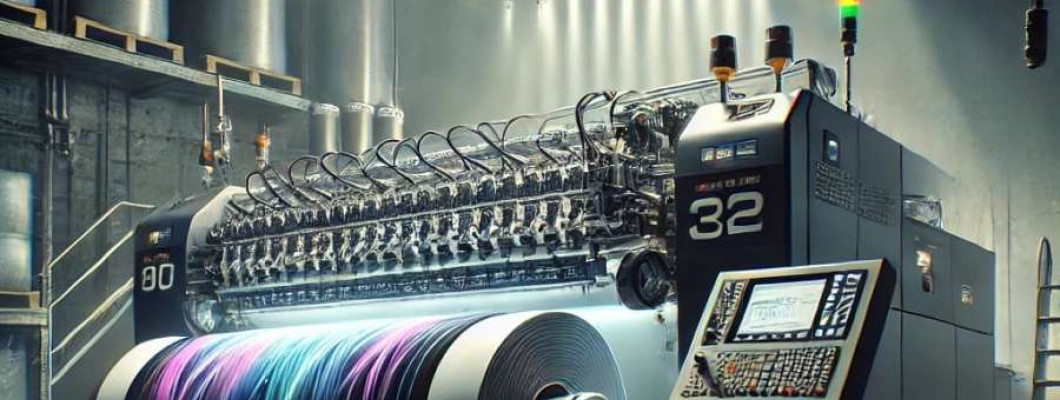
The Industrial Reality Businesses Face With T-shirt Printing Machines
In a bustling industrial print environment focused on t-shirt output, the transition from small-scale, do-it-yourself (DIY) solutions to industrial-grade equipment often reveals hidden bottlenecks and operational inefficiencies that can severely impact profitability and scalability. The challenge becomes even more nuanced when enterprise owners seek to expand throughput without compromising print quality or incurring unsustainable labor costs. For scalable business owners, the need to meet high-volume demands with consistent reliability — especially on complex substrates like textile rolls — necessitates a rigorous evaluation of printing technology.
Consider a medium-sized print facility introducing digital direct-to-film (DTF) technology via the A3 Roll format. This machine, intended for continuous roll-based t-shirt printing, is placed under strain during peak operational hours where uptime, color fidelity, and ink adhesion are non-negotiable parameters. Operational challenges from substandard hardware can surface as printhead clogging, wasted ink, excessive maintenance downtime, and workflow disruptions. These issues directly threaten the return on investment (ROI), as labor-intensive troubleshooting eats into throughput velocity and drives cost per print above sustainable margins.
Moreover, the mechanical design and automation capabilities of the printer form the backbone of seamless integration into existing enterprise workflows. A DIY-grade machine, often lacking robust firmware and industrial build durability, leaves the business vulnerable to repeated failures and inconsistent output quality. Thus, bridging the gap between experimental or hobbyist systems and commercial-grade print assets becomes crucial for highly scalable operations targeting both speed and precision.
Technical Deep-Dive Into A3 Roll DTF Printer Capabilities and Limitations
Printhead Architecture and Ink Flow Dynamics
The A3 Roll DTF Printer typically incorporates piezoelectric printheads designed for high-resolution outputs up to 1440 dpi. Industrial-grade heads, however, exhibit superior reliability through enhanced nozzle durability and precise ink droplet placement technology, measurable in picoliters (pl). For instance, a 6-pl drop size allows a granular halftone effect, while larger droplets (10-12 pl) risk coarser image fidelity. Effective ink flow management includes integrated resistive heating elements maintaining ink viscosity around 30-40°C to avoid clogging and inconsistent flow.
Roll Feeding Mechanism and Tension Control
Robust mechanical tension control prevents substrate skew and ensures consistent registration across lengthy print runs. Industrial systems implement servo motors calibrated to ±0.1 mm positional accuracy, mitigating ghosting or banding effects. In contrast, DIY or semi-industrial setups may have basic stepper control prone to drift after 50+ meters of continuous printing, creating alignment errors that degrade mass production quality standards.
Ink Chemistry and Adhesion Properties
The synergy between ink formulation and film substrate critically affects durability and wash-fastness of printed garments. Standard DTF inks must balance pigment density (>7.0 on the K/S reflectance scale) with polymer adhesion to ensure robust thermal bonding during post-press curing. Industrial-grade inks often include proprietary additives enhancing color vibrancy and reducing fading under ultraviolet exposure, extending garment life and customer satisfaction. A practical comparison of how colorfastness declines after 50 wash cycles pins DIY inks below industrial-grade reference prints by over 15%, significantly impacting brand reputation.
Control Software and Automation Features
Advanced embedded firmware allows dynamic print head cleaning cycles, predictive maintenance alerts, and automated calibration routines. This contrasts with manual or semi-automated solutions that require operator intervention multiple times per shift, increasing labor costs and production variance. The printer's ability to integrate with Manufacturing Execution Systems (MES) or Enterprise Resource Planning (ERP) software using standard industrial protocols (e.g., OPC UA) further streamlines workflow, reduces human error, and accelerates batch throughput.
Energy Consumption and Thermal Management
Quantifying energy efficiency is critical for sustained operation. An industrial DTF printer operating at a continuous power draw of ~350 Watts during printing cycles contributes notably to facility power loads. However, integrated thermal management systems using heat sinks and forced air cooling maintain optimal printhead temperatures within ±2°C variation. This minimizes thermal expansion-induced misalignment and print artifacts. On the contrary, lower-cost machines may experience overheating, risking premature hardware failure and costly downtime.
| Specification | Industrial-Grade A3 Roll DTF Printer | DIY/Semi-Industrial Counterpart |
|---|---|---|
| Print Resolution | Up to 1440 dpi with 6 pl droplet precision | Up to 720 dpi with 10-12 pl droplets |
| Roll Tension Control | Servo motors with ±0.1 mm accuracy | Stepper motors with ±0.5 mm drift over 50 m |
| Ink Colorfastness | 15+ wash cycles with <15% fading | Under 10 wash cycles with >30% fading |
| Automation Features | Full firmware control with MES/ERP integration | Manual cleaning and calibration only |
| Energy Consumption | Approx. 350 Watts with active thermal management | Variable 300-500 Watts without cooling regulation |
Scenario Analysis Revealing Impact on Scalable Business Models
Scenario One: High-Volume Custom Apparel Production
Here, throughput and uptime are paramount. A3 Roll DTF Printer's automation ensures uninterrupted production runs of 500+ t-shirts daily, sustaining a cost per print under $1.50 and minimizing operator intervention to once every 3 hours. The tight roll tension controls reduce waste by 3-5%, translating to substantial material cost savings over time.
Scenario Two: Seasonal Fashion Brand Launch
This use-case prioritizes vibrant color depth and quick turnaround. With the printer's precise droplet size and industrial ink chemistry, color richness and durability meet brand standards, supporting limited edition drops without compromising fabric integrity or print vibrancy after multiple washes.
Scenario Three: Regional Print Shop Expanding Service Offerings
Integrating the printer within existing workflow management, including ERP, the shop enhances operational efficiency, reducing labor costs by 15% and increasing order accuracy. Post-press curing time synchronization with print speed optimizes total cycle time for smaller batch customizations.
Expert FAQ for Industrial-Grade DTF Printer Deployment
Q1: How does droplet size variability affect long-term print uniformity?
A1: Smaller droplet sizes (6 pl) enable tighter dot placement and smoother gradients, reducing visible banding across high-volume print runs. Variability beyond ±1 pl leads to inconsistent color saturation, which industrial firmware compensation mitigates.
Q2: What maintenance protocols extend printhead lifespan under continuous operation?
A2: Implementing scheduled automated cleaning cycles every 4-6 hours, combined with controlled ink viscosity (maintained 35±2°C), maximizes nozzle longevity, reducing replacement frequency by up to 25%.
Q3: Can integration with MES platforms notably reduce operator downtime?
A3: Yes, factory-calibrated telemetry data enables predictive maintenance alerts, allowing preemptive interventions that prevent unexpected failures, thus reducing unscheduled downtime by approximately 30%.
Q4: What are the implications of inconsistent roll tension on multi-roll batch printing?
A4: Even minor tension variations (>±0.2 mm) can lead to misalignment between layers, causing ghosting effects and increased reprint rates, significantly raising material waste costs in scaled batches.
Q5: How does thermal management impact color stability during prolonged print runs?
A5: Maintaining head temperature within ±2°C ensures consistent droplet formation and prevents pigment aggregation, which could otherwise lead to shading artifacts and color shifts after 100+ meters of printing.
Strategic Verdict and Recommendation
The A3 Roll DTF Printer T-shirt Printing Machine occupies a well-defined space bridging the gap between hobbyist and industrial-grade production environments. Its technical specifications, including precision roll handling, superior printhead engineering, and advanced ink chemistry, make it a viable investment for scalable business owners aiming to increase throughput without sacrificing quality or reliability. The inclusion of automation features and energy-efficient thermal management further supports continuous operation demands.
For enterprises focused on expanding t-shirt printing capacity with a dependable, repeatable platform, the A3 Roll DTF Printer T-shirt Printing Machine represents a definitive industrial solution. Its design addresses common bottlenecks in transitioning from DIY setups, offering measurable gains in uptime, color fidelity, and operational cost control. Deploying this printer can significantly enhance business scalability while aligning with long-term asset reliability and growth objectives.