
Assessing the Gap Between DIY and Industrial-Grade in A3 Roll DTF Printer T-shirt Printing Machines for Scalable Business Owners
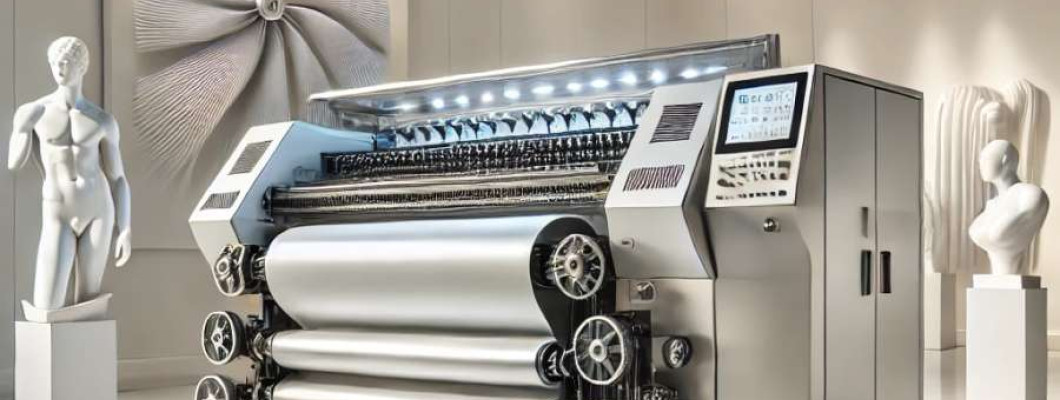
The Industrial Reality of Introducing A3 Roll DTF Printing to Scalable Businesses
Scaling up textile printing operations from small-scale or DIY solutions to industrial-grade hardware represents a critical technical and operational inflection point. In the context of A3 Roll DTF Printer T-shirt Printing Machines, scalability challenges manifest primarily around throughput consistency, automation integration, and labor cost minimization while maintaining print quality and uptime reliability. The typical entry-level DTF solution often struggles when subjected to continuous production cycles due to limited hardware durability, simplified printhead designs, or insufficient thermal management systems.
A scalable business owner aiming to meet growing order volumes with tight delivery windows will encounter bottlenecks such as frequent downtime for printhead cleaning or replacement, insufficient roll capacity leading to interruptions, and inadequate feed mechanisms that compromise alignment and print accuracy at higher speeds. Effective scalability demands a robust infrastructure capable of running multiple shifts without significant performance degradation, with maintenance cycles optimized for minimal disruption.
These operational realities highlight the need for a solution that balances print resolution and color fidelity with mechanical endurance and workflow automation. Transitioning from DIY or hobbyist-grade printers to an industrial-grade A3 Roll DTF printer represents more than just upgrading hardware — it necessitates a fundamental reevaluation of production strategy, workforce allocation, and quality assurance protocols.
Technical Deep-Dive into A3 Roll DTF Printer Performance and Operational Constraints
Printhead Technology and Precision Mechanics
The core of reliable industrial printing lies in the printhead's capacity to maintain consistent droplet size and placement accuracy. Typically, industrial DTF printers deploy piezoelectric printheads delivering droplet volumes as low as 2-4 pl, enabling sharp edges and smooth gradations. Performance degradation occurs with nozzle clogging frequency, influenced by ink chemistry and daily printing hours.
Assuming a 600 dpi resolution at 4 pl droplet size, the theoretical maximum speed can be approximated by the volumetric ink flow rate divided by droplet volume. For example, a printhead delivering 10 ml/min translates into approximately 2.5 million droplets per second, but real-world throughput is limited by substrate feed speed and curing time.
Roll Feed System and Media Handling
Industrial roll-fed DTF printers require precision rollers with minimal lateral deviation (<0.1 mm tolerance) to prevent banding and alignment errors over long print runs. A heavier-duty stepping or servo motor system sustains consistent feed rates ranging from 50 mm/s to 150 mm/s, depending on print resolution settings. Roll diameter capacity also impacts operational continuity; a roll holding 100 meters of transfer film reduces changeover frequency, compared to smaller rolls common in compact units.
Ink Chemistry and Thermal Curing
DTF ink formulations contain pigment particles suspended in polymeric binders, demanding temperatures between 80-120°C for optimal curing and adhesion to textile substrates. The printer’s integrated curing system uses infrared or hot-air modules calibrated to deliver uniform heat distribution. Insufficient thermal control risks incomplete ink fusion, causing poor wash-fastness and durability.
Automation and Workflow Integration
In scalable operations, automation extends beyond printing to include roll loading, printhead cleaning cycles, and post-print curing conveyors. Modern industrial DTF printers provide hardware-triggered sensors for anomaly detection (e.g., media jams, nozzle blockages) linked to central production management systems. This reduces labor intensity and enhances uptime.
Energy Consumption and Heat Management
Continuous operation of heating elements and servo motors means power draw peaks of 1.5-2.5 kW per unit, influencing facility electrical infrastructure. Efficient heat dissipation prevents overheating of sensitive electronics and printheads, extending component lifespans. Effective cooling designs include active ventilation and heat sinks, measurable by comparing component temperature fluctuations under load tests.
| Specification | DIY/Entry-Level DTF Printer | A3 Roll Industrial-Grade DTF Printer |
|---|---|---|
| Printhead Droplet Size (pl) | 6-12 | 2-4 |
| Roll Media Capacity (meters) | 10-30 | 80-150 |
| Feed Accuracy Tolerance (mm) | 0.5+ | <0.1 |
| Heating System Output (°C) | 80-100 | 80-120 (with uniformity control) |
| Continuous Operational Power Draw (kW) | 0.5-1 | 1.5-2.5 |
| Integration with Automation Systems | Minimal | Advanced (Sensors, Alerts, Remote Control) |
Scenario Analysis with Use-Case Implications
Case 1 Equipment Rental Business Expanding Fleet
An equipment rental provider catering to event-based custom apparel printing requires machines capable of rapid changeover and minimal downtime. The industrial-grade A3 Roll DTF offers large media rolls and integrated automation, reducing manual interventions and improving print output consistency critical to rental turnover schedules.
Case 2 Mid-Sized Print Shop Increasing Throughput
For a shop transitioning from manual heat press transfers to semi-automated workflows, this printer’s precise roll feeding and high print resolution meet growing demand for refined, multi-color designs. Reduced printhead maintenance cycles further optimize labor allocation, lowering operational costs per shirt.
Case 3 Online Custom Apparel Startup Scaling Production
Startups with unpredictable order volumes benefit from the printer’s flexible print speed settings. During peak demand, faster settings prioritize throughput, while lower speeds enable intricate color layering. The machine’s integration capabilities with order management software streamline batch processing, minimizing errors and reprints.
Expert FAQ Addressing Key Technical Considerations
1. How does nozzle clogging frequency compare between DIY and industrial-grade DTF printers?
Industrial-grade printers reduce clogging risk through optimized ink formulations and automated cleaning cycles triggered by embedded sensors, whereas DIY models rely on manual cleaning, increasing downtime.
2. Can this printer handle different fabric substrates beyond cotton?
Yes, the thermal curing system and ink chemistry are designed to adhere effectively to polyester, blends, and synthetic fabrics, though curing parameters must be adjusted accordingly.
3. What is the expected printhead lifespan under continuous operation?
Printheads are rated for approximately 2000 hours before performance degradation; however, proper preventive maintenance can extend this considerably in industrial-grade setups.
4. How does feed system precision impact final print accuracy?
Even sub-millimeter lateral deviation can cause color misalignment and banding, making high-precision roll feed mechanisms essential for pristine image reproduction.
5. Are there specific infrastructure requirements for power and cooling?
Yes, facilities must support stable 220-240V power circuits capable of sustaining 2-3 kW load per unit, with adequate ventilation or air conditioning to maintain ambient temperatures within operational tolerances.
Strategic Verdict and Recommendation for Scalable Business Owners
The technical and operational assessment unequivocally positions the A3 Roll DTF Printer T-shirt Printing Machine as a robust, industrial-grade solution tailored to scalable businesses prioritizing throughput, automation, and print quality. Its advanced printhead technology, precision roll feed, and integrated automation features address persistent bottlenecks encountered in DIY and entry-level equipment. Furthermore, its enhanced thermal management and media capacities make it a dependable asset for continuous production cycles, vital for expanding print shops and apparel manufacturers.
For those seeking to elevate production while controlling labor costs and workflow disruptions, this machine represents a sound capital investment with benefits extending beyond print quality to operational resilience. Interested professionals can explore further technical details and procurement options via the A3 Roll DTF Printer T-shirt Printing Machine resource.