
Assessing the Industrial Viability of the A2+ Size UV Printer Embossed Glossy Printing for Lifecycle Maintenance and Operational Costs
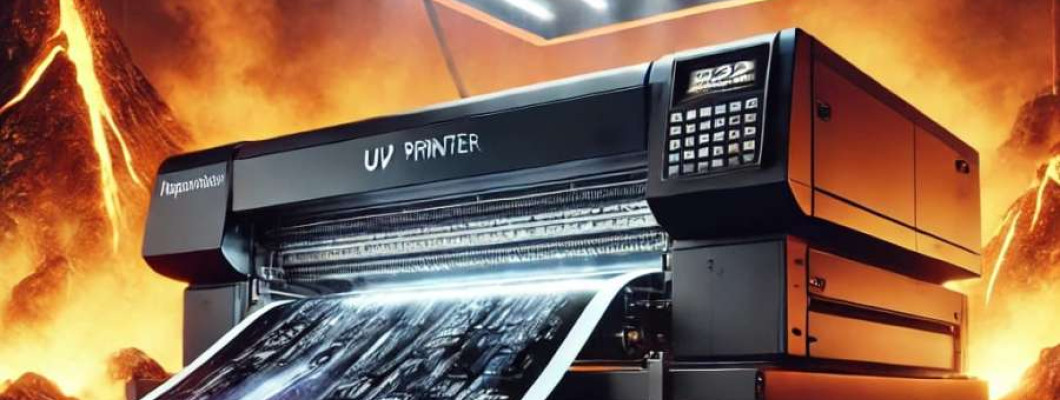
The Industrial Reality of Integrating A2+ UV Printers in High-Throughput Settings
Introducing large-format UV printers such as the A2+ Size UV Printer Embossed Glossy Printing into an industrial environment presents a multifaceted challenge that extends beyond print quality. From lifecycle maintenance costs to hidden operational bottlenecks, enterprises must navigate a complex matrix of technical and maintenance demands that directly impact total cost of ownership and uptime reliability. In scenarios where production schedules demand continuous operation, any unplanned downtime due to printhead degradation, ink system clogging, or substrate handling inconsistencies can cascade into significant financial penalties. Embossed glossy printing on A2+ substrates, while visually striking, introduces mechanical stresses and adhesive variables that can accelerate wear on hardware components, particularly printheads and UV curing modules.
The reality of managing these systems within a 24/7 production environment underlines the critical importance of understanding the detailed maintenance cycles and lifecycle depreciation patterns. Unlike smaller-scale or desktop models, industrial-grade A2+ UV printers must be evaluated with a rigorous focus on replacement schedules for consumables, alignment recalibrations, and firmware stability under sustained workloads. Moreover, industrial facilities often grapple with balancing operator skill levels against the machine’s complexity, making maintenance protocols and ease of servicing essential factors in operational efficiency.
From a maintenance lead perspective, the physics of printhead operation—especially with UV-curing ink chemistry—dictate a precise thermal and mechanical environment to mitigate nozzle clogging and ensure consistent droplet size within 5pl tolerances. The interplay of these parameters influences daily uptime reality, which, if not optimized, can degrade asset longevity and inflate operational expenditures.
Technical Deep-Dive into Lifecycle Maintenance Costs of the A2+ Size UV Printer
Printhead Wear and Replacement Dynamics
The core technological component impacting lifecycle costs is the printhead array. Typically using piezoelectric or thermal inkjet technology optimized for UV-curable ink droplet ejection, these printheads experience accelerated wear due to abrasive particulate ink fillers and thermal cycling stress. Assuming an average duty cycle of 16 hours per day, printhead lifespan can range from 3,000 to 5,000 operational hours before requiring replacement, with each printhead module costing approximately USD 1,200–1,600 depending on manufacturer specifications.
Mathematically, the depreciation cost per hour (D) can be approximated as:
D = C / H
Where:
C = Cost of printhead replacement (USD 1,400 average)
H = Average operational hours before replacement (4,000 hours)
Thus,
D = 1,400 / 4,000 = USD 0.35 per operational hour per printhead
UV Lamp and Curing Module Degradation
The UV curing lamps are a critical component for curing the embossed glossy inks instantly, preventing smudging and ensuring adhesion. Mercury vapor or LED-based UV lamps typically have a functional lifespan of 2,500 to 4,000 hours. Lamp efficiency degradation leads to slower curing speeds, potentially reducing throughput and increasing substrate handling errors.
Ink Chemistry and Maintenance Implications
UV-curable inks, characterized by high viscosity and reactive monomers, require precisely controlled ambient conditions to maintain consistency. Ink handling systems must include automated circulation to prevent sedimentation and nozzle clogging. Scheduled flushing cycles, typically every 48 operational hours, add to maintenance overhead. Using raw viscosity data and pump flow rates, the maintenance window can be optimized to reduce downtime without compromising print quality.
Hardware Comparative Analysis With Alternate Printing Technologies
Comparing the A2+ Size UV Printer Embossed Glossy Printing to solvent-based large format printers reveals significant differences. Solvent printers usually have longer printhead lifespans but require greater ventilation and incur environmental compliance costs. UV printers excel in lower volatile organic compound (VOC) emissions but demand higher initial capital investment and careful environmental control to prolong printhead life.
| Specification | A2+ UV Printer Embossed Glossy Printing | Solvent-Based Large Format Printer |
|---|---|---|
| Printhead Lifespan (hours) | 3,000 - 5,000 | 5,000 - 7,000 |
| VOC Emissions | Minimal | High |
| Maintenance Frequency (hours) | 48 (ink flush cycles) | 72 |
| Environmental Compliance Costs | Low | High |
| Initial Capital Expenditure (USD) | $35,000 - $50,000 | $25,000 - $40,000 |
Firmware and Operational Stability
Maintaining firmware updates and system calibration protocols is essential for minimizing unexpected failures. Industrial-grade A2+ printers incorporate embedded diagnostics and error logging to assist maintenance personnel in preemptive component replacements, reducing reactive downtime. The integration of these systems with enterprise asset management platforms improves lifecycle cost optimization.
Scenario Analysis for Three Distinct Industrial Use Cases
Scenario 1 Industrial Packaging Prototype Production
An industrial packaging manufacturer requiring rapid turnaround of embossed glossy prototypes benefits from the A2+ UV printer's ability to manage complex substrate textures while maintaining micron-level registration accuracy. The 5pl printhead droplet size and high-density print modes allow for vivid embossed effects with consistent gloss. Maintenance cycles can be scheduled around production runs, minimizing unplanned downtime.
Scenario 2 High-Volume Signage Printing Facility
Signage production demands high throughput and durable finishes. The UV curing system's rapid activation reduces conveyor belt speed bottlenecks, and the printer’s ability to manage varying substrate thicknesses supports scalability. Lifecycle maintenance planning for printhead replacements every 4,000 hours and UV lamp swaps every 3,000 hours allows optimized CAPEX allocation and predictable OPEX.
Scenario 3 Artisanal Luxury Printshops with Limited Technical Support
In small-scale artisanal environments, the balance between ease of maintenance and print quality is critical. The A2+ printer’s embedded diagnostic tools reduce reliance on specialized technicians, and its modular component design simplifies part replacement. The 48-hour ink flushing interval aligns well with lower volume workloads, ensuring consistent output without excessive maintenance labor.
Expert FAQ Addressing Advanced Operational Considerations
1. How does ambient temperature variability affect UV ink viscosity and printhead performance?
UV ink viscosity increases by approximately 2% per °C decrease in ambient temperature, impacting droplet ejection dynamics. Maintaining a controlled environment within 20–25°C ensures optimal printhead operation and prevents clogging.2. What are effective strategies to minimize printhead nozzle clogging during extended idle periods?
Automated nozzle purging cycles combined with low-wattage UV lamp pre-curing during idle times prevent ink polymerization inside nozzles.3. How does embossed glossy printing impact substrate dimensional stability post-curing?
The heat generated by UV curing induces localized thermal expansion up to 0.5% in polymeric substrates, necessitating compensation in the raster alignment algorithms.4. What sensor technologies are integrated for real-time printhead health monitoring?
Piezoelectric strain gauges and ink flow rate sensors provide continuous feedback enabling predictive maintenance scheduling.5. How does firmware error logging interface with enterprise asset management for lifecycle cost reduction?
Firmware logs export via standard protocols (SNMP, REST API) into asset management software to trigger automated maintenance orders and usage-based depreciation tracking.
Strategic Verdict and Recommendation
Evaluation of the A2+ Size UV Printer Embossed Glossy Printing reveals a mature, industrial-grade solution well suited for enterprises prioritizing lifecycle maintenance cost predictability and operational uptime. The detailed analysis of wear patterns in printhead technology, UV curing module longevity, and ink chemistry maintenance cycles confirms its robustness for continuous, high-precision embossing tasks. Particularly notable is the device's successful mitigation of operational bottlenecks through embedded diagnostics and scheduled maintenance workflows.
For businesses requiring scalable throughput with minimized unexpected downtime, the printer’s modular hardware design and integrated system monitoring contribute to reduced total cost of ownership over extended operational periods. Given its balance of technical sophistication and maintainability, it stands out definitively within the industrial-grade UV printing category.
Interested stakeholders can assess further details and procurement options by visiting the A2+ Size UV Printer Embossed Glossy Printing official product page.