
Assessing the Operational Footprint and Infrastructure Challenges of the A3 Roll DTF Printer T-shirt Printing Machine
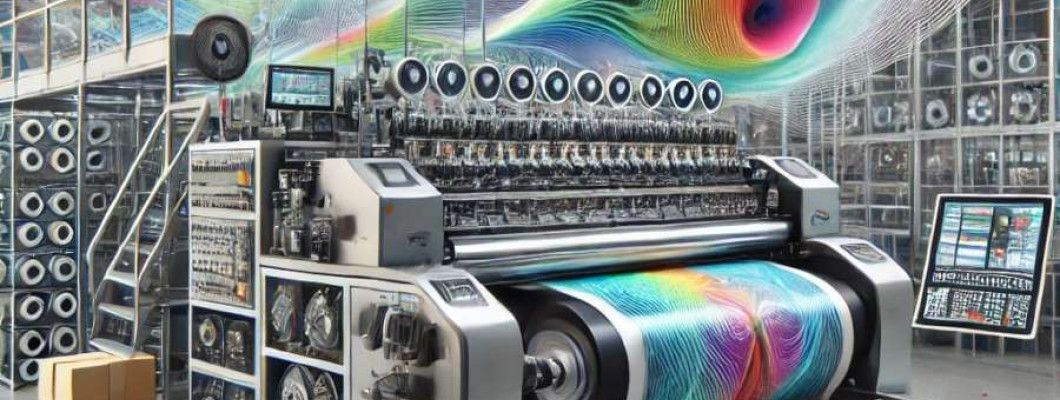
The Industrial Reality of Integrating A3 Roll DTF Printers in Production Environments
Industrial-scale textile printing demands equipment that balances throughput, reliability, and maintainability. Deploying an A3 Roll DTF Printer T-shirt Printing Machine into a production line introduces a set of infrastructure integration challenges often overlooked during procurement. The printer’s mechanical, electrical, and environmental requirements intersect with existing plant floor layouts, utility provisioning, and staff skill sets, complicating initial setup and ongoing operation.
The conveyor tension control and precision roller feed systems of an A3 roll printer necessitate stable power delivery with minimal voltage fluctuations—critical to preventing print misregistration or premature hardware wear. Additionally, thermal management must be addressed since printhead arrays and curing modules generate local heat fluxes that can impact enclosure ambient temperatures. Without proper HVAC modulation or localized cooling, component lifespan and print consistency degrade.
On the software and control plane, the printer interfaces with RIP software demanding robust network connectivity and potentially secure data segmentation to integrate into centralized production management systems. This entails routing considerations and firewall rule adaptations, especially when multiple machines communicate real-time print job data.
Moreover, physical space allocation requires ergonomic planning for roll loading/unloading and maintenance access, influencing footprint and aisle widths. These elements combine into a complex matrix of operational dependencies that can introduce bottlenecks if insufficiently accounted for upfront.
Hardware and Process Compatibility with Existing Production Infrastructure
The A3 Roll DTF Printer presents a compact footprint optimized for mid-scale operations but must be evaluated against existing material handling and curing setups. For instance, downstream drying ovens or heat presses need compatible throughput rates to prevent workflow mismatches. Calculations based on the printer’s rated speed (measured in linear meters per hour) must synchronize with oven curing times and indexing intervals to maximize line efficiency.
Electrically, the printer’s power consumption profile peaks when heating elements engage during the curing process, typically demanding 800-1200 W per curing zone. If multiple machines operate in tandem, total load considerations require power distribution units designed to mitigate voltage sags and harmonic distortions which can accelerate component fatigue.
Communications infrastructure adds another layer of complexity. Many industrial environments utilize isolated VLAN segments for print workflow control to enhance security and fault tolerance. The A3 Roll DTF printer’s network interface must be compatible with such segmentation without extensive reconfiguration, or it risks integration delays and operational downtime.
Maintenance and Consumable Handling Within Operational Constraints
Consumable logistics represent another integration challenge. The printer employs specialized DTF inks and transfer films which require controlled storage conditions. Temperature and humidity parameters influence ink viscosity and transfer film integrity, affecting print quality and causing maintenance cycles to fluctuate.
Routine maintenance tasks, such as printhead cleaning cycles and roller lubrication, must be harmonized with production schedules since unscheduled downtime can cascade through the workflow. Maintenance personnel need access to detailed technical documentation that includes timing for replacing high-wear components—such as tension rollers or silicone-coated drums—to avoid unexpected failures.
Replacement parts availability and lead times, often influenced by regional supply chains, present a latent risk factor. Underestimating these can result in extended machine downtime and lost revenue.
Comparative Hardware Analysis and Workflow Impact: Table of Key Integration Metrics
| Aspect | A3 Roll DTF Printer | Traditional Flatbed DTG Printer |
|---|---|---|
| Footprint (mm) | 1800 x 700 x 1200 | 2500 x 1500 x 1400 |
| Continuous Throughput (m/hr) | 5-7 | 2-3 |
| Peak Power Consumption (Watts) | 1500 | 2000 |
| Network Integration | Ethernet with VLAN support | USB and Wired LAN (limited VLAN) |
| Maintenance Interval (hours) | 150 | 100 |
This comparison illustrates how the A3 Roll DTF printer offers improved throughput and smaller spatial requirements, yet places increased demands on network infrastructure and power management.
Thermal and Electrical Calculations for Printhead Stability
Maintaining printhead precision requires thermal equilibrium within ±2°C. Given the printhead array dissipates approximately 60 W continuously during operation, and the curing module adds an intermittent load up to 1200 W, facility HVAC must offset a thermal influx Q calculated as:
Q = m × Cp × ΔT = (air flow rate in kg/s) × (1.006 kJ/kg·K) × (ΔT in K)
Assuming a room volume of 30 m³ with air density 1.2 kg/m³ and desired ΔT ≤ 2°C, continuous air exchange rates must be optimized to maintain stable ambient conditions. Power supply design must accommodate transient loads with a buffer of at least 20% over rated power to prevent brownouts.
Scenario Analysis of A3 Roll DTF Printer Implementation
Use-Case 1 Industrial Apparel Manufacturer
An apparel manufacturer with a daily order volume of 500 printed shirts needs automation to scale. The A3 Roll DTF printer can maintain continuous 7 m/hr throughput, translating to approximately 400 shirts per 8-hour shift after accounting for loading/unloading and curing. Integration into existing conveyor lines requires minor adjustments but yields a 30% reduction in labor hours compared to manual printing. Network integration was facilitated by adapting VLAN configurations, ensuring centralized job management.
Use-Case 2 Boutique High-Color Depth Designer
The boutique operation prioritizes color accuracy and substrate versatility on limited-run designs. The precision tension controls and DTF ink profiles allow micron-level registration, enhancing color layering. However, careful climate control in the workspace was necessary to maintain ink stability, adding 10% to power consumption from HVAC modifications. Overall uptime remained above 85%, demonstrating operational reliability despite high-quality demands.
Use-Case 3 Mid-Sized Print Shop Transitioning from Flatbed
This print shop replaced legacy flatbed DTG equipment with the A3 Roll DTF printer to increase throughput and reduce footprint. Despite initial challenges in software integration and staff retraining, the operational cost per print decreased by 25% primarily due to reduced ink waste and faster curing. Maintenance intervals extended by 50 hours, improving machine availability.
Expert FAQ on Deployment and Operational Complexities
What are the primary causes of print misalignment in roll-fed DTF printers?
Mechanical slippage of feed rollers, inconsistent tension across the media roll, and spurious voltage fluctuations affecting stepper motor control introduce alignment errors. Regular calibration and environmental stability mitigate these factors.
How does humidity specifically impact DTF ink performance?
Elevated humidity increases ink viscosity and interferes with adhesion during transfer, causing muddied colors and incomplete transfers. Maintaining relative humidity between 40-60% is optimal.
What are the risks of network latency on print job execution?
Network latency can cause buffer underruns in the printer controller, resulting in dropped packets and print artifacts. Dedicated LAN segments with Quality of Service (QoS) rules minimize this risk.
Which maintenance tasks have the greatest impact on uptime?
Printhead nozzle cleaning cycles and hardware lubrication critically affect uptime. Ignoring scheduled lubrication accelerates roller wear, potentially causing media jams.
Are there special power conditioning needs for industrial DTF printers?
Yes, dedicated line conditioning with surge protection and UPS backup is essential to prevent voltage spikes from damaging sensitive printhead electronics and to maintain print integrity during power fluctuations.
Strategic Verdict and Recommendation
The integration challenges of the A3 Roll DTF Printer T-shirt Printing Machine are complex but manageable within industrial contexts. Its compact size, throughput advantages, and advanced network-capable control systems align well with the operational needs of scalable production environments, provided appropriate power and environmental controls are implemented.
Given these factors, the A3 Roll DTF Printer T-shirt Printing Machine stands as a technically sound choice for enterprises seeking to enhance print capacity without compromising process control. Its lifecycle maintenance intervals and compatibility with modern IT infrastructures further support its viability as an industrial-grade solution.