
Assessing the Smart Mini Selfie Coffee Printer for Industrial Throughput and Automation Viability
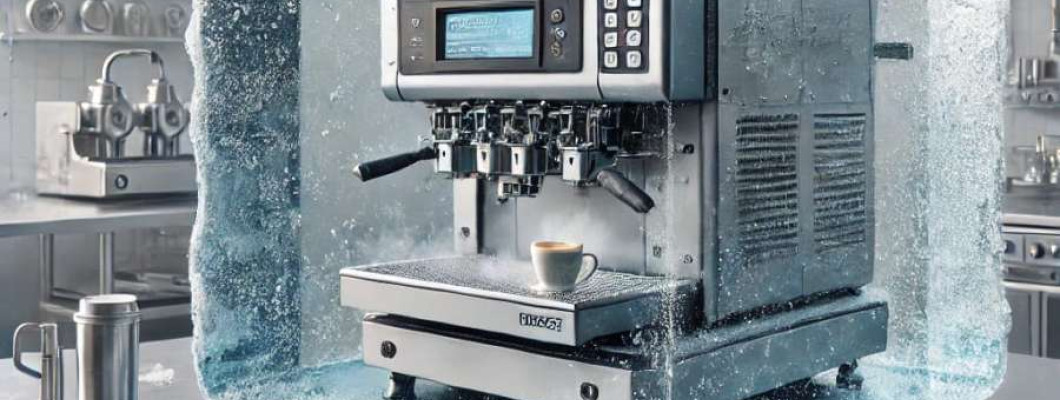
The Industrial Reality of Integrating Miniature Coffee Printing in High-Volume Settings
Deploying an innovative device like the Smart Mini Selfie Coffee Printer within a dense foodservice establishment or a high-turnover café confronts multiple operational challenges and trade-offs. The core dilemma lies in balancing unique customer engagement with throughput demands and automation efficiency. Imagine a bustling café during morning rush hours facing peak customer inflow exceeding 300 orders per hour. Introducing a miniature coffee printer that personalizes beverages with selfie images adds complex timing and mechanical precision requirements to the workflow.
The device must complete the printing process within the minimum window of coffee preparation and handover—typically under 30 seconds per cup—to avoid throughput bottlenecks. It also needs to integrate seamlessly with existing automated espresso machines, either via digital triggers or standardized workflows, without necessitating excess human intervention or manual cup handling. This implies synchronization of ink delivery, positioning systems, and cup stabilization mechanisms within the printer’s compact footprint while maintaining sterile, food-safe operational conditions.
Operational staff will also face retraining demands to handle device maintenance cycles and occasional recalibration to avoid print misalignment or ink smudging, factors critical to preserving both product quality and brand reputation. Added complexity arises from downstream supply chain realities such as sourcing food-grade edible ink cartridges with consistent chromatic density and printhead resilience. The machine’s ambient thermal and humidity tolerances directly impact print longevity and in-cup image fidelity, complicating deployment across diverse geographic regions with varying climate conditions.
Technical Deep-Dive Into Throughput and Automation Constraints
Printhead Configuration and Output Speed
The Smart Mini Selfie Coffee Printer likely utilizes a piezoelectric inkjet printhead configured for edible ink deposition at micron-scale droplet volumes, typically in the 10-15 picoliter (pl) range. Assuming a print resolution of 300 dpi (dots per inch) across a 60 mm diameter coffee cup surface, the total pixel count approximates:
Area = π * (radius)^2 = 3.1416 * (30 mm)^2 ≈ 2827 mm²
Pixels = (300 dpi / 25.4 mm/inch)^2 * 2827 mm² ≈ (11.81 dots/mm)^2 * 2827 mm² ≈ 139,754 total dots
With a maximum jetting frequency around 10 kHz per nozzle and an estimated 128 nozzles for simultaneous deposition, the theoretical maximum speed is:
Print time = Total dots / (Nozzle count * frequency) = 139,754 / (128 * 10,000) ≈ 0.11 seconds, not accounting for head movement or ink drying.
In practice, printhead movement, ink curing, and mechanical repositioning increase print cycle time to approximately 20-30 seconds per cup, aligning with the operational throughput bottleneck.
Automation and Integration Architecture
Operational integration requires the printer to interface with café order management systems (OMS) and espresso machine controllers. Communication protocols such as Ethernet/IP or USB may be used, but physical automation to transfer cups between espresso output and the printer platform demands coordinated robotics or manual labor, increasing CAPEX or labor intensity. Upstream software must trigger print jobs with minimal latency:
- Queue management to avoid overflow
- Real-time image conversion pipelines to generate selfie rasters
- Controlled ink supply monitoring and auto-replenishment alerts
Maintenance and Consumables Lifecycle
The ink cartridges require replenishment cycles every 500-1000 prints depending on ink density and color complexity. Printheads might degrade due to clogging or biofilm formation from edible ink residues, necessitating weekly calibration procedures including nozzle cleaning and alignment verification. Misalignment exceeding 0.1 mm can cause significant image distortion, undermining product quality. Maintenance downtime must be accounted for in throughput models to avoid unplanned operational losses.
Energy and Thermal Management
The device consumes approximately 60 Watts in full operation, with heat dissipated mainly by the piezoelectric elements and embedded microcontrollers. Thermal drift can cause ink viscosity fluctuations affecting droplet ejection consistency. Implementing active thermal stabilization or precision environmental control within a 2°C range is advisable for reliable print quality, introducing additional infrastructure considerations.
Material and Environmental Compliance
All consumables must comply with FDA or EFSA edible material safety standards. The printer’s external surfaces require antimicrobial coating to reduce cross-contamination in a food environment. Waste ink disposal systems must adhere to environmental safety regulations to avoid hazardous chemical accumulation.
| Feature | Manual Cup Handling Workflow | Automated Conveyor Integration |
|---|---|---|
| Throughput per Hour | 60-90 cups | Up to 180 cups |
| Labor Intensity | High (manual transfer) | Moderate (supervision) |
| Capital Expenditure | Low | High (robotics) |
| Maintenance Downtime | Weekly cleaning | Scheduled auto-calibration |
| Print Quality Stability | Variable due to human factors | Consistent environment control |
Scenario Analysis Showing Business Impact of Printing Specifications
Scenario 1: Boutique Café Targeting Customer Experience
A boutique café deploying the Smart Mini Selfie Coffee Printer focuses on ultra-high-quality prints with personalized selfies at a rate of 50 cups per hour. Here, the 30-second print time aligns with manual latte art preparation. The café prioritizes precision, color fidelity, and substrate compatibility (foam density and cup material). The machine’s micron-level deposition and color droplet fidelity enable truly custom prints that enhance brand differentiation and justify premium pricing.
Scenario 2: High-Volume Chain Café Seeking Throughput Improvements
This chain integrates the device into existing espresso machines with robotic cup transfer conveyors. With print cycles trimmed to 20 seconds and 180 cups per hour throughput, the automation reduces labor costs but requires higher CAPEX and maintenance training. The printer’s modularity facilitates firmware upgrades, enabling rapid adaptation to new print patterns or regional compliance regulations.
Scenario 3: Mobile Event Coffee Service with Variable Ambient Conditions
Operating outdoors or in semi-controlled environments, a mobile coffee service must deal with ambient temperature and humidity fluctuations affecting ink performance. The printer’s embedded environmental sensors and adjustable print parameters maintain image integrity by dynamically tuning droplet size and firing frequency. This adaptability supports consistent customer experience despite challenging deployment conditions.
Expert FAQ for Industrial Buyers and Technical Leads
Q1: How does the printer ensure repeatable print alignment on a moving cup surface?
A: The device uses optical sensing to detect cup position and real-time axis feedback control systems to maintain alignment within ±0.05 mm, compensating for minor vibration or conveyor speed variations.
Q2: What ink drying methods are employed to avoid smudging without impacting taste?
A: The printer relies on rapid solvent evaporation combined with low-heat infrared drying lamps calibrated to maintain cup surface temperatures below 40°C to preserve coffee flavor profiles.
Q3: Can the printer handle non-foam substrates like black coffee or alternative milks?
A: Printing efficacy is maximized on stable, frothy microfoam surfaces; black coffee substrates require special surface coating pre-treatment to enhance ink adhesion and image durability.
Q4: What is the expected operational lifetime of the printhead under continuous production?
A: Estimated at 3,000 print hours under continuous operation, with preventative maintenance extending lifespan through weekly nozzle cleaning and software-based firing cycle adjustments.
Q5: How is the device secured against operator error or unauthorized configuration changes?
A: It includes role-based access controls and encrypted firmware locks, requiring authentication for critical parameter adjustments to maintain print quality and compliance.
The Strategic Verdict and Recommendation for Industrial Deployment
Considering operational throughput constraints, automation integration complexity, and maintenance demands, the Smart Mini Selfie Coffee Printer emerges as a strongly viable industrial solution within targeted niche segments and scalable environments. Its micron-scale printhead technology and embedded environmental controls position it well to serve both high-end artisan cafés emphasizing quality and volume-driven chains seeking partial automation benefits. The embedded modularity for consumables and firmware upgrades future-proofs deployment against evolving regulatory and cosmetic trends.
Full integration into automated conveyor and café management systems, alongside rigorous maintenance protocols, unlocks throughput potentials approaching 180 cups per hour, offering a measurable ROI when balanced against upfront capital expenditures and labor optimization. The device’s compliance with food safety standards and thermal management design underpin operational reliability and consumer safety critical for enterprise environments.
For detailed specifications and procurement, visit the Smart Mini Selfie Coffee Printer official page. This product represents an authoritative choice for businesses requiring a technically rigorous, automated coffee personalization solution with industrial throughput ambitions.