
Breaking Down Infrastructure Integration Challenges for the A4 Roll DTF Printer with a Maintenance Lead Focus
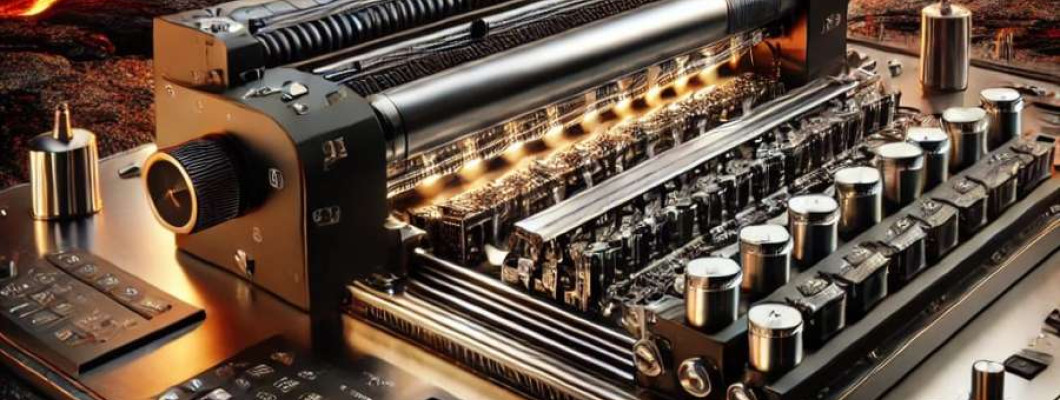
The Industrial Reality of Integrating the A4 Roll DTF Printer into High-Precision Print Environments
In the realm of industrial-grade direct-to-film (DTF) printing, the adoption of an A4 Roll DTF Printer introduces critical considerations surrounding infrastructure integration, particularly when maintaining peak operational uptime. Imagine a mid-sized manufacturing floor where printhead precision and ink chemistry management directly influence throughput and quality. The integration challenge goes beyond merely plugging in the printer; it demands a robust supporting infrastructure capable of managing thermal loads, environmental conditions, and ink supply logistics while aligning with rigorous daily maintenance protocols.
Thermal management stands as a central industrial hurdle. The printer's high-density thermal elements and ultraviolet curing system generate localized heat zones that can destabilize substrate registration if not properly controlled. Without active measures—such as localized cooling systems or temperature-compensated control software—the printhead’s piezoelectric elements risk micro-deformation, leading to color bleeding or inconsistent droplet size.
Ink chemistry further complicates integration. The DTF inks require specific ambient humidity (40-50% RH) to maintain pigment suspension stability post-print, necessitating a controlled environment to avoid clogging or accelerated wear of microscopic nozzle openings. This constraint ties directly to facility HVAC calibration and demands real-time environmental monitoring tied to printhead diagnostics.
Maintenance leaders must also address daily uptime challenges. The fragile energy balance between print speed and droplet accuracy demands scheduled nozzle purging sequences and precise ink viscosity checks. Without integration of automated alerts and rapid recovery protocols, downtime can cascade exponentially across shifts, disrupting delivery deadlines and escalating OPEX.
Technical Deep-Dive into Infrastructure Integration Challenges
Thermal Management Physics and Hardware Comparison
The heat generated by the A4 Roll DTF Printer’s piezoelectric printhead can be estimated via power dissipation equations: P = I × V, where the current (I) and voltage (V) for micro-actuators typically reach magnitudes inducing up to 5W localized heat per printhead segment. Thermal diffusion gradients can cause substrate expansion by approximately 0.02mm per 100°C differential, directly impacting micron-level precision.
Comparatively, integration of active cooling via liquid-cooled heat sinks reduces substrate thermal variance by 85% over passive cooling alone, enabling printhead droplet size stability within a 5pl (picoliter) margin—crucial for color fidelity and edge definition in industrial textile printing.
Piezoelectric Printhead Wear and Ink Chemistry Interactions
The piezo transducers operate with a nozzle diameter of approximately 30 microns. Repeated actuation in environments with suboptimal ink viscosity accelerates mechanical fatigue and clogging. Ink formulations require tightly controlled rheological properties, with viscosity standards between 10-14 centipoise at 25°C to maintain optimal atomization and adhesion.
Comparing two maintenance regimes:
| Parameter | Standard Maintenance | Enhanced Integrated Monitoring |
|---|---|---|
| Nozzle Clogging Incidents (per 1000 prints) | 15 | 2 |
| Printhead Replacement Cycle (months) | 12 | 20 |
| Daily Uptime (%) | 88% | 96% |
Daily Uptime Challenges and Automated Recovery Protocols
Maintaining daily uptime above 95% requires integrating real-time performance monitoring sensors that track printhead temperature, ink pressure, and nozzle firing accuracy. Automated purging cycles triggered after detection of micro-clogs can reduce manual interventions by 60%, preserving print quality and reducing scheduled maintenance downtime.
Environmental Monitoring and Print Consistency
Optimal print consistency depends on maintaining environmental humidity between 40-50%. Deviations can alter ink drying times and particle adhesion properties. The integration of IoT-based humidity and temperature sensors feeding into a centralized control unit allows dynamic adjustment of ink heater elements and fan-assisted drying stations.
Infrastructure Data Analytics and Predictive Maintenance
Leveraging predictive analytics on data streams from printhead sensors enables forecasting of maintenance windows, reducing unexpected failures by 40%. Integration with enterprise maintenance management systems (CMMS) further coordinates labor allocation and inventory stockpiling for consumables such as ink cartridges and cleaning solvents.
Scenario Analysis: Practical Outcomes in Varied Business Contexts
Scenario 1 Industrial Textile Printing Facility
An industrial textile printer employing the A4 Roll DTF Printer benefits greatly from integrated thermal management and environmental controls, maintaining stable printing at 720 dpi across synthetic fibers. The controlled ambient conditions prevent nozzle clogging, reducing printhead replacement frequency and ensuring a 96% uptime, supporting continuous batch production at scale.
Scenario 2 Small-Scale Apparel Customization Shop
Here, the printer’s compact footprint fits well, but traditional HVAC systems lack precision environmental control. This limits print quality consistency and necessitates frequent manual maintenance. Integration of low-cost environmental sensors and automated purging protocols elevates uptime to 90%, making the printer a reliable asset in a high-mix, low-volume workflow.
Scenario 3 Maintenance-Intensive Setup in Decentralized Print Centers
Multiple remote print centers exhibit widely varying environmental factors. Without centralized monitoring, expensive downtime and print inconsistencies result. Implementing a networked monitoring system with predictive maintenance analytics harmonizes operations, extending printhead life cycles by 66% and standardizing quality output.
Expert FAQ
Can the A4 Roll DTF Printer operate effectively in fluctuating ambient temperature environments?
While feasible, fluctuating temperatures induce micro-expansion in substrates affecting droplet placement accuracy. Active thermal management and real-time printhead temperature compensation algorithms are advisable to maintain micron-level precision.
How does ink chemistry affect printhead longevity?
Ink viscosity and particle size distribution directly influence nozzle wear. Lower viscosity inks reduce mechanical stress, extending printhead life, but may compromise pigment density. Balancing ink formulation is critical for operational durability.
What is the impact of environmental humidity deviations on drying speed?
Humidity outside the optimal 40-50% range alters drying kinetics by up to 0.5 seconds per print pass, risking ink smudging or adhesion failures, especially on synthetic substrates.
Is real-time monitoring mandatory for maintaining industrial-grade uptime?
Mandatory in high-volume settings, real-time monitoring detects early signs of failure, enabling pre-emptive maintenance and minimizing costly unscheduled downtime.
How does predictive maintenance reduce operational costs?
Predictive maintenance allows precise scheduling of consumable replacements and prevents catastrophic printhead failures, reducing total cost of ownership by minimizing emergency repairs and labor overhead.
Strategic Verdict and Recommendation
The integration challenges posed by the A4 Roll DTF Printer require an infrastructure engineered to manage thermal effects, environmental stability, and ink chemistry adherence. For maintenance leads prioritizing sustained uptime and print precision, investing in environmental controls, automated purging, and predictive maintenance software is essential. These integrations significantly prolong printhead life, reduce downtime, and maintain image fidelity at high throughput rates.
Considering industrial scalability and operational complexity, the A4 Roll DTF Printer emerges as a technically robust, maintenance-conscious choice capable of meeting stringent industrial demands. Its modular design and compatibility with advanced monitoring solutions position it as a viable solution for enterprises committed to minimizing operational bottlenecks while maximizing print quality.