
Bridging the Gap Between DIY and Industrial Edible Printing with the A3 Edible Food Printer For Printing Cakes Cookies
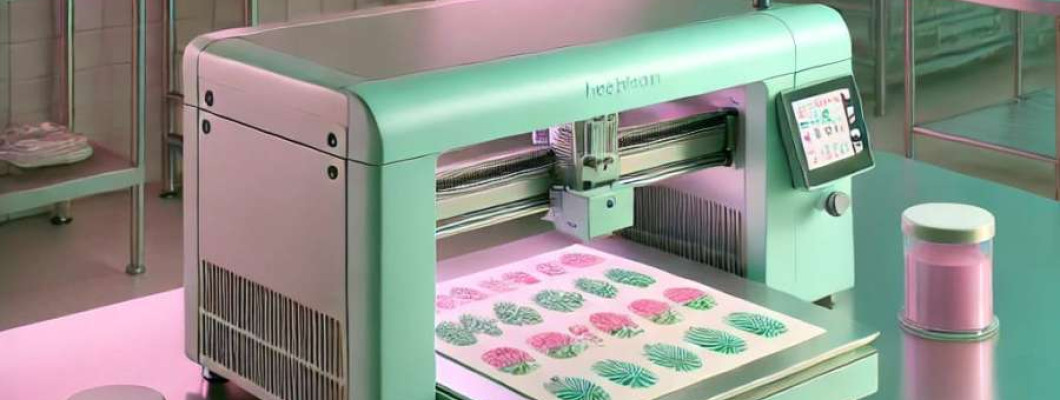
The Industrial Reality of Edible Printing Precision and Workflow Integration
In a commercial bakery or a high-volume confectionery production line, transitioning from simple edible printing solutions to an industrial-grade platform presents significant technical and operational challenges. Typical consumer-grade edible printers often fail to meet the throughput demands, color fidelity, and substrate versatility required for consistent large-scale output. For instance, when tasked with printing intricate cake or cookie decorations, maintaining micron-level precision alongside fast print speeds is critical to prevent bottlenecks and waste. The need to integrate such printing systems into existing workflows—including ingredient handling, decorating, and curing processes—further complicates adoption.
The A3 Edible Food Printer For Printing Cakes Cookies steps into this demanding environment aiming to close the gap traditionally seen between DIY and industrial printing tools. However, its adoption requires evaluating printhead technology, ink chemistry compatibility with various edible substrates, and maintenance cycles, all within a framework that supports complex industrial environments adhering to stringent hygiene and safety standards.
Beyond the hardware, the operator’s role in managing thermal variations influencing ink viscosity and droplet formation cannot be overlooked. This becomes especially relevant under continuous operation or when subjected to fluctuating ambient conditions. The challenge extends to ensuring asset longevity while avoiding print inconsistencies caused by mechanical wear or clogs in the edible ink delivery system. These factors materially impact the real-world total cost of ownership and production reliability in commercial settings.
Printhead Mechanics and Ink Delivery System Engineering
At the core of precision edible printing lies the printhead responsible for droplet ejection, placement accuracy, and durability under prolonged operation. The A3 Edible Food Printer typically employs piezoelectric printhead technology calibrated for edible ink viscosities ranging approximately between 4–12 centipoise (cP). This viscosity range balances fluidity for reliable ejection with pigment concentration needed for vibrant color reproduction.
Mathematically, assuming a droplet volume of 10 pico-liters (pl) and a nozzle density of 600 nozzles per inch, the theoretical maximum resolution approaches 600 dpi. However, practical operating resolution adjusts based on substrate absorption rates and drying times to avoid smudging or color bleed. Print speed inversely correlates with resolution; operating at 600 dpi might yield speeds near 0.5 m2/hour, whereas reducing to 300 dpi can double throughput.
An edible ink system’s stability is influenced by ink particle size distribution (typically 100–250 nm), which affects clog resistance and color stability. The ink delivery subsystem includes UV or thermal curing elements, though primarily non-UV for sensitive edible substrates. The printer’s thermal management integrates heat sinks maintaining printhead temperature within 40–50°C to prevent ink drying inside nozzles while ensuring proper droplet formation dynamics.
Comparative Table of Key Hardware Attributes
| Specification | A3 Edible Food Printer | Typical Consumer Edible Printer |
|---|---|---|
| Print Resolution (dpi) | Up to 600 dpi | 300–400 dpi |
| Theoretical Print Speed (m2/hr) | 0.5 @ 600 dpi; 1.0 @ 300 dpi | 0.2–0.4 |
| Ink Viscosity (cP) | 4–12 optimized for edible inks | 3–8 |
| Thermal Management | Active heat sinks, temperature sensors | Passive cooling only |
| Printhead Longevity (hours) | >2000 operational hours | ~500 hours |
| Substrate Compatibility | Wide range: fondant, wafer paper, cookies, cakes | Limited to flat cookies or fondant sheets |
Workflow and Integration Challenges in Industrial Settings
Integrating the A3 Edible Food Printer into existing pastry production lines entails several practical considerations. Firstly, substrate feeding mechanisms must accommodate varying cake shapes and cookie sizes without causing jams or misalignments. An automated conveyor compatible with the printer's platen size (approximately A3: 297 x 420 mm) is necessary to sustain throughput.
Secondly, edible ink replenishment cycles and cartridge swaps must be streamlined to minimize downtime. The printer’s software should support color profile management to replicate brand colors consistently across batches, essential for client satisfaction in commercial orders.
Thirdly, maintenance workflows must be designed around cleaning protocols to prevent microbial contamination. The printer’s components exposed to edible inks require materials compliant with food-grade standards (FDA or equivalent certifications) and need rapid disassembly for cleaning between production runs.
Lifecycle Maintenance and Total Cost of Ownership Analysis
From a maintenance perspective, the A3 Edible Food Printer is engineered for rapid printhead replacement and self-cleaning routines to reduce manual intervention. Regular preventative maintenance every 200 hours includes nozzle checks, ink line flushing, and firmware updates to maintain color calibration and droplet accuracy.
Depreciation analysis over a 5-year operational horizon considers a purchase price benchmarked against industrial printing solutions but lower than full-scale cake decorating robots. Factoring in consumables, operator labor for routine maintenance, and downtime losses, the printer offers a competitive cost per unit printed when operating above 1000 printed items monthly.
Operational bottlenecks are mitigated through scheduled maintenance windows aligned with production lulls and automated diagnostics relaying real-time status. These capabilities reduce unexpected interruptions and preserve print quality consistency.
Scenario Analysis for Diverse Business Models
1 Bakery Chain Scaling On-Demand Custom Cakes
A bakery with multiple outlets requires a printer capable of rapid turnaround without sacrificing color depth or detail. The A3 Edible Food Printer’s 600 dpi output supports intricate designs, while its robust build ensures uptime even in high-demand periods. Integration with order management systems allows seamless print job queuing for personalized cake decorations, enhancing customer satisfaction and operational efficiency.
2 Boutique Cookie Artist Focusing on Micron-Level Precision
An artisan cookie decorator demands color gradient control and exceptional droplet placement to replicate fine art. Here, the printer’s piezoelectric printhead and optimized ink flow deliver repeatable micron-level accuracy, enabling complex shading and multi-color layering on various substrates. The flexibility to switch substrates rapidly supports experimental design workflows common to high-end artisans.
3 Industrial Scale Event Caterer Needing Throughput and Compliance
An event caterer producing thousands of branded cookies requires a system with minimal downtime and compliance with hygiene standards. The A3 Edible Food Printer’s fast print cycles, easy cleaning protocols, and food safety certifications support large volume production while maintaining quality assurance, ensuring client brand consistency under tight deadlines.
Expert FAQ Addressing Advanced Queries
Q1: How does printhead temperature variation impact droplet formation consistency?
A1: Temperature fluctuations affect ink viscosity and surface tension, which alter droplet volume and velocity. The A3 printer’s thermal management maintains a ±2°C stability band, ensuring consistent droplet ejection and thereby consistent color density and edge definition.
Q2: What ink particle size distribution optimizes clog resistance in edible ink systems?
A2: Sub-250 nm particles balance pigment suspension with flowability, minimizing nozzle blockages while maximizing color saturation. Agglomeration beyond this size increases clogging risks and printhead wear.
Q3: To what extent does substrate surface energy influence ink adhesion and drying speed?
A3: Higher surface energy substrates promote rapid ink wetting, reducing drying time but increasing risk of bleed. Controlled porosity substrates such as fondant sheets optimized for edible printing allow predictable ink spread and color sharpness.
Q4: How do maintenance cycles correlate with cumulative printhead operational hours?
A4: Empirical data suggests nozzle wear accelerates after approximately 1500 hours, requiring recalibration or replacement. Scheduled maintenance every 200 operational hours mitigates long-term print quality degradation.
Q5: What are the thermal dissipation challenges in high-density multi-nozzle printheads operating continuously?
A5: Concentrated heat can cause ink evaporation and cavitation damage. The printer employs active heat sinks and internal heat spreaders to maintain a uniform thermal profile, preventing localized overheating and preserving printhead reliability.
Strategic Verdict on the A3 Edible Food Printer For Printing Cakes Cookies
The A3 Edible Food Printer For Printing Cakes Cookies occupies a critical space bridging amateur and industrial edible printing. Its technical design—combining precise piezoelectric printheads, optimized edible ink systems, and robust thermal management—addresses core operational challenges prevalent in commercial-scale food decoration. Through detailed lifecycle maintenance plans and adaptability across substrates, it promises reduced operational bottlenecks and enhanced print consistency.
For enterprises seeking to elevate edible printing from a niche activity to a scalable, efficient production process, the printer delivers a balance of resolution, throughput, and compliance that few competitors match. Its integration potentials and maintenance-friendly architecture further solidify its status as a dependable industrial-grade solution. For more technical specifications and procurement options, visit the official A3 Edible Food Printer For Printing Cakes Cookies product page.
In conclusion, the A3 Edible Food Printer represents a strategic investment for scalable businesses aiming to combine high-precision edible decoration with industrial operational realities.