
Bridging the Gap Between DIY and Industrial Grade with the A3 Edible Food Printer For Printing Cakes Cookies
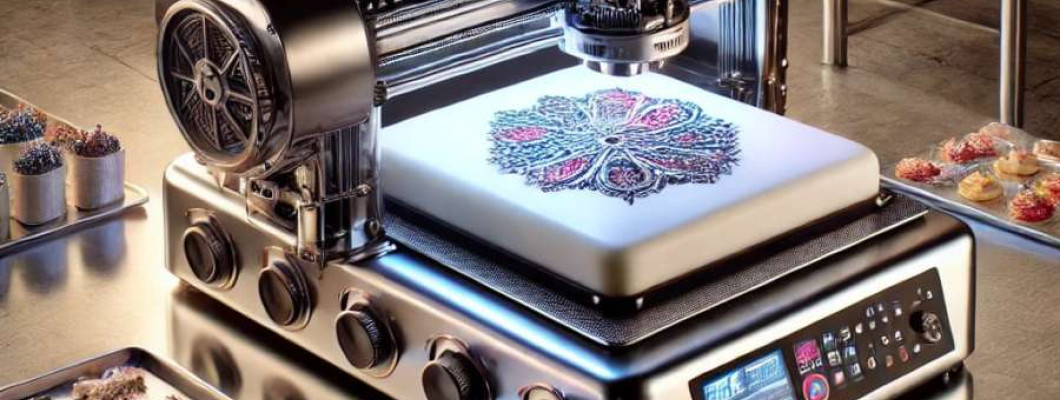
The Industrial Reality of Integrating Edible Food Printing into Commercial Kitchens
Precision and reliability define industrial food production, especially when it comes to printable edible decorations. Introducing an A3 edible food printer that caters to cakes and cookies places unique demands on technology and operation. Unlike DIY or hobbyist devices, industrial-grade edible printers face challenges such as maintaining consistent print quality across multiple substrates, adhering to food safety regulations, and managing throughput in a high-volume environment.
Consider a commercial bakery aiming to integrate edible printing for personalized cakes. The primary technical challenge lies in achieving micron-level precision while ensuring ink formulations remain food-safe and stable under continuous operation. Printhead clogging due to viscous edible ink, thermal management to prevent heat-induced degradation of both printer electronics and edible media, and maintaining precise calibration across cake surfaces of varying shapes and elevations are daily hurdles. Operational bottlenecks arise when the printer fails to keep pace with peak order volumes, leading to downtime and increased labor costs to troubleshoot print failures.
Furthermore, transition from manual food decoration to automated printing necessitates compatibility with existing production lines, including conveyor systems and ambient environmental controls. Compliance with hygienic design principles is mandatory to avoid contamination risks. These complexities clearly illustrate why many commercial kitchens hesitate to adopt edible printing technology without robust industrial-grade solutions addressing these challenges holistically.
Technical Deep-Dive
Printhead Technology and Ink Chemistry
The A3 edible food printer employs piezoelectric printheads optimized for food-grade ink viscosity ranging between 10 to 30 centipoise. Piezoelectric elements provide sub-20 picoliter droplet size control with ejection frequencies up to 20 kHz, enabling precise dot placement at resolutions up to 1200 dpi on edible substrates. Unlike thermal inkjet heads prone to clogging with thicker edible inks, piezoelectric heads offer reliability under continuous operation.
Substrate Versatility and Surface Adaptation
The printer accommodates cake and cookie surfaces up to 420 mm by 297 mm (A3 size) with a maximum height clearance of 50 mm. It integrates a height sensing and adaptive z-axis control system based on laser triangulation to maintain optimal nozzle-to-substrate distances. This prevents smudging and ensures edge-to-edge print clarity on curved and uneven surfaces common in cakes. Surface wetting dynamics of edible inks on fondant, buttercream, or cookie icing are factored into droplet impulse and drying time calculations.
Thermal Management and Ambient Control
Continuous operation of the printer generates approximately 150 Watts of heat concentrated within the printhead assembly and ink reservoirs. The system incorporates a closed-loop thermal control unit utilizing Peltier elements and microfluidic heat exchangers to maintain ink temperature stability between 18-22°C. Maintaining optimal ink viscosity and preventing thermal degradation of heat-sensitive edible pigments is critical for consistent color fidelity.
Operational Throughput and Workflow Integration
Printing speeds vary depending on image complexity and substrate size but average 5-7 minutes per A3 edible print. The printer supports batch mode operation via an integrated job queue managed through proprietary software that communicates with enterprise resource planning (ERP) systems for seamless production scheduling. Automated cleaning cycles reduce daily maintenance downtime from 45 minutes to under 15 minutes.
Material and Lifecycle Considerations
Consumables include edible inks composed of FDA-approved food colorants suspended in water-glycerol carriers, with average cartridge volumes of 100 ml per color. Cartridge lifespan under typical usage is approximately 20,000 printed A3 sheets before pigment sedimentation necessitates cartridge replacement. Printhead components are rated for 1 million ejection cycles before requiring recalibration or replacement, translating to an operational lifecycle of roughly 18 months in industrial settings. Asset depreciation aligns with standard heavy-use printing equipment standards.
| Specification Aspect | DIY Edible Printer | A3 Industrial-Grade Edible Printer |
|---|---|---|
| Printhead Type | Thermal Inkjet | Piezoelectric with Adaptive Control |
| Max Printable Area | Up to A4 (210x297 mm) | A3 (420x297 mm) |
| Color Fidelity | Limited, prone to bleeding | High precision, stable pigments |
| Thermal Control | Passive cooling | Active Peltier thermal management |
| Throughput | 1-2 prints/hour | 8-12 prints/hour |
| Consumable Volume | 30-50 ml cartridges | 100 ml cartridges |
| Maintenance Downtime | Up to 60 minutes daily | Under 15 minutes daily, automated cleaning |
Scenario Analysis of Business Use-Cases
Custom Artisan Bakery Focused on Small Batch Precision
For boutique bakeries prioritizing color depth and substrate versatility, the A3 printer’s micron-level nozzle control and adaptive z-axis ensure detailed edible art on delicate buttercream or fondant surfaces. Fast color transitions and high DPI capability enable fine gradation and photographic-quality prints. Automated maintenance reduces labor overhead despite high precision demands.
Mid-Sized Commercial Cake Production Facility
In settings with moderate throughput requirements and batch scheduling, the printer’s ERP integration and job queuing enable smooth workflow alignment with production targets. The larger A3 printable area minimizes sectional printing or manual decoration, reducing rework. Thermal management ensures ink stability across extended shifts, maintaining consistent output quality.
Industrial Cookie Manufacturer Introducing Personalized Edibles
For cookie lines requiring high volume and rapid job turnover, the printer’s robust piezoelectric heads and active thermal cooling support continuous operation for multiple shifts. Ink cartridge longevity and automated cleaning cycles minimize downtime, while substrate height sensing adapts to cookie icing thickness variability, preserving print fidelity at scale.
Expert FAQ
What factors drive piezoelectric printhead longevity in edible printing?
Piezoelectric printhead longevity depends on ejection cycle volume, ink chemistry compatibility, and maintenance rigor. High-glycerol inks may cause nozzle clogging if filtration is inadequate. Automated cleaning systems mitigating ink residue buildup significantly extend operational lifespan.
How does substrate surface tension affect edible ink adhesion?
Surface tension influences droplet spread and absorption rate. Fondant, being less porous, requires optimized droplet impulse to prevent pooling, whereas more absorbent cookie icing demands faster drying inks to avoid bleeding. Adaptive printhead settings calibrate droplet velocity and volume in real time.
What thermal thresholds are critical to avoid pigment degradation?
Most food-grade pigments degrade above 30°C sustained exposure. The printer maintains ink reservoirs below 22°C to prevent color shifts and viscosity changes. Excessive heat risks both print quality loss and accelerated cartridge wear.
How does the system ensure hygienic operation under industrial food safety standards?
The printer’s design uses food-grade materials, sealed ink cartridges, and closed-path ink circulation. Automated cleaning cycles use FDA-compliant sanitizers. The enclosure supports easy disassembly and cleaning to meet HACCP protocols.
Can the printer software handle variable data printing for mass personalization?
Yes, the included software integrates with ERP systems to manage variable data inputs, supporting unique edible prints per item. This is critical for on-demand personalization without manual intervention, preserving throughput and quality.
Strategic Verdict and Recommendation
The A3 Edible Food Printer For Printing Cakes Cookies embodies a robust industrial-grade solution that effectively addresses the technical and operational gaps inherent in DIY edible printing technologies. Its combination of piezoelectric printheads, adaptive surface sensing, active thermal management, and ERP-integrated workflow commands represent a mature, scalable product capable of seamless integration into commercial bakery environments. The printer elevates production throughput, reduces maintenance downtime, and ensures consistent high-fidelity output across diverse edible substrates.
For businesses seeking to transition from manual or hobbyist edible decoration methods, this printer offers a clear advantage in print precision, operational reliability, and cost control over its lifecycle. Its asset longevity aligns with industry standards, and the consumables ecosystem is optimized for sustained industrial use.
Overall, we recommend exploring the detailed specifications and procurement options available through the official A3 Edible Food Printer For Printing Cakes Cookies product site to align with evolving business needs in edible printing technology.