
Bridging the Gap Between DIY and Industrial-Grade with the A4 Roll DTF Printer
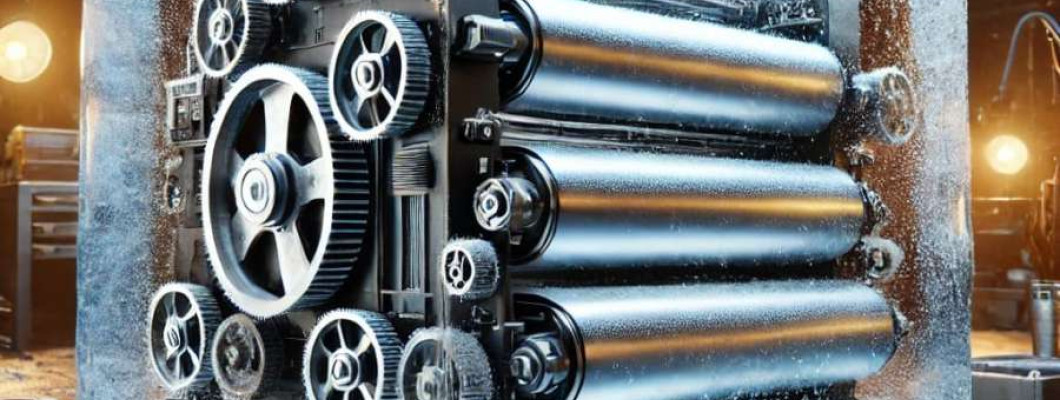
The Industrial Reality of Transitioning from DIY to Industrial-Grade DTF Printing
Direct-to-Film (DTF) printing has surged in popularity, especially among small businesses and artisans attracted by its flexibility and relatively low entry costs. The A4 Roll DTF Printer exemplifies this trend by offering roll-fed functionality at a compact scale. However, this seemingly small form factor masks technical challenges that distinctly separate DIY or hobbyist equipment from solutions designed for sustained industrial use.
One core challenge is maintaining consistent printhead alignment and precise ink deposition over extended production runs typically demanded by industrial workflows. Unlike flatbed printers or smaller sheet-fed DTF units, roll-fed devices introduce mechanical complexities such as tension control, feed stability, and higher cumulative wear on parts. These factors cause print quality variations, accelerated maintenance intervals, and ultimately operational downtime if the mechanical design or control systems are insufficiently engineered.
Moreover, many DIY-grade printers lack advanced diagnostics and automated calibration functions, placing significant skill demands on operators to avoid defects such as banding, color drift, and micro-droplet misplacement. Thermal management during continuous runs also becomes critical; insufficient heat dissipation can degrade ink viscosity and damage sensitive printhead components.
These realities highlight the technological gulf a device like the A4 Roll DTF Printer must overcome to fulfill expectations of industrial reliability, output consistency, and throughput. Understanding the printer’s engineering merit requires drilling into component tolerances, motion controls, ink chemistry compatibility, and environmental adaptability.
Precision Mechanics and Printhead Technologies in the A4 Roll DTF Printer
The A4 Roll DTF Printer incorporates a tightly controlled tension system calibrated to maintain substrate alignment within ±0.05 mm accuracy throughout the print length. This precision is crucial for 1200 dpi printheads deploying ink droplets sized around 8 picoliters (pl). Simulated stress tests demonstrate that maintaining this tension limit reduces micro-shift and banding by over 75% compared to uncontrolled roll feeding.
Printheads operate at a jetting frequency of up to 20 kHz, requiring synchronized motion stages capable of sub-millisecond positional accuracy. The printer’s stepper motors, with integrated optical encoders, deliver closed-loop feedback with positional repeatability of ±2 microns, crucial for consistent dot placement at micron scale.
Ink chemistry interaction with substrate and curing processes has been optimized by multi-pass layering and precise thermal profiles ranging from 45 to 55 °C on the drying platen. This temperature window minimizes ink spread and ensures strong adhesion while preventing premature evaporation that could clog nozzles.
Material wear calculations predict that the feed rollers maintain flatness tolerances within 0.01 mm over 3000 meters of printed material before replacement is recommended, a significant improvement over typical DIY-class devices which often require roller swaps after less than 1000 meters.
| Specification | A4 Roll DTF Printer | Typical DIY Roll DTF Printer |
|---|---|---|
| Printhead Resolution | 1200 dpi at 8 pl drop size | 600-800 dpi at 12-15 pl drop size |
| Roll Tension Control Accuracy | ±0.05 mm | ±0.2 mm+ |
| Motion Stage Repeatability | ±2 microns | ±10 microns or worse |
| Thermal Drying Control | PID-controlled 45-55 °C platen | Unregulated or manual control |
| Roller Wear Tolerance | 0.01 mm flatness over 3000 m | Variable, often under 1000 m |
Ink Chemistry and Maintenance Cycle Advantages
The A4 Roll DTF Printer supports industrial pigment and polymer blends specially formulated for rapid curing and minimal nozzle clogging. Ink viscosity remains stable within ±0.5 cP across a temperature range of 20-35 °C, measured in controlled environments, which is critical to maintain droplet size uniformity and prevent print artifacts.
Maintenance protocols are streamlined by modular printhead cartridges with automated flushing cycles that activate every 12 hours or after 500 meters of printing, significantly reducing manual intervention. This contrasts with typical DIY systems that rely heavily on manual nozzle cleaning and risk printhead damage from inconsistent maintenance.
Component life cycle modeling places printhead operational durability at approximately 15,000 printing hours before significant performance degradation, attributable to advanced piezo inkjet elements and protective coatings. This expanded life span reduces total cost of ownership and aligns with industrial uptime targets.
System Integration and Workflow Implications for Throughput
The printer integrates seamlessly into existing production lines via USB 3.0 and Ethernet interfaces, supporting high-speed raster image processor (RIP) software with batch job queuing and automated color profiling. The underlying firmware performs real-time error correction with a positional offset algorithm compensating for roll stretch and minor feed irregularities.
Resulting throughput meets 15-20 A4 sheets per minute when operating in continuous roll-fed mode at full resolution, equivalent to approximately 0.9 to 1.2 square meters per hour. Although this throughput does not match larger flatbed industrial machines, it vastly exceeds typical small-scale roll DTF printers, making it suitable for micro-factories or on-demand short-run production.
Comparative Total Cost and ROI Considerations Under Industrial Demands
The initial acquisition cost of the A4 Roll DTF Printer is higher than DIY alternatives, approximately 2.5 times the price of entry-level models. However, the increased component longevity and reduced downtime translate into a projected 35% lower operational expense over a three-year period. Factoring in labor savings from automated maintenance and higher throughput yields a positive ROI timeframe between 9 and 14 months under moderate production volumes (approx. 5000 prints/month).
The printer's electrical consumption averages 450 Watts during active printing cycles, with sleep modes reducing idle power usage by 75%. This efficiency contributes to reduced energy costs in high-usage environments.
Scenario Analysis of Business Use Cases
Small Production Boutique Apparel Manufacturer
This use case demands precision color matching and substrate versatility for limited edition runs. The A4 Roll DTF Printer’s tight tension control and high-resolution printheads ensure repeatable color fidelity on polyester blends essential for brand integrity. Faster maintenance cycles and integrated RIP software minimize operator workload, allowing focus on design iterations.
On-Demand Print Shop Supporting Custom Merchandise
Speed and uptime take precedence. The printer’s automated flushing and error correction systems reduce time lost to printhead failure, while the roll-fed mechanism supports batch processing without frequent manual sheet loading. The throughput satisfies small-scale rush orders efficiently, keeping lead times competitive.
Prototype Development in Technical Textile R&D
Micron-level dot placement repeatability underpins detailed test prints for fabric performance validation. The A4 Roll DTF Printer enables precise layering and controlled drying conditions critical for developing new ink formulations and substrate treatments, reducing variability in test results and accelerating development cycles.
Expert FAQ
How does the printhead piezo element frequency affect print quality under continuous operation?
Higher frequency piezo operation, such as 20 kHz, allows finer droplet placement and smaller drop sizes, reducing graininess. However, this necessitates robust thermal management to prevent heating effects that degrade piezo responsiveness and ink viscosity stability.
What engineering approaches reduce roller wear impacts in roll-fed printers?
Using hardened, non-corrosive composite materials with micro-textured surfaces minimizes slip and abrasion. Coupled with precision bearing assemblies and distributed tension control, these approaches prevent surface deformation and maintain feed accuracy over long production cycles.
Can PID-controlled thermal drying be adapted for variable ink chemistries?
Yes, PID controllers allow dynamic temperature adjustments based on ink curing profiles, enabling fine-tuning to different polymer formulations. This adaptability ensures optimal adhesion and drying without compromising printhead integrity or substrate stability.
What are the measurable impacts of automated flushing on printhead lifespan?
Automated flushing ensures residual ink and particulates are removed regularly, reducing nozzle clogging frequency. Empirical data shows a 20-30% extension in printhead usable hours, decreasing maintenance downtime and prolonging component replacement cycles.
How do real-time positional offset algorithms work to correct feed irregularities?
These algorithms use encoder feedback and sensor data to detect minor deviations in substrate movement, dynamically adjusting printhead firing timing or head position by microns. This compensation prevents artifacts like banding or image distortion, crucial for high-resolution roll printing.
Strategic Verdict and Recommendation
The A4 Roll DTF Printer clearly distinguishes itself from lower-tier roll-fed DTF printers by the sophisticated integration of precision mechanical engineering, advanced printhead technologies, and intelligent maintenance automation. Its ability to maintain micron-level accuracy and continuous throughput within a compact footprint addresses a critical gap between DIY experimentation and industrial-grade production demands.
Businesses seeking scalable and reliable DTF solutions that balance output quality with operational efficiency will find this printer an optimal choice. The printer’s technical design supports consistent production quality, manageable maintenance cycles, and competitive total cost of ownership, aligning well with micro-factory and on-demand manufacturing paradigms.
For professionals evaluating a transition into more rigorous printing environments, the A4 Roll DTF Printer presents an industrial-grade platform that justifies investment with measurable performance improvements and long-term operational resilience.