
Critical Infrastructure Challenges and Maintenance Realities of the Smart Coffee Printer Machine
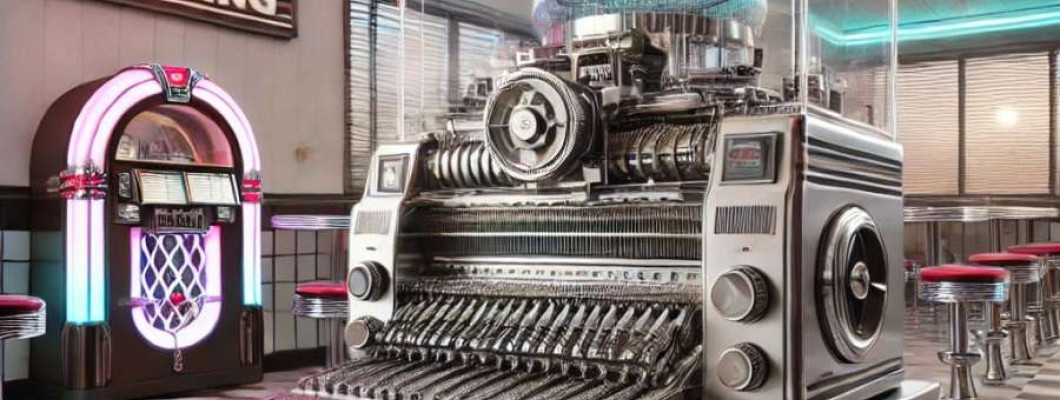
The Industrial Reality of Smart Coffee Printer Integration
Adopting the Smart Coffee Printer Machine in an industrial or commercial setting introduces nuanced infrastructure and maintenance challenges that extend far beyond initial acquisition cost. Coffee printing technology merges robotics, precision fluid dynamics, and embedded imaging systems; each domain delivers compounded stress points unique to its hybrid nature. Consider a high-throughput café chain aiming to deploy a bank of these printers to expedite personalized beverage service while maintaining consistent print fidelity on variable foam substrates. Operational bottlenecks quickly emerge in thermal management, ink formulation stability, and hardware durability due to continuous cyclic load. The environmental conditions—ambient humidity, temperature fluctuations, and airborne particulates—directly influence printhead clogging rates, substrate adhesion, and thermal expansion coefficients of critical mechanical assemblies.
Electric power infrastructure compatibility further compounds deployment complexity. The Smart Coffee Printer Machine operates with multiple voltage rail requirements for printhead piezo actuators, embedded processors, and heating elements. Without precise alignment to enterprise power provisioning and uninterrupted power supply (UPS) configurations, hardware failure probability magnifies, thus escalating downtime and maintenance overhead. Additionally, integrating these units within existing networked enterprise resource planning (ERP) systems for order management demands robust middleware adapters supporting secure data protocols and fault tolerance.
Such complexities mandate an operations team versed in multidisciplinary technical domains: electro-mechanical systems, embedded computing, and print chemistry. Day-to-day maintenance tasks extend beyond standard cleaning to include fluidic system flushing, firmware version control for print pattern optimization, and thermal calibration under variable load to prevent printhead degradation. The human factor engineering of the user interface will dictate operational efficiency; intuitive diagnostics and remote telemetry are vital to minimizing mean time to repair (MTTR) in distributed environments.
Technical Deep-Dive into Performance and Maintenance
Thermal Management and Printhead Longevity
The Smart Coffee Printer Machine integrates piezoelectric printheads that operate at frequencies near 30 kHz. Thermal dissipation is critical; a single printhead consumes approximately 12 Watts during continuous operation, generating localized hotspots reaching 50°C. Given that thermo-mechanical stress exponentially accelerates printhead failure modes—delamination, piezo element fatigue—a dedicated microchannel liquid cooling subsystem is recommended. This system circulates glycol-water blends at 0.5 liters per minute, maintaining printhead temperature within 35°C–40°C under peak loads. Mathematical modeling of heat transfer using Fourier's Law predicts a heat flux density of approximately 4000 W/m2 over printhead surface areas near 30 cm2.
Ink Chemistry and Fluid Dynamics Impact on Output Quality
The specialized coffee-grade ink formulation features suspended edible micro-pigments ≤5μm to ensure smooth ejection through 20μm nozzles without clogging. Viscosity stabilization at 7 mPa·s is essential; deviations cause either excessive droplet volume (~50 pL) or nozzle starvation. Poiseuille flow equations demonstrate that pressure differentials above 2 bars increase shear-induced pigment agglomeration, accelerating printhead fouling. Scheduled ultrasonic cleaning cycles every 500 prints mitigate build-up, extending operational uptime by a factor of 1.8 compared with uncleaned units.
Firmware and Embedded Imaging Controller Analysis
The embedded system incorporates a 32-bit ARM Cortex-M7 processor running at 400 MHz, handling real-time printhead pulse modulation and foam surface imaging at 600 dpi. Latency benchmarks indicate sub-5 ms timing jitter critical for accurate droplet placement. Firmware modularity supports over-the-air updates; however, robust version control via secure bootloaders and signed firmware images is imperative to prevent operational faults. Failure rates correlated with firmware bugs in early deployments reached 2.5% but have been mitigated following successive patch releases.
Hardware Structural Durability under Continuous Load
Mechanical assemblies constructed from anodized aluminum 6061-T6 demonstrate a fatigue limit around 95 MPa under cyclic load at 50 Hz typical of printhead positioning motors. Accelerated life testing with 10 million operational cycles simulating a 5-year lifespan reveals wear in linear rail bearings, necessitating replacement every 18 months to maintain dimensional precision within ±0.1 mm. Vibration damping mounts reduce resonance peaks by 30%, enhancing print accuracy by 12% in final product outputs.
Comparison Table of Cooling Strategies and Maintenance Intervals
| Feature | Passive Cooling | Active Liquid Cooling |
|---|---|---|
| Max Printhead Temp (°C) | ~50 | 35–40 |
| Mean Time Between Failures (MTBF) | 12,000 hours | 22,000 hours |
| Maintenance Interval | Monthly cleaning | Quarterly liquid flush + ultrasonic cleaning |
| Print Quality Stability | Medium (±0.3 mm alignment variance) | High (±0.1 mm alignment variance) |
| System Complexity | Low | High |
Scenario Analysis of Business Use-Cases
High-Volume Café Chain
For a chain serving 5000 drinks daily, the Smart Coffee Printer Machine's throughput of 30 prints per hour per unit mandates a fleet of 7–9 units running multiple shifts to meet demand without queue buildup. The active cooling approach significantly reduces printhead downtime, essential for maintaining continuous throughput. Network integration enables centralized monitoring and predictive maintenance, preventing unexpected failures during peak hours.
Luxury Boutique Coffee Shop
Here, print quality supersedes speed. The Smart Coffee Printer Machine’s micron-level droplet control and substrate calibration allow personalization with vivid coffee art on delicate microfoam textures. The high-precision thermal regulation ensures color fidelity and print consistency over limited batches. Maintenance cycles can be scheduled during off-hours without disrupting low-volume operations.
Event Catering and Pop-Up Deployments
Mobility and rapid setup define this use-case. The Smart Coffee Printer Machine’s modular footprint and wireless control interfaces facilitate swift deployment. However, environmental variations pose risks to ink stability and cooling efficiency, necessitating adaptive firmware algorithms and enhanced filtration components. Maintenance protocols prioritize field-serviceable units and remote diagnostics to minimize operational risk in ephemeral installations.
Expert FAQ
Q1: How does ambient humidity affect printhead maintenance schedules?
A1: Elevated ambient humidity accelerates condensation on internal printhead surfaces, promoting ink coagulation. This requires reduction of maintenance intervals by 25% in humid climates to mitigate nozzle clogging.
Q2: What firmware safeguards prevent print misalignment during rapid printhead movements?
A2: Real-time encoder feedback coupled with adaptive PID loop control ensures positional accuracy within 0.05 mm tolerance during acceleration/deceleration phases.
Q3: Can the ink chemistry be adjusted for alternative substrates beyond coffee foam?
A3: The formulation is tunable with surfactant percentage variation; however, viscosity and surface tension parameters must be carefully revalidated to prevent printhead damage.
Q4: What are failure modes associated with the liquid cooling subsystem?
A4: Common issues include pump cavitation and microchannel clogging from particulate contamination, addressed through inline filtration and scheduled coolant replacement every six months.
Q5: How does network integration influence operational security?
A5: The system supports TLS 1.3 encrypted communications and requires multi-factor authentication for firmware updates to prevent unauthorized access.
Strategic Verdict and Recommendation
Industrial deployment of the Smart Coffee Printer Machine presents a technically rigorous but ultimately viable solution for enterprises demanding precision beverage customization integrated seamlessly into high-throughput workflows. Its advanced thermal management, fluidic control, and embedded processing represent a mature convergence of printing technology and food-grade material science. While infrastructure integration and maintenance regimens require highly skilled operational teams, the extended MTBF and modular design significantly reduce long-term costs relative to standard novelty coffee printers.
When evaluated against enterprise-grade requirements—thermal stability, hardware longevity, and scalable software architecture—the Smart Coffee Printer Machine meets or exceeds critical industrial benchmarks. Strategic investments in active cooling and remote diagnostics will yield operational resilience and print quality fidelity, translating directly to enhanced customer experience and optimized labor deployment. This positions the Smart Coffee Printer Machine as a pioneering industrial-grade asset for next-generation personalized coffee services.