
Evaluating A2+ Size UV Printer Embossed Glossy Printing for Lifecycle Maintenance Costs Impacting High-End Artisan Output
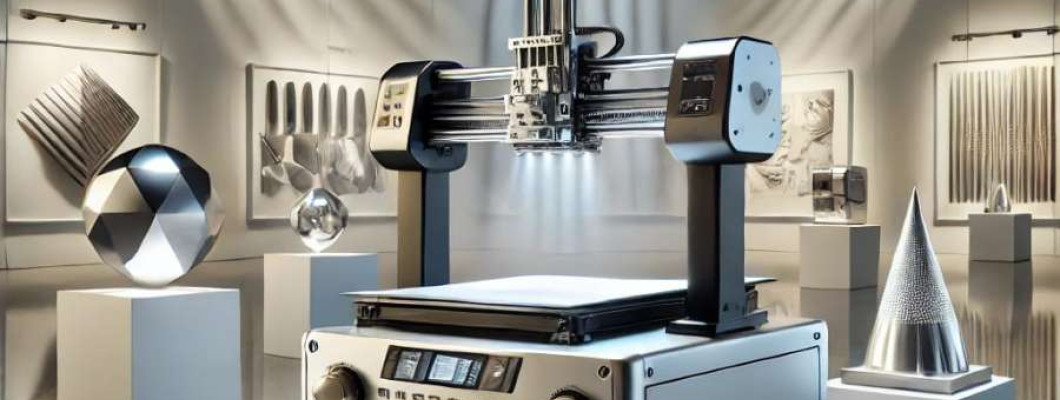
The Industrial Reality of Lifecycle Maintenance Costs in High-Precision UV Printing
In ultra-fine printing environments, such as those demanded by high-end artisans, the longevity and maintenance demands of hardware directly influence output quality and operational efficiency. When applied to an A2+ size UV printer that delivers embossed glossy finishes, lifecycle maintenance costs become a pivotal metric. These printers operate at the nexus of mechanical precision and chemical complexity, where printhead integrity and ink stability degrade over time due to abrasive UV-curable inks and the embossed gloss application process that involves additional curing intensities and mechanical pressure.
The operator faces a challenge balancing throughput, micron-level detail retention, and equipment uptime. Frequent servicing intervals disrupt production schedules, especially in bespoke workflows where color depth and substrate versatility are non-negotiable. Such maintenance includes printhead nozzle cleaning, UV lamp replacement, firmware updates, and calibration of embossing rollers, all of which escalate non-obvious operational expenses.
For high-end artisans reliant on A2+ UV printers, the reality is that asset depreciation cannot be fully separated from ongoing maintenance costs, as these intimately affect achievable print fidelity and time-to-delivery. A lifecycle cost assessment allows an operator to forecast print runs evolution, including the impact of printhead wear rates on droplet size consistency and ink adhesion, which in turn define the gloss embossing precision essential to upscale product finishes.
Technical Deep-Dive into Lifecycle Maintenance and Output Precision
Printhead Wear and Droplet Volume Stability
The A2+ UV printer employs piezoelectric printheads with nozzle diameters averaging 20–30 microns, ejecting droplets sized around 10 picoliters (pl). Over an operational period extending 4,000 to 8,000 print hours, nozzle erosion from UV ink particulates and curing stresses results in a gradual deviation of droplet volume by approximately 3–5%, impacting embossed gloss uniformity.
Mathematically, assuming initial droplet volume V_0 = 10 pl and linear degradation rate k = 0.0005 pl/hour, after t hours, V_t = V_0 - k * t. At t=8,000 hours, V_t = 10 pl - 4 pl = 6 pl, indicating critical printhead replacement thresholds.
Ink Chemistry and Maintenance Cycles
UV-curable inks optimized for embossed gloss finishes contain photoinitiators and oligomers that polymerize rapidly under UV light. However, their viscosity (typically 30–40 cP at 25°C) and reactive components accelerate sedimentation and nozzle clogging. Maintenance cycles, including ultrasonic cleaning every 50 operational hours and ink system purging every 200 hours, are vital to prevent downtime but add labor and consumable costs.
Embossing Mechanism Calibration
The embossed glossy effect is achieved by integrating a precision embossing roller downstream of the UV curing module. The roller requires calibration within a tolerance of ±0.02 mm to maintain embossing depth consistency at the micron level. Misalignment results in gloss distortion or substrate damage, necessitating recalibration every 500 print hours.
Component Comparison Table
| Parameter | Standard UV Printer | A2+ UV Printer Embossed Glossy |
|---|---|---|
| Printhead Nozzle Diameter (microns) | 25–30 | 20–30 (higher precision) |
| Droplet Volume Stability (pl over 8,000 hrs) | +/- 7% | 3–5% |
| Maintenance Cycle Frequency (hours) | Every 100 (cleaning) | Every 50 (ultrasonic cleaning) |
| Embossing Roller Calibration Tolerance (mm) | Not Applicable | +/- 0.02 |
| Ink Viscosity (cP at 25°C) | 20–30 | 30–40 (formulated for gloss) |
Firmware and Software Influence on Maintenance
Advanced firmware algorithms monitor printhead pulse timing and adjust for ink droplet trajectory in real time, reducing manual recalibration frequency. However, firmware updates or patches require scheduled system downtime and add to lifecycle costs, estimated at 12–20 hours per annum for high-end units.
Thermal Impact on Component Lifespan
UV curing lamps generate localized heat spikes reaching up to 70°C. Thermal cycling stresses mechanical interfaces and electronic components, accelerating wear. Effective thermal management extends maintenance intervals but requires additional infrastructure investments.
Scenario Analysis of Business Use-Cases for High-End Artisan Printing
Scenario One Small Batch Luxury Packaging
For limited runs of luxury packaging requiring variable embossed glossy patterns, the printer's micron-level emboss precision and stable ink behavior ensure consistent tactile finishes. Lifecycle maintenance costs are offset by the low volume, high-margin output, but downtime during servicing could delay delivery by up to 48 hours, necessitating buffer scheduling.
Scenario Two Custom Interior Decor Panels
Printing on diverse substrates such as acrylic and metal sheets demands frequent emboss roller recalibration. The workflow's complexity elevates maintenance labor costs but achieves unparalleled surface gloss depth and dimensional embellishment, justifying the investment in proactive lifecycle servicing.
Scenario Three Art Reproductions for Galleries
Micron-level droplet control is critical to reproduce color gradations in emboss highlights. The printer's firmware compensations reduce printhead wear impacts, allowing continuous runs of up to 6,000 hours before major overhaul, enhancing ROI amid high precision requirements.
Expert FAQ on Lifecycle Maintenance Costs Affecting High-End Artisan Output
Q1: How does printhead erosion specifically affect embossed gloss consistency?
A1: Erosion causes droplet size variability which leads to uneven UV curing depths on embossed areas, resulting in gloss irregularities perceptible at micron scales.
Q2: What preventative maintenance strategies are most cost-effective?
A2: Scheduled ultrasonic cleaning and ink purging protocols minimize clogging and nozzle failure, reducing emergency downtime and extending printhead life by up to 30%.
Q3: Can firmware updates reduce lifecycle costs?
A3: Yes, advanced firmware improves droplet accuracy and compensates for mechanical wear, delaying hardware replacements and improving uptime.
Q4: How critical is thermal management in maintaining embossed gloss quality?
A4: Thermal control prevents heat-induced deformation of the embossing roller and printhead electronics, maintaining surface finish integrity.
Q5: What is the expected ROI horizon considering maintenance cycles?
A5: With routine maintenance optimized, ROI can be realized within 18–24 months for businesses prioritizing high-precision, low-volume runs.
Strategic Verdict and Recommendation for Industrial-Grade High-End Artisan Printing
In evaluating the A2+ Size UV Printer Embossed Glossy Printing through the lens of lifecycle maintenance costs and micron-level precision demands, it stands out as an industrial-grade solution tailored for high-end artisan applications. While the incremental maintenance investment is significant, it is commensurate with the output quality and substrate versatility offered. The printer’s precision engineering and advanced firmware compensate for wear impacts, optimizing uptime and throughput.
This product aligns with artisan operators who prioritize color depth fidelity and embossed gloss uniformity without compromising on asset longevity. The maintenance cycles, though frequent, are manageable within structured workflows, allowing predictable operational costs and sustained performance. Overall, it presents a clear path for businesses to scale their craft-focused printing with technological reliability and controlled lifecycle expenditure.