
Evaluating Industrial Viability and Operational Realities of the A3 DTG Printer T-shirt Printing Machine for Scalable Print Businesses
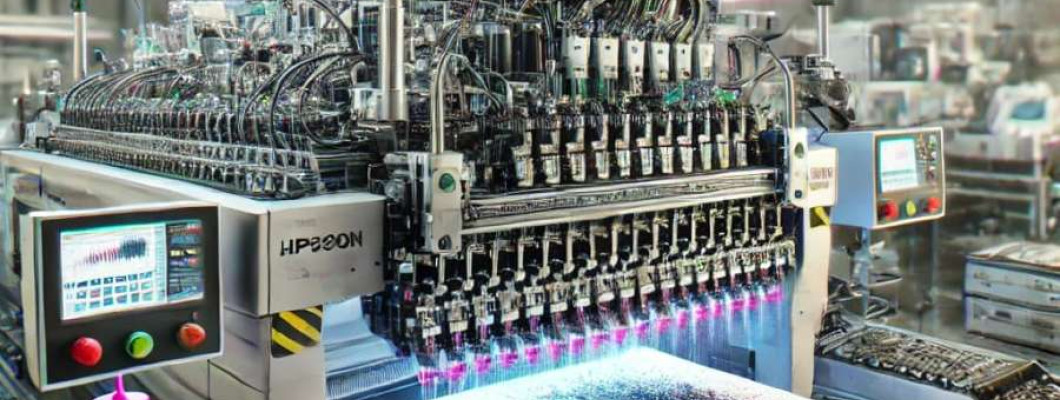
The Industrial Reality of Integrating the A3 DTG Printer into Mid-Scale Production
Commercial textile printing enterprises face a multitude of operational challenges when scaling from artisanal to industrial output, particularly when incorporating Direct-to-Garment (DTG) technology. The A3 DTG Printer T-shirt Printing Machine situates itself at this nexus, purporting suitability for scalable business owners targeting throughput maximization while controlling labor and operational costs.
A primary technical obstacle lies in the balance between print speed and color accuracy given the intrinsic limitations of piezoelectric printhead mechanics. Operating in a high-turnover environment demands not only rapid print cycles but also consistent maintenance to avoid prolonged downtime and quality degradation. For instance, the printer’s capacity to maintain a nominal 300x600 dpi resolution at throughput rates of up to 15 shirts per hour must be assessed against mechanical wear rates under continuous load.
Another critical factor involves the integration of automation features in loading/unloading garments and ink management. Companies dependent on manual intervention risk bottlenecks that disproportionately inflate labor costs and reduce effective output. The A3 DTG Printer’s design, including its substrate handling mechanisms and ink delivery system, determines the degree of workflow streamlining achievable without excessive bespoke engineering adaptations.
Thermal regulation within the printhead assembly also factors into print quality consistency and uptime reliability. Prolonged operation increases the risk of nozzle clogging and color banding, resulting in defective outputs requiring costly reprints. An industrial environment demands printheads tolerant of sustained cycles with built-in self-cleaning protocols and efficient thermal dissipation.
In summary, the industrial reality for scalable businesses adopting this A3 DTG Printer centers on managing throughput demands while controlling operational inefficiencies inherent in mid-tier DTG technology. This necessitates a granular technical understanding of the printer’s hardware limits and process integration potential.
Technical Deep-Dive into the A3 DTG Printer's Performance and Integration Parameters
Printhead Design and Ink Delivery Mechanics
The A3 DTG Printer uses piezoelectric printheads with a nominal droplet size of approximately 10 picoliters (pl). This droplet size balances line sharpness and drying time but places practical throughput limits. The printhead contains 180 nozzles per color channel, typically CMYK plus white ink for opacity layering on textile substrates.
Under continuous operation, flow rate (Q) per color can be approximated by:
Q = n × d × f
where n = number of nozzles (180), d = droplet volume (10 pl), and f = firing frequency (up to 20 kHz). This yields a theoretical maximum ink ejection of 36 microliters per second per color, subject to mechanical and thermal constraints.
Throughput versus Print Resolution Trade-offs
The printer supports variable dpi settings: 150x300, 300x600, and a high-definition 600x1200 dpi mode. Throughput at maximum resolution (600x1200 dpi) falls sharply to approximately 5 shirts per hour versus 15 shirts per hour at 300x600 dpi, dictated by increased nozzle firings and dwell times.
Calculating approximate print time (T) per garment surface area A (300 mm by 400 mm) at 300x600 dpi:
T = A / (dpi_x × dpi_y × nozzle_count × firing_frequency)
This formula, simplified for practical throughput estimation, indicates nonlinear scaling of throughput with resolution.
Ink Chemistry and Substrate Compatibility
The DTG process requires water-based pigment inks engineered for fabric adhesion and wash fastness. The A3 DTG Printer accommodates cotton-rich textiles primarily but faces challenges on blends with significant polyester content due to ink absorption and fiber coating discrepancies.
Maintenance Cycles and Consumable Lifespan
Printheads require cleaning every 24–48 hours of operation to prevent clogging, particularly with white ink, which is prone to sedimentation. Replacing printheads is predicted every 6–12 months depending on print volume, with individual head costs approximately 20% of initial machine CAPEX.
Automation and Workflow Integration
The machine supports external conveyor interfaces but lacks fully integrated automated garment feeding. Manual handling remains a throughput bottleneck at scale, reinforcing the importance of optimized labor deployment.
Scenario Analysis on Business Use-Cases and Output Optimization
Use-Case 1: Boutique Custom Print Shop Scaling to Online Order Fulfillment
The business demands high customization but moderate batch sizes. The 300x600 dpi setting offers balance in throughput and visual fidelity, with manual handling viable given low volume. Labor costs escalate with volume; thus, applying standard operating procedures around maintenance and ink loading reduces downtime.
Use-Case 2: Mid-Sized Apparel Brand Producing Limited Runs of Seasonal Designs
The priority is rapid turnaround at acceptable quality, favoring lower resolution modes to maintain 15 shirts/hour throughput. Automation investments in garment handling can improve labor efficiency but require significant CAPEX beyond the printer itself. Maintenance planning must mitigate risk of printhead failure during peak demand.
Use-Case 3: Mass Production Environment Integrating DTG into Hybrid Printing Lines
Here, the A3 DTG Printer serves as a finishing station for high-detail applique prints on already processed garments. Resolution is key, so longer print cycles at 600x1200 dpi are acceptable. Workflow integration challenges arise due to limited automation features, necessitating specialized conveyor retrofits and workforce allocation to maintain continuous operation.
Expert FAQ on Technical and Operational Nuances
Q1: How does the thermal management system affect printhead longevity under continuous operation?
The printer employs active cooling via internal fans positioned near the printheads, maintaining nozzle operating temperature below 40°C. Overheating accelerates piezo crystal fatigue and ink drying within nozzles, reducing lifespan from an estimated 12 months to 6 months under excessive thermal stress.
Q2: What are the quantified consequences of operating at 600x1200 dpi on consumable ink usage?
Ink consumption increases by approximately 60% at this resolution compared to 300x600 dpi due to doubled nozzle firings. This impacts OPEX significantly, necessitating budget adjustments for pigment ink procurement.
Q3: Can the printer accommodate dark fabrics without pre-treatment?
Direct printing on dark textiles requires precise pre-treatment to enhance ink adhesion and opacity. The A3 DTG Printer's white ink channel supports this necessity, but manual pre-treatment remains essential to avoid washout and color fading.
Q4: What failure modes are most common in the printhead electronic driver circuits?
Voltage spikes during cleaning cycles and particulate contamination cause intermittent nozzle firing failures. Regular firmware updates and environmental dust control are mitigations.
Q5: How does substrate thickness variation impact nozzle calibration and print uniformity?
Textile thickness variations alter focal distance between nozzles and fabric, risking under or over-saturation. The printer’s fixed carriage height mandates consistent fabric thickness, or otherwise frequent recalibration to maintain print uniformity.
Strategic Verdict and Recommendation for the A3 DTG Printer T-shirt Printing Machine
The A3 DTG Printer T-shirt Printing Machine represents a viable industrial-grade printing solution for scalable businesses prioritizing balanced throughput and quality. While its fixed automation and maintenance requirements constrain ultra-high-volume applications, its operational envelope fits well within mid-tier production environments aiming to optimize labor and output efficiency.
From a technical standpoint, the printer’s printhead design and ink chemistry offer robust print fidelity and color depth given scheduled maintenance and process controls. Integration challenges primarily revolve around workflow automation and thermal management, but these are addressable through modular upgrades and sound operational protocols.
For businesses targeting throughput in the range of 10–15 garments per hour with resolution flexibility, the A3 DTG Printer is a justifiable investment when considering CAPEX amortization against OPEX control. Its print quality meets industry expectations for bespoke and small-batch production runs.
Given these considerations, prospective adopters should assess their existing workflow for compatibility and invest in operational training to maximize uptime and printhead longevity.
Further technical specifics and procurement details are available directly through the official product page at A3 DTG Printer T-shirt Printing Machine.
| Parameter | 300x600 dpi Mode | 600x1200 dpi Mode |
|---|---|---|
| Print Speed (shirts/hr) | 15 | 5 |
| Ink Consumption Increase | Baseline | +60% |
| Maintenance Interval (hours) | 24–48 | 24–48 |
| Printhead Replacement Interval (months) | 6–12 | 6–12 |
| Labor Requirement | Moderate | High |