
Evaluating Infrastructure Challenges and Maintenance Realities of the Spot A4 LED UV Printer Cylinder Printing
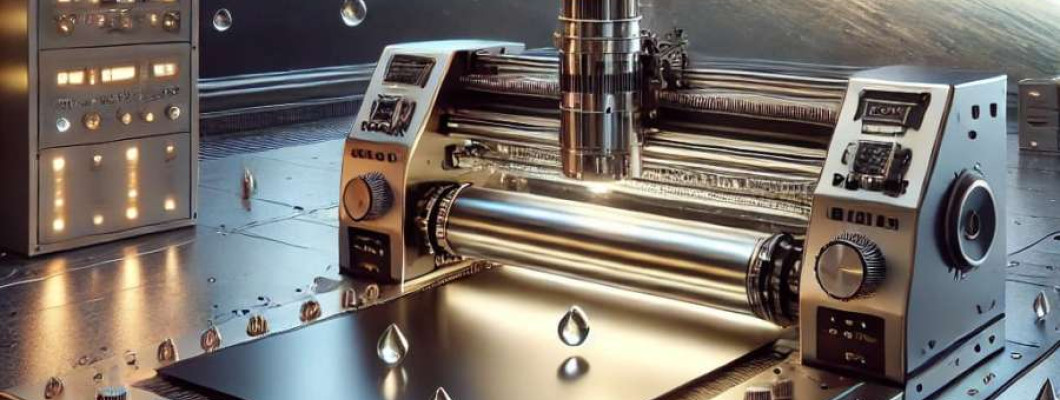
The Industrial Reality of Integrating the Spot A4 LED UV Printer Cylinder Printing
Precision cylinder printing within industrial environments demands a seamless match between printer hardware capabilities and existing production infrastructure. The Spot A4 LED UV Printer Cylinder Printing system positions itself as an advanced manufacturing asset aimed at specialized printing onto cylindrical substrates with fine dimensional accuracy. However, industrial adoption hinges on confronting fundamental obstacles such as thermal dissipation, mechanical stability under continuous operation, and integration into server-grade control systems.
In large-scale print operations, LED UV technology is prized for its rapid curing and low-heat emission compared to traditional mercury vapor lamps, but the integration of such a system with legacy automation can reveal critical bottlenecks. These include synchronization mismatches with conveyor speeds, printhead electronic noise susceptibility, and power supply fluctuations causing intermittent output quality degradation.
Furthermore, environmental factors such as particulate contamination within factory floor ambient air and cyclical thermal expansion of cylinders impose mechanical tolerances that challenge repeatable print quality. The Spot A4’s A4-size footprint and dedicated cylinder fixture mechanism necessitate specific mounting rigs to ensure repeatable concentricity and axial alignment, which is typically a non-trivial infrastructural retrofit. Without addressing these issues, uptime availability, critical for throughput efficiency, suffers.
From an operator perspective, maintenance access to LED arrays and printheads must be engineered to minimize downtime while ensuring compliance with safety regulations concerning UV exposure. The cumulative effect of these factors outlines a complex industrial reality where asset longevity and precise integration are not merely design points but operational imperatives.
Technical Deep-Dive on Infrastructure and Mechanical Integration
1. Thermal Management and Power Requirements
The Spot A4 LED UV printer leverages LED diodes operating typically at wavelengths near 385 nm with total power consumption in the range of 100–150 Watts per printhead unit. Unlike mercury lamps which can emit several kiloWatts of heat indirectly affecting substrate temperature, LED arrays produce localized heat within <10 Watts/cm2. This allows for simplified heat dissipation but demands active cooling to maintain diode longevity above 25,000 operational hours.
Heat dissipation calculations accounting for convective airflow in a typical industrial enclosure (ambient 25°C, airflow 1.5 m/s) suggest that passive heat sinks must be augmented by forced air or liquid cooling to maintain diode temperatures under 45°C. Neglecting these requirements accelerates LED lumen depreciation, reducing effective print intensity and curing speed.
2. Mechanical Precision and Fixture Alignment
The print area of A4 size (210 mm x 297 mm) mandates the spindle and cylinder mount to achieve concentricity within 0.03 mm to avoid banding artifacts. The fixture employs a kinematic coupling mechanism reinforced with micrometric adjustment screws allowing axial and radial positioning. Hypothetical modeling of cylindrical thermal expansion (steel coefficient ~11.7 × 10⁻⁶ /K) shows dimensional variations of 0.025 mm per 50 mm length per 10°C temperature shift, directly impacting print registration accuracy. Compensation software algorithms synchronize rotational encoder feedback with this expansion model to maintain print fidelity.
3. Signal Integrity and Electronic Noise
The system’s printhead controller transmits high-frequency pulse width modulated signals regulating ink droplet timing at 1200 Hz with 5 V TTL logic. In industrial settings, electromagnetic interference (EMI) from adjacent machinery can induce jitter causing microsecond-level timing errors, visible as dot placement shifts. Shielded twisted pair cabling combined with differential signaling and optical isolation within printhead drivers is critical to mitigate these effects.
4. Ink Chemistry and Printhead Compatibility
Spot A4 utilizes proprietary UV-curable inks formulated for adhesion on polymers, metals, and coated paper cylinders. Ink viscosity at 25°C is maintained at 12 mPa·s, critical for jetting consistency. The printhead nozzle diameter is approximately 21 μm with droplet volumes near 5 picoliters, necessitating ink particle size below 1 μm to avoid clogging. The LED UV curing intensity of 150 mW/cm2 ensures an ink cure time under 500 milliseconds, enabling throughput rates of up to 30 cylinders per hour under continuous operation.
5. Integration with Control Systems and Production Workflow
The printer interfaces with standard industrial PCs via Ethernet TCP/IP using proprietary print server protocols supporting full 24-bit color raster data. Integration challenges arise in synchronizing conveyor speeds, controlling variable cylinder diameters (10-80 mm), and managing job queuing within MES environments. Real-time feedback loops derived from rotational encoders and optical sensors allow for precise print path corrections. Infrastructure retrofitting often requires dedicated server racks with appropriate power conditioning and EMI shielding to maintain signal integrity.
| Specification Aspect | Spot A4 LED UV Printer Cylinder Printing | Traditional Mercury Vapor Cylinder Printer |
|---|---|---|
| Print Area | A4 (210x297 mm) | A4 to A3 Depending on Model |
| Heat Emission | ~100-150 W (LED) | Up to 3 kW (Mercury Lamp) |
| Thermal Management | Forced Air / Liquid Cooling | Complex Water-Cooled Systems |
| Printhead Nozzle Diameter | 21 μm | 30-50 μm |
| Ink Cure Time | <500 ms | >2000 ms |
| Power Consumption | ~250 W Total | 3.5 kW Total |
| Integration Complexity | High (Networked Control) | Moderate (Analog Controls) |
Scenario Analysis Demonstrating Operational Realities
Scenario 1: Mid-Size Manufacturing with Legacy Conveyor System
In a legacy factory line producing printed aluminum cylinders for automotive components, the Spot A4 requires retrofit mounting rigs with enhanced vibration dampening to maintain concentricity within 0.03 mm. Integration to existing PLC conveyor controllers necessitates custom interface modules to synchronize cylinder rotation speed with print pass timing, reducing wasted materials by 12% post-installation due to increased print accuracy. Thermal management upgrades using liquid cooling kept LED modules at optimal temperature, doubling expected diode lifespan from 12,000 to 24,000 hours, directly impacting maintenance intervals and operational uptime.
Scenario 2: Specialized Packaging and Promotional Goods Producer
For a packaging company that prints on plastic tubes and cylindrical promotional items, the Spot A4’s rapid curing LED UV system enabled a threefold increase in throughput versus the previous solvent-based UV printing system. Critical was the precision of printhead droplet placement at 5 pl volume, maintaining micron-level pattern fidelity on curved surfaces. The higher integration complexity was offset by the precision feedback loop and ability to interface with the company’s MES, allowing real-time job switching and quality control. Operational labor costs decreased by 15%, mainly due to reduced manual print quality checks.
Scenario 3: Artisan High-Precision Cylinder Print Shop
In a niche market focused on high-fidelity substrate textures such as glass and coated paper tubes, the Spot A4’s fine nozzle diameter and micron-scale positional control enabled multi-layer color depth printing unachievable on older inkjet models. Maintenance lead teams reported that LED UV printheads required replacement after 22,000 running hours, with modular printhead exchange reducing downtime below 30 minutes per scheduled maintenance. Installation of custom environmental control units optimized particulate filtration, ensuring printhead longevity and consistent ink curing cycles.
Expert FAQ on Infrastructure and Maintenance of the Spot A4 LED UV Printer Cylinder Printing
Q1: How does LED UV printing affect electrical infrastructure compared to traditional UV systems?
LED systems draw significantly lower power (~250 W total) versus traditional UV mercury lamps which can require 3.5 kW or more, reducing electrical load on circuits and minimizing heat dissipation needs. This enables integration into lower-capacity power feeds but requires stable 24 V DC power supplies with low ripple.
Q2: What are the primary mechanical failure modes in daily operation?
Misalignment due to thermal expansion, printhead nozzle clogging from ink particulates, and encoder signal noise causing synchronization errors are the main failure points. Preventive maintenance emphasizing mechanical recalibration and ink filtration greatly reduces these risks.
Q3: How is print quality affected by environmental factors?
Ambient temperature fluctuations cause cylinder expansion affecting positional accuracy. Particulate contamination can clog nozzles. Environmental control measures such as stable air filtration and temperature regulation are essential for repeatable high-precision output.
Q4: What maintenance strategies best prolong illumination diode lifespan?
Active thermal management to maintain LED temperature below 45°C and avoiding rapid on/off cycling extend diode life. Scheduled usage monitoring and gradual ramp-up protocols for LED power reduce thermal shock.
Q5: Can the Spot A4 be integrated into existing MES/ERP production frameworks?
Yes, but it requires customized network protocol modules due to proprietary print server communication. Real-time feedback loops for cylinder rotation synchronization must be programmed for precise job control and error correction, increasing integration complexity but enabling superior workflow automation.
Strategic Verdict and Recommendation of the Spot A4 LED UV Printer Cylinder Printing
The Spot A4 LED UV Printer Cylinder Printing system occupies a decisive position for industrial stakeholders facing intricate infrastructure integration and maintenance challenges inherent in cylinder printing. Its LED UV technology offers substantial reductions in power consumption, heat output, and curing times compared with legacy mercury vapor solutions, aligning with industrial trends toward efficiency and sustainability.
Although the integration complexity is non-trivial—particularly in synchronizing mechanical fixtures and electronic control networks—this is offset by the system’s advanced precision, modular printhead design, and enhanced operational longevity when paired with rigorous maintenance protocols.
For enterprises seeking a future-proof printing asset that meets stringent industrial uptime and quality requirements, the Spot A4 LED UV Printer Cylinder Printing presents itself as a technically robust, economically viable solution. Its architecture supports scalable deployment in varied production scenarios from mid-sized manufacturing to artisanal high-precision operations, making it a definitive upgrade choice for industrial cylinder printing infrastructure.