
Evaluating Infrastructure Integration Challenges of the A3 UV DTF Printer Multifunction Printing Machine for Scalable Business Owners
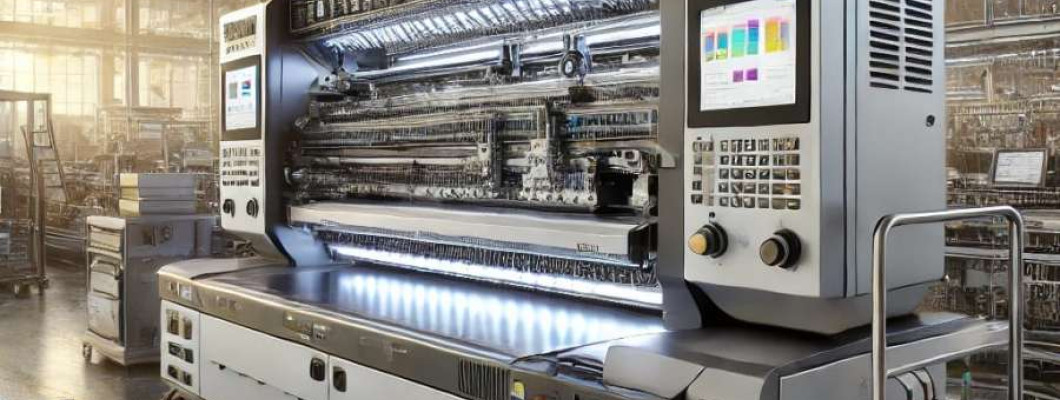
The Industrial Reality of Integrating the A3 UV DTF Printer into Complex Production Environments
Modern scalable businesses face an increasing demand for versatile, high-throughput printing solutions that seamlessly mesh with existing infrastructure. The A3 UV DTF Printer Multifunction Printing Machine emerges as a contender designed to meet diverse printing needs, but its integration within established production workflows presents intricate technical challenges. Consider a mid-sized apparel decorating facility processing 500+ units daily with variable print jobs and substrate types. Introducing a multifunction printer with UV curing and direct-to-film (DTF) capabilities demands rigorous assessment of physical layout constraints, utility provisioning, data interface compatibility, and process synchronization.
Unlike monofunction printers, multifunction machines like the A3 UV DTF Printer impose dynamic electrical loads—UV lamps can reach peak power consumptions upwards of 600 watts, while integrated heating elements for adhesive powder curing can add transient spikes. Effective integration requires upgrading power distribution units to handle these loads without triggering circuit breakers or causing voltage drop that could degrade print quality. Additionally, thermal management strategies must counteract heat dissipation within tightly packed print bays; inadequate airflow risks component overheating and premature failure.
Data communication bottlenecks further complicate seamless workflow integration. The printer’s typical use of USB 3.0 and Ethernet interfaces must align with existing Print Server protocols and network segmentation to minimize latency and packet loss during high-resolution print data transfers, which can exceed 1GB per job at 1200 dpi. Synchronizing the printer with automated material handling systems also hinges on reliable triggering and status feedback signals, often requiring customized I/O modules.
Technical Deep-Dive into Key Infrastructure Integration Parameters
1. Power and Electrical Load Analysis
The A3 UV DTF Printer’s multifunction architecture drives peak electrical demands, notably from:
- UV LED curing units (max 600 W)
- Heated adhesive powder stations (approx. 400 W)
- Printhead actuators and ink circulation pumps (~150 W)
Cumulative peak power surges can reach 1.15 kW within sub-second intervals during print cycles. The facility’s power supply and distribution system must accommodate these transient loads with minimal voltage ripple (under 5%) to avoid printhead misfiring or ink jet deflection.
Using Ohm’s Law and power factor correction calculations, an industrial-grade UPS and dedicated circuits with at least 20A capacity per unit are advised. Overcurrent protection devices with swift trip curves minimize downtime risks.
2. Thermal Management and Ambient Heat Dissipation
Thermal modeling using Computational Fluid Dynamics (CFD) predicts heat flux from combined UV lamp emission and heated powder stations to exceed 350 W/m2 at 0.5m from the machine. Efficient exhaust ventilation or forced air cooling is critical to maintain ambient temperatures under 30°C to sustain printhead reliability and consistent ink viscosity.
3. Data Throughput and Network Integration
Given the typical file sizes of 2-3 GB for complex A3 prints at 1200 dpi and 6-color layering, USB 3.0 bandwidth (theoretically 5 Gbps) suffices under ideal conditions but can be affected by cable quality and system interface. Ethernet at 1 Gbps offers more consistent performance and facilitates remote queue management and firmware updates.
4. Physical Footprint and Floor Layout Considerations
The printer occupies roughly 1.2 m2 with an operational height of 1.5 meters, including room for access doors and maintenance clearances (recommended 0.5 m clearance on all sides). Workflow efficiency correlates with ergonomically positioned input/output racks and integration with conveyor automation, necessitating precise floor plan adaptations.
5. Compatibility with Existing Production Control Systems
Industrial print environments typically deploy MES (Manufacturing Execution Systems) or ERP-linked print job schedulers. The A3 UV DTF Printer supports standard RIP (Raster Image Processor) protocols but may require middleware for seamless interoperability with proprietary MES platforms, especially for job status polling and error event logging.
| Integration Parameter | Legacy Monofunction Printer | A3 UV DTF Printer Multifunction |
|---|---|---|
| Max Power Load (W) | 400 | 1150 |
| Thermal Dissipation (W/m2) | 180 | 350 |
| Data Interface | USB 2.0, Ethernet 100 Mbps | USB 3.0, Ethernet 1 Gbps |
| Required Floor Space (m2) | 0.8 | 1.2 + clearance |
| MES Compatibility | Basic RIP-only | RIP + Middleware Potential |
Scenario Analysis on Business Use Cases
Case One The High-Volume Apparel Decorator
A business producing 700+ A3-sized prints daily requires continuous uptime and rapid job switching. The printer’s multifunction feature reduces the need for multiple machines but necessitates robust cooling and power infrastructure upgrades. Network integration ensures print jobs are queued and monitored remotely, reducing labor overhead.
Case Two The Regional Print-on-Demand Retailer
This retailer benefits from the printer's versatility to print on diverse substrates, including heat-sensitive materials. Integration with POS software through middleware enables just-in-time production, though power infrastructure must be carefully mapped to prevent workflow disruption due to sudden power surges.
Case Three The Educational and Prototype Lab
Institutes deploying the printer for prototyping require modular integration within existing lab infrastructure. The printer’s software openness allows for customization, but physical footprint and dedicated ventilation often call for workspace renovations to maintain environmental safety and compliance.
Expert FAQ on Infrastructure Integration Challenges
Q1 What is the recommended electrical setup to avoid voltage fluctuations?
Implement dedicated circuits with 20A breakers, use UPS systems rated for 1.5 kW minimum, and conduct power factor correction analysis to stabilize loads.
Q2 How effective is passive cooling for thermal management in a tight print bay?
Passive cooling is insufficient beyond 0.8 m proximity; forced air or localized exhaust systems are essential to maintain sub-30°C ambient temperature.
Q3 Can existing Ethernet infrastructure handle the printer’s data throughput without upgrades?
Legacy 100 Mbps networks will bottleneck data; upgrading to Gigabit Ethernet is advisable for consistent high-resolution print job transfers.
Q4 Is middleware customization mandatory for MES integration?
Yes, especially where proprietary scheduling systems are used; middleware bridges communication gaps for job status and error reporting.
Q5 How does increased footprint impact workflow ergonomics?
Reconfiguration of material handling paths and operator access zones is required to maintain efficiency and safety with the larger multifunction footprint.
Strategic Verdict and Recommendation for Scalable Business Owners
In conclusion, the A3 UV DTF Printer Multifunction Printing Machine represents a technologically advanced, multifunctional printing system that can decisively elevate production capabilities within scalable business environments. While integration demands considerable upgrades in power distribution, thermal management, and network infrastructure, the machine’s broad substrate compatibility and multifunction utility justify these investments. Businesses aiming for high throughput and operational flexibility will find this unit capable of reducing machine counts and streamlining workflows, provided planned infrastructure adaptations are rigorously implemented.
For decision-makers carefully balancing CAPEX and OPEX while architecting future-proof operations, the careful integration of the A3 UV DTF Printer Multifunction Printing Machine offers a pragmatic balance of innovation and industrial reliability. Its advanced electrical and data interfaces align with modern enterprise demands, making it a recommended asset for production optimization in competitive sectors.