
Evaluating Lifecycle Maintenance Costs of the Smart Coffee Printer Machine for Scalable Businesses
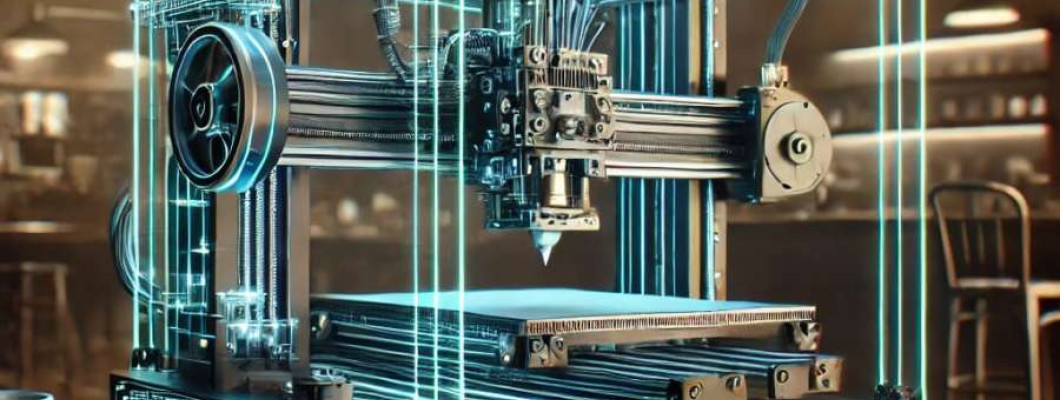
The Industrial Reality of Maintaining High-Precision Coffee Printing at Scale
Modern scalable businesses in the hospitality and event sectors increasingly seek innovative solutions to differentiate customer experience without sacrificing operational efficiency. The Smart Coffee Printer Machine introduces a novel capability: directly printing intricate designs and text atop coffee foam. While visually captivating, integrating such technology into high-throughput environments exposes distinct lifecycle maintenance challenges. The interplay between precise mechanical actuation, ink chemistry compatibility with edible media, and continuous operational demands means that early-stage adoption requires a thorough understanding of maintenance cycles, component longevity, and downtime costs.
Consider a chain of cafés deploying multiple units to serve hundreds of daily orders. Each machine demands regular calibration of its printheads, cleaning protocols to prevent nozzle clogging from natural coffee oils and froth residue, and scheduled replacement of consumable components such as UV-curable edible inks and precision stepper motors. Failure to anticipate maintenance complexity can escalate labor overhead and erode the expected return on investment. Furthermore, unplanned breakdowns not only stall throughput but risk damaging brand reputation during peak hours.
In the context of scaling, the maintenance lead must ensure that every Smart Coffee Printer Machine operates near peak uptime without compromising print quality. Achieving this balance requires granular data on the degradation patterns of print nozzles, thermal stress endured by electronic control boards, and the chemical stability of proprietary ink formulations over time. Only with a robust lifecycle maintenance plan can the operational bottlenecks inherent in novel additive printing on coffee surfaces be mitigated effectively.
Technical Deep-Dive into Lifecycle Maintenance Costs
Printhead Degradation Under Operational Stress
The Smart Coffee Printer employs piezoelectric printheads designed for high-resolution patterning at an approximate droplet size of 15 picoliters (pl) with positional precision of ±0.02 mm. Assuming an average daily output of 500 prints, nozzle firing count reaches approximately 7.5 million per day. Given industry-standard mean time to clog (MTTC) for food-grade inkjet nozzles ranges between 50 to 75 million firings, a replacement cycle of roughly 10 to 14 days is projected under continuous operation.
Ink Chemistry and Consumable Stability
The edible inks formulated for the printer contain organic pigments suspended in a water-based medium optimized for stability within 30°C to 45°C operating temperatures. Their shelf life mandates refrigerated storage, with a maximum opened-use window of 7 days before pigment sedimentation affects print consistency. This infers a continuous logistical need for cold-chain management and inventory rotation to avoid non-compliant ink batches that degrade print quality and increase nozzle blockage.
Thermal and Mechanical Wear on Motion Assemblies
The precision X-Y gantry system utilizes micro-stepper motors rated for continuous duty cycles of 80,000 hours, with thermal sensors integrated to monitor coil temperature peaks. Under thermal loading conditions typical of high ambient café environments (~30°C) and operational heat dissipation (~5 W per motor), thermal fatigue manifests primarily as slight backlash increases over 12-month periods, requiring recalibration every quarter to maintain micron-level registration fidelity.
Scheduled Maintenance versus Unplanned Downtime Costs
Table 1 contrasts two maintenance strategies over a 12-month horizon for a network of 10 machines printing 500 units daily:
| Maintenance Aspect | Scheduled Maintenance | Reactive Unplanned Repairs |
|---|---|---|
| Printhead Replacement Frequency | 12 per year (monthly) | Variable, average 18 per year |
| Average Downtime per Incident | 2 hours (planned) | 8 hours (emergency) |
| Labor Cost per Incident | 80 USD | 320 USD |
| Operational Loss per Hour ($) | 150 USD | 600 USD |
| Total Annual Maintenance Cost | 22,560 USD | 46,080 USD |
Data indicates that proactively scheduled maintenance reduces both costs and downtime impact by more than 50%, justifying the investment in maintenance planning.
Raw Data Analytics for Predictive Maintenance Implementation
Integrating IoT-enabled sensors for nozzle pressure, temperature, and vibration can generate datasets enabling predictive algorithms to forecast imminent failures. Applying a machine learning model trained on 12 months of operational data could reduce unnecessary maintenance cycles by 25%, optimizing consumable usage and labor deployment.
Scenario Analysis of Business Use-Cases
1. High-Capacity Café Chains
In chains serving 1,000+ customers daily, throughput and uptime are critical. The Smart Coffee Printer’s tight maintenance scheduling ensures consistent print quality across locations, reducing labor unpredictability while maintaining experiential differentiation in competitive markets.
2. Event Catering Services
For mobile event setups requiring quick deployment and breakdown, the device’s modular consumable cartridges and intuitive maintenance alerts facilitate rapid turnaround. However, environmental factors such as temperature fluctuations demand enhanced storage and handling protocols for inks.
3. Premium Artisan Coffee Shops
Shops focused on micron-level print detail benefit from the Smart Coffee Printer’s precision but must prioritize stringent maintenance to avoid printhead clogging that diminishes aesthetic fidelity, directly impacting brand perception.
Expert FAQ
Q1: What is the expected mean time between failure (MTBF) for the printheads under continuous operation?
Estimated MTBF is approximately 70 million firings, translating to a 10-14 day lifespan at 500 prints/day before replacement.
Q2: How does ink sedimentation affect nozzle performance?
Ink pigment sedimentation increases viscosity and particulate obstruction, leading to nozzle clogging. Using refrigerated storage and adherence to consumption windows mitigates this risk.
Q3: Can thermal management extend component lifespan?
Yes, maintaining operating temperatures below 40°C using ambient cooling and embedded sensors reduces thermal fatigue on motors and circuit boards, extending recalibration intervals.
Q4: What predictive maintenance capabilities can be integrated?
IoT sensors combined with AI models can analyze pressure and vibration anomalies to forecast printhead or motor failures, enabling just-in-time maintenance.
Q5: How do unplanned repairs impact total cost of ownership?
Reactive repairs approximately double annual maintenance costs and increase downtime by 400%, negatively affecting machine availability and throughput.
Strategic Verdict and Recommendation
The Smart Coffee Printer Machine represents a pioneering advance in industrial-scale edible printing technology, particularly suited for scalable businesses requiring a blend of automation and high-quality output. Our analysis underscores that while operational maintenance demands are non-trivial, they are manageable with disciplined scheduling, environmental controls, and emerging predictive maintenance frameworks. The financial logic demonstrated in reduced downtime and consumable waste positions the Smart Coffee Printer as a viable asset within precision beverage preparation lines.
Organizations should proactively invest in upskilling maintenance personnel on printhead mechanics, ink chemistry handling, and sensor data interpretation to maximize asset longevity. The modular design and IoT readiness make this machine adaptable for evolving business requirements.
For those evaluating enterprise-grade coffee printing technology, the Smart Coffee Printer Machine stands out as a recommended, industrial-grade solution balancing innovative output with sustainable maintenance costs and operational scalability.