
Evaluating Roll Laminators Single Side Laminating Machines Through Infrastructure Integration Challenges for Scalable Businesses
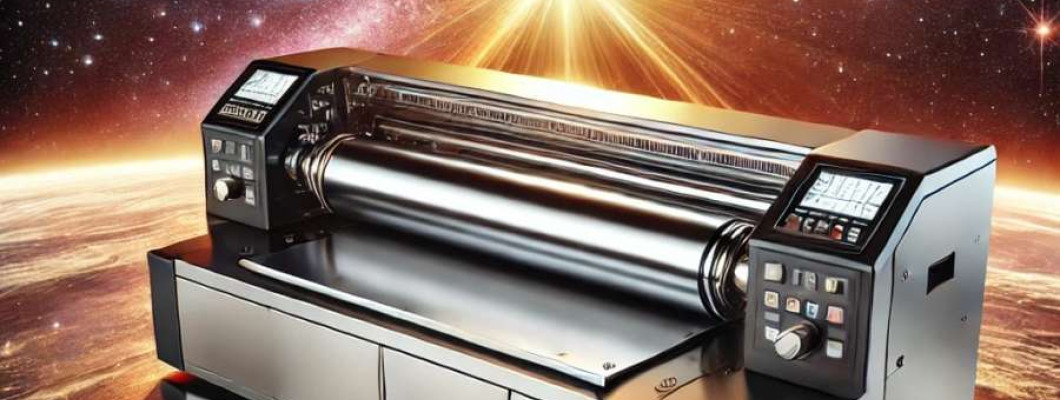
The Industrial Reality of Integrating Roll Laminators in High-Volume Production Lines
Consider a mid-sized packaging firm tasked with upgrading their finishing line to meet rising market demands without halting current operations. Integrating a Roll Laminator Single Side Laminating Machine into existing workflows challenges not only floor space allocation but also power supply reliability, thermal management, and control system interoperability. This scenario highlights the complexities of embedding such equipment inside industrial infrastructures designed primarily for printing and post-press finishing. Inefficient integration risks downtime, degraded throughput, and compromised product quality.
The laminator's single-side lamination mechanism, while conceptually straightforward, imposes nuanced requirements on upstream and downstream machinery. The tension control systems must synchronize to prevent substrate wrinkling or curling, demanding precision motor control and feedback loops. Power demands spike during warm-up cycles; ignoring these transient loads may trigger breaker trips or cause voltage fluctuations impacting other devices. Thermal dissipation from heated rollers presents a further challenge in confined spaces common in scalable manufacturing environments, demanding robust ventilation strategies or heat-exchange systems.
Technical Deep-Dive into Infrastructure Integration Challenges
Power and Thermal Management
Industrial laminators typically consume between 1.5kW and 3kW during operation, with peak surges reaching 4kW during initial heat-up phases. For a single-side laminator with heated rollers operating at 120°C, this translates to approximately 2.7kW continuous thermal output requiring dissipation. Failure to manage this heat load can degrade electronic components and reduce roller lifespan. Fan-assisted ventilation or liquid cooling loops rated for a minimum of 300 W/m2 heat extraction mitigate these risks. Considering facility power infrastructure, dedicated circuits with 20% margin beyond maximum current draw ensure stable performance.
Control System Integration and Automation Compatibility
Modern roll laminators connect to supervisory control and data acquisition (SCADA) systems or programmable logic controllers (PLCs) using standard industrial protocols such as Modbus or EtherCAT. The challenge lies in ensuring sensor feedback—roller speed, tension, temperature—is accurately communicated and processed in real-time to adjust motor speed and nip pressure dynamically. Latency above 50ms in control loops can cause visible defects in lamination, such as inconsistent adhesion or surface bubbles. Selecting laminators with open protocol support and standardized I/O interfaces reduces integration complexity.
Physical and Footprint Constraints
Typical dimensions of a single-side laminator range from 1.5 meters length by 0.6 meters width, with a weight between 150 and 250 kg depending on frame materials. This imposes spatial challenges when retrofitting into existing finishing lines with constrained aisle widths less than 1.2 meters. Modular machine designs or foldable entry points facilitate installation logistics. Vibration isolation mounts attenuate mechanical transmission to surrounding structures, preserving print quality on upstream presses.
Substrate Handling and Throughput Synchronization
Substrate tension control is fundamental. Assuming a 500 mm wide polyester film at a lamination speed of 5 m/min, tension variance must be limited to ±0.2 N to avoid wrinkling. Closed-loop tension controllers must integrate with upstream unwinders and downstream rewinders to maintain equilibrium. Throughput synchronization requires buffering zones or servo-interlinked rollers to compensate for speed mismatches exceeding 0.1 m/min, which would otherwise cause slack or stress peaks and impact product integrity.
Reliability and Maintenance Integration
Facility maintenance schedules must account for roller surface wear, heater element degradation, and motor brush replacements. Monitoring systems embedded in advanced laminators provide predictive analytics to schedule downtime before failures occur. Integrating these alerts with existing computerized maintenance management systems (CMMS) reduces unplanned stoppages and optimizes labor deployment.
| Aspect | Standard Laminator Integration | Advanced Integration with Control Systems |
|---|---|---|
| Power Consumption (Continuous) | ~2.0 kW | 2.7 kW with peak surge management |
| Thermal Dissipation Required | ~1.5 kW passive | 3.0 kW active cooling recommended |
| Control Protocols | Proprietary I/O | Modbus, EtherCAT compatibility |
| Tension Control Accuracy | ±0.5 N | ±0.2 N closed-loop feedback |
| Footprint | 1.5 m x 0.6 m standard | Modular or foldable design options |
Scenario Analysis of Business Use Cases
Case 1 Industrial Packaging Upgrade
A packaging line with 3 existing lamination machines requires a single-side laminator integration to increase coating variety without significant downtime. The facility’s limited electrical capacity and no active HVAC system initially pose challenges. Upgrading power circuits and installing forced cooling resolved overheating issues, allowing the new laminator to operate at 3.5 m/min continuously, boosting output by 12%. The modular machine footprint minimized line disruption during installation.
Case 2 Print Shop Expanding to High-Volume Runs
A commercial print shop expanding its finishing services implemented a single-side laminator with built-in PLC control. Real-time tension synchronization with upstream printers prevented substrate distortion. Though initial control system setup extended commissioning by two weeks, throughput improved from 45 to 70 sheets per minute at 250-micron substrates without defects, demonstrating the value of integrated automation in workflow scaling.
Case 3 Government Document Security Lamination
For secure document production, the laminator’s ability to maintain precise temperature control within ±0.5°C was critical. Integration with the existing SCADA enabled automated logging of operational parameters as compliance evidence. The thermal output required installation of an exhaust fan system to avoid ambient temperature rise affecting sensitive inks, underscoring infrastructure adaptation necessity.
Expert FAQ Addressing Infrastructure Integration Challenges
What power supply considerations are critical for roll laminator integration?
Ensuring circuit breakers and wiring support peak current surges, typically up to 4kW, is critical. Dedicated circuits with surge capacity prevent voltage dips impacting other equipment.
How can thermal dissipation from heated rollers be effectively managed?
Passive venting is often insufficient; forced air or liquid cooling with heat exchangers helps maintain machine operating temperatures and prevent component damage.
What control communication protocols enhance system compatibility?
Open industrial protocols like Modbus and EtherCAT allow seamless integration with existing SCADA or PLC systems for real-time operational control and data logging.
How important is tension control accuracy and how is it achieved?
Maintaining tension within ±0.2 N prevents substrate defects. This requires closed-loop electronic tension controllers interconnected with feeder and rewinder motors.
What are key maintenance integration strategies?
Embedding predictive analytics and integrating alerts into CMMS ensures timely maintenance, minimizing unplanned downtime and optimizing resource allocation.
Strategic Verdict and Recommendation for Scalable Businesses
The Roll Laminator Single Side Laminating Machine is a highly viable choice for businesses seeking to integrate industrial-grade lamination into complex production infrastructures. Its power and thermal management specifications, coupled with compatibility for advanced control systems, position it favorably against legacy equipment. For scalable business owners prioritizing throughput and automation, this laminator addresses critical integration bottlenecks inherent to retrofit scenarios. While upfront expenses on electrical and ventilation upgrades should be anticipated, the resultant improvements in operational stability and product quality justify the investment. The machine’s modular design and extensive sensor feedback enable a sustainable scaling path, ensuring long-term asset reliability and reduced operational disruptions. Thus, the machine stands out as a definitive industrial solution, well suited for environments where infrastructure integration challenges often limit technology adoption.