
Evaluating the 40*60CM Heat Press Machine for Industrial Asset Longevity and ROI
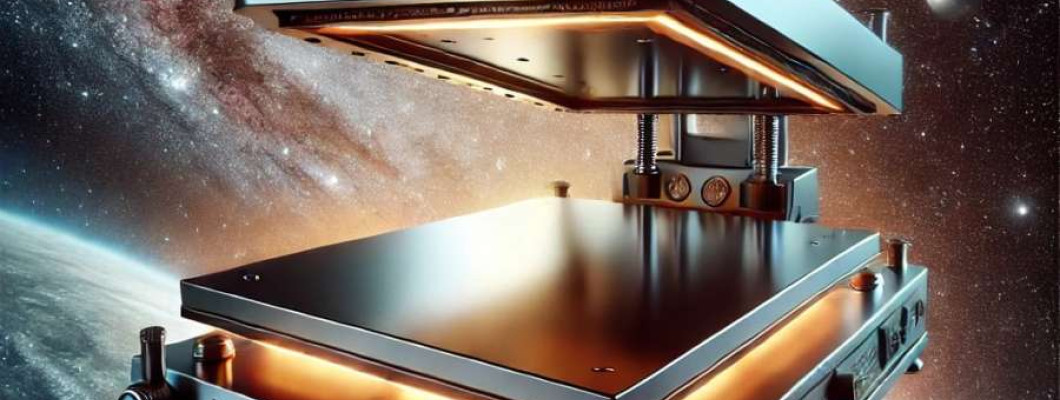
The Industrial Reality of Maintaining Heat Press Assets in Production Environments
Industrial heat press machines operate under rigorous conditions that directly impact their depreciation and return on investment (ROI). For enterprises relying on precision heat application for processes such as textile printing, substrate lamination, or thermal bonding, the balance between upfront capital expenditure and asset longevity is rarely intuitive. Consider a mid-sized production facility processing 500 units daily with a 40*60CM heat press machine. Daily operational uptime, thermal cycling, operator handling, and maintenance schedules all converge to influence both the immediate asset efficiency and cumulative depreciation over a typical 5-year lifecycle.
Heat press systems, especially those with a 40*60cm platen size, must consistently maintain uniform temperature distribution across the platen area to avoid quality inconsistencies that otherwise escalate rework costs and asset downtime. Additionally, the physical robustness of mechanical components such as pressure arms, hydraulic or pneumatic actuators, and electronic controllers must withstand repetitive stress without significant performance degradation. These factors dictate hidden operational costs that, if misunderstood, may cause premature asset obsolescence or unexpected capital refresh cycles that negatively impact financial forecasts.
Industrial-grade presses face challenges from both thermal and mechanical fatigue. Repeated expansions and contractions of the upper platen, often heated to 180-200°C, introduce microstructural metal stresses, which over thousands of cycles can induce warping or loss of flatness. This mechanical drift translates into non-uniform pressure application, reducing print quality and risking substrate damage. The cost implications extend beyond mere repair; they affect throughput, labor efficiency, and ultimately customer satisfaction. Thus, any serious analysis of a 40*60CM heat press machine in industrial contexts must start with understanding these depreciation vectors and their impact on ROI.
Thermal Management and Mechanical Robustness Compared
To place the 40*60CM heat press in context, we examine two different industrial press technologies: the conventional electric platen press versus emerging advanced composite heating presses. Below is a comparative table elucidating key parameters relevant to asset longevity and operational cost management.
| Parameter | 40*60CM Electric Platen Press | Advanced Composite Heating Press |
|---|---|---|
| Platen Temperature Range (°C) | 50-200 | 50-220 |
| Heating Element Type | Resistive Wire Coil | Graphene-Infused Composite |
| Thermal Uniformity (°C variance) | ±5 | ±2 |
| Mechanical Pressure System | Manual or Pneumatic | Servo-Controlled Hydraulic |
| Mean Time Between Failures (MTBF, hours) | 4000 | 6500 |
| Average Power Consumption (Watts) | 1800 | 1500 |
| Asset Depreciation Rate (% per annum over 5 years) | 18 | 12 |
The conventional electric platen press, typified by the 40*60CM Heat Press Machine, exhibits a moderate thermal uniformity with about ±5°C temperature variance and mechanical controls that are simpler but more susceptible to wear. Its depreciation rate reflects typical wear-out mechanisms observed in resistive coil wear and mechanical fatigue in pressure arms. In contrast, advanced composite heating presses benefit from improved heat distribution, reduced power draw, and servo-hydraulic pressure systems which extend operational life and lower ongoing maintenance costs, despite higher initial capital costs.
Mathematical Analysis of Asset Depreciation and ROI
To quantify asset value erosion, consider the straight-line depreciation formula:
Depreciation per year = (Initial Capital Cost - Residual Value) / Useful Life (years)
Assuming a purchase price of $4,000 and a residual salvage value of $500 for the 40*60CM Heat Press Machine with an anticipated useful life of 5 years, annual depreciation equals:
($4,000 - $500) / 5 = $700 per year
This translates to approximately $58 monthly asset depreciation expense. However, integrating operational bottlenecks such as unplanned downtime—estimated at 5% annually due to maintenance and repairs—adds hidden costs. Assuming daily throughput valued at $1000, a 5% downtime causes $50 daily loss, or roughly $12,500 annually. The total operational cost attributable to asset aging thus rises significantly.
Calculating ROI also involves factoring in labor costs due to workflow inefficiencies during maintenance or repair cycles. For example, if an operator earning $20/hour requires 2 hours weekly for machine calibration and minor maintenance, annual labor overhead related to maintenance sums to $2,080.
Material Wear and Contact Pressure Dynamics
Heat press performance also hinges on the consistency of pressure applied across the substrate. The 40*60CM platen area equals 2400 cm2. For a pressure rating of 3 bar (0.3 MPa), the total applied force can be calculated:
Force = Pressure × Area = 0.3 MPa × 0.24 m2 = 72,000 N
This force induces significant mechanical stress on the pressing assembly. Over repeated cycles, material fatigue in components such as the pressure arm pivot points and platen hinges is inevitable. Selection of high-grade alloy steel and precise mechanical tolerances are critical to reducing wear rate and preserving platen alignment. Failure to maintain consistent force distribution directly impacts print quality, leading to potential rework and higher lifecycle costs.
Maintenance Scheduling and Lifecycle Cost Optimization
A critical dimension of lifecycle management is systematic preventive maintenance (PM). For a 40*60CM Heat Press Machine, a PM schedule might include:
- Monthly calibration of temperature sensors to maintain within ±2°C tolerance
- Lubrication of mechanical joints every 3 months
- Quarterly inspection of heating elements for electrical resistance drift
- Annual replacement of silicone rubber platen covers to ensure uniform heat transfer
Neglecting such procedures accelerates depreciation and can double unexpected downtime. From a financial controller's perspective, PM investments offer an ROI via extended service intervals and reduced capital replacement frequency.
Scenario Analysis for Different Business Models
Scenario 1: Print Shop with Moderate Volume
A regional print shop processing 200 custom apparel items daily benefits from the 40*60CM Heat Press's medium platen size, balancing throughput with spatial economy. The manual pressure controls reduce capex but increase dependence on operator expertise for quality consistency. Annual depreciation and maintenance costs align with the $700/year depreciation plus operational overhead, acceptable within their moderate-margin business model.
Scenario 2: Industrial Apparel Manufacturer
In a high-throughput setting with a 24/7 shift schedule, the 40*60CM press may become a bottleneck. Mechanical wear rates increase, and maintenance windows tighten. The business incurs higher operational costs due to downtime, favoring machines with servo-controlled hydraulic systems. Nevertheless, the 40*60CM model can be viable as a supplementary workstation where precision for limited batch sizes is prioritized.
Scenario 3: Custom Product Development Lab
This use case benefits from the press's moderate size and flexibility. Asset longevity is less critical than precision and rapid changeover. The depreciation costs are a smaller fraction of total R&D budgets. Here, the balance of upfront cost and moderate maintenance labor aligns well with the 40*60CM Heat Press Machine specifications.
Expert FAQ
1. How does platen size impact thermal uniformity and asset wear?
Larger platen sizes generally increase temperature gradients due to heat dissipation, necessitating more sophisticated element zoning and feedback control. The 40*60CM size is a balanced format that allows practical uniformity with conventional resistive elements, mitigating the risk of localized over-stressing and wear.
2. What are the common failure modes impacting ROI for heat presses?
Key failure points include heating element burnout, digital controller faults, mechanical hinge fatigue, and platen warping. Each failure type entails different repair timelines and costs. Understanding failure probability distributions is essential for accurate CAPEX forecasting.
3. Can manual pressure mechanisms sustain industrial throughput without precision loss?
While manual systems are cost-effective, they depend heavily on operator skill, making precision and repeatability challenging at scale. Pneumatic or servo-hydraulic systems provide consistent pressure, lowering rework and improving asset utilization.
4. How critical is silicone rubber platen cover condition to process stability?
Cracks or compression set in silicone covers degrade heat transfer efficiency and pressure distribution, increasing scrap rates. Regular replacement is recommended every 12 months to maintain process stability.
5. What power consumption trends should be considered when scaling multiple 40*60CM presses?
Individual machines consume approximately 1800W during heating phases. Multiplying across several units increases electrical infrastructure demands and cooling load, necessitating robust facility power design to prevent bottlenecks and scheduling conflicts.
Strategic Verdict and Recommendation
For industrial operations emphasizing asset longevity and predictable depreciation schedules, the 40*60CM Heat Press Machine presents a strong value proposition. Its balanced platen size, coupled with reliable thermal and mechanical systems, aligns well with medium-scale throughput requirements and manageable maintenance overhead. While alternative technologies featuring advanced composite elements and servo controls promise extended lifecycles and lower operational costs, their elevated capital investment may not justify near-term ROI for many enterprises.
Given the comprehensive analysis of thermal uniformity, mechanical stress factors, maintenance logistics, and financial depreciation, we affirm the 40*60CM Heat Press Machine as a durable and cost-effective industrial asset. It excels particularly where controlled throughput and capital discipline coexist as priorities.
For further technical and purchasing details, please refer to the official product resource at 40*60CM Heat Press Machine.