
Evaluating the A2+ Size UV Printer Embossed Glossy Printing for Lifecycle Maintenance Costs in Industrial Applications
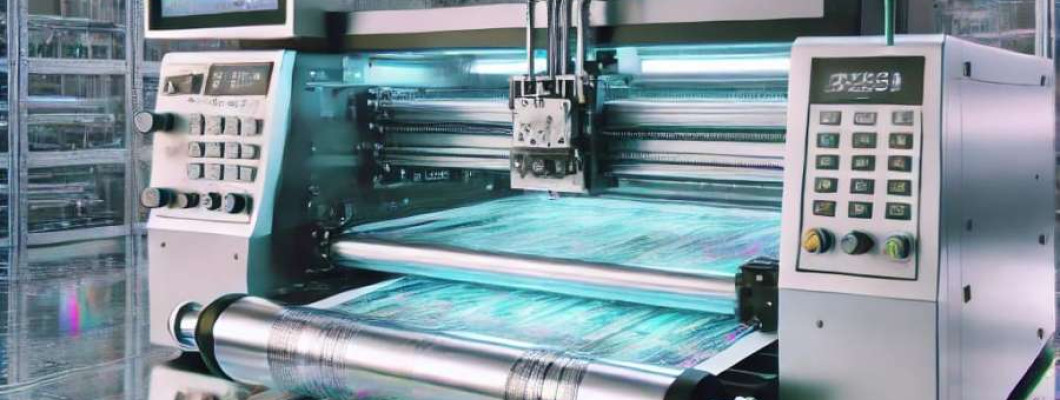
The Industrial Reality of Lifecycle Maintenance Costs in High-Precision UV Printing
In industrial-grade printing environments, the lifecycle maintenance costs of advanced equipment like the A2+ Size UV Printer Embossed Glossy Printing present a critical bottleneck that directly affects operational continuity and financial sustainability. Unlike entry-level or DIY systems, industrial UV printers must maintain consistent output quality while managing the complex interplay of UV light curing, ink chemistry, and substrate variability. The challenge deepens when considering embossing and glossy finishing on A2+ format substrates, which demands both precision and repeatable surface texture control.
Maintenance in these contexts extends beyond simple replacement cycles of consumables. The harsh operational environment—often involving exposure to UV radiation, particulate matter from ink dispersions, and mechanical wear on delicate embossing rollers—creates accelerated deterioration pathways. Understanding the cumulative impact of these factors is essential for plant managers and technical leads aiming to achieve predictable uptime. This high-stakes setting reveals hidden operational costs related to preventative maintenance scheduling, spare parts inventory management, and system recalibration frequency.
The printer’s core hardware configuration, including the printhead assembly, UV LED modules, and embossing mechanism, must be analyzed under these lifetime stressors to extrapolate total cost of ownership (TCO) beyond the initial capital expenditure. Failure to optimize these maintenance regimes results in unplanned downtimes, print quality degradation, and ultimately, potential revenue loss. The operational cost profile is further complicated by the requirements for glossy finish uniformity, which is sensitive to even microscale deviations in print layer thickness and curing intensity.
Technical Deep-Dive into Maintenance Dynamics and Hardware Stress Factors
Printhead Wear and Replacement Intervals
Embossed glossy printing demands precision droplet placement at resolutions often exceeding 1200 dpi with droplet sizes in the 5-10 picoliter range. Ink formulated for UV curing can have abrasive particulates or reactive compounds that increase the erosion rate of jet nozzles. Assuming an average printhead lifespan of 1000 operational hours, with a 10% deviation due to material variability, the replacement schedule must account for both the print volume and the abrasive nature of the inks used.
UV LED Module Degradation Under Continuous Operation
UV curing LEDs are rated for approximately 20,000 operational hours at rated intensity (typically around 395 nm wavelength). However, thermal cycling and power fluctuation introduce efficiency drops up to 15% annually. Assume a curing intensity drop beyond 10% leads to insufficient ink polymerization affecting adhesion and gloss uniformity. Thus, hardware monitoring systems must integrate irradiance sensors to track LED health in real time.
Embossing Roller Stress and Surface Finish Consistency
The embossed finish requires constant mechanical pressure with micrometer precision on substrates typically ranging from 0.2 to 1 mm thickness. Material fatigue on rollers, especially those with specialized surface textures, manifests as micro-cracks after approximately 500,000 passes. This corresponds roughly to 2500 m² of printed material at a 500 mm width. Scheduling roller refurbishment or replacement is therefore critical in maintaining consistent embossed gloss effects.
Environmental Factors Impacting Maintenance Cycles
High particulate environments accelerate printhead clogging and optical sensor fouling. Controlled cleanroom-like atmospheres reduce maintenance frequency by as much as 30%, but increase infrastructure operating costs. An optimized balance must be struck between environmental control expenditure and maintenance downtime losses.
Comparison Table of Maintenance Costs Between A2+ UV Printer and Conventional UV Printers
| Parameter | A2+ Size UV Printer Embossed Glossy Printing | Conventional UV Printer (Similar Format) |
|---|---|---|
| Printhead Replacement Cycle | 1000 hours (±10%) | 1200 hours (±15%) |
| UV LED Module Life | 20,000 hours with 10% degradation monitoring | 18,000 hours with 15% degradation risk |
| Embossing Roller Refurbishment | 500,000 passes (~2500 m²) | Not applicable |
| Maintenance Downtime per Month | 4-6 hours | 2-3 hours |
| Operational Environment Requirements | Cleanroom recommended | Standard industrial floor |
Scenario Analysis of Lifecycle Maintenance Costs Impacting Business Models
Scenario One Industrial Print Shop with Medium Volume Output
A print shop running multiple shifts with an average throughput of 800 m²/month requires consistent glossy embossing for luxury packaging clients. Here, maintenance scheduling aligned with printhead and roller lifespans ensures no unscheduled downtimes. The awareness of environmental control costs allows optimization to reduce cleaning cycles, reducing labor overhead by 20% monthly.
Scenario Two High-End Artisan Production Facility
In a boutique environment focusing on short run, high-complexity prints, the high maintenance overhead is offset by the ability of the A2+ size UV printer to handle substrate diversity and maintain micron-level embossing precision. The lifecycle costs are managed via preventive maintenance contracts that prioritize extended printhead longevity using specialty inks with low abrasive filler content.
Scenario Three Large-Scale Manufacturing Line
At scale, the integration of the A2+ printer into automated workflows requires planned maintenance windows that synchronize with production cycles. The upfront investment in environmental controls yields savings by reducing downtime risks and ensuring quality consistency. Detailed logging of UV LED output and embossing roller wear facilitates proactive part replacements preventing costly line stoppages.
Expert FAQ on Lifecycle Maintenance Costs for the A2+ UV Printer
What are the primary factors reducing printhead lifespan in UV embossed printing?
Abrasive ink particulates, high-frequency droplet ejection, and substrate dust accumulation accelerate nozzle erosion and clogging.
How does UV LED intensity degradation affect print quality?
Reduced UV intensity causes incomplete ink curing, leading to adhesion failure and inconsistent gloss levels, especially critical for embossed textures.
What maintenance strategies extend embossing roller life?
Periodic surface inspections using microscopy, controlled mechanical pressure settings, and using wear-resistant surface coatings improve roller longevity.
How does environmental control influence maintenance frequency?
Lower particulate and stable temperature environments reduce clogging incidents and sensor fouling, extending both maintenance intervals and print quality stability.
What are the risks of ignoring maintenance schedules in this printer category?
Missed maintenance can cause unplanned downtime, print defects, costly hardware damage, and shorter overall asset lifespan with increased total cost of ownership.
Strategic Verdict and Recommendation for the A2+ Size UV Printer Embossed Glossy Printing
After analyzing lifecycle maintenance costs through a rigorous technical lens, the A2+ Size UV Printer Embossed Glossy Printing stands out as a robust industrial-grade solution tailored to the demands of high-precision, A2+ format jobs with embossed glossy finishes. The device’s integration of durable printhead architecture, predictable UV LED degradation patterns, and a dedicated embossing mechanism positions it as a forward-looking asset when maintenance protocols are methodically implemented.
While its maintenance frequency and environmental control needs exceed those of simpler UV printers, these investments translate directly into superior uptime and print quality consistency—key drivers in enterprise-scale printing operations where margin pressure is acute. For industrial technical leadership prioritizing lifecycle cost control aligned with stringent quality parameters, this system represents an authoritative option. Interested technical decision-makers should consult the detailed specs and maintenance recommendations available through the official product page A2+ Size UV Printer Embossed Glossy Printing to evaluate compatibility with their operational frameworks.