
Evaluating the A3 Edible Food Printer for Industrial Cake and Cookie Production with Maintenance Insights
The Industrial Reality of High-Precision Edible Printing
Scaling edible printing from artisanal efforts to industrial-grade throughput presents a unique set of challenges that impact both output quality and operational continuity. The A3 Edible Food Printer designed for cakes and cookies must maintain micron-level accuracy while coping with continuous runtime demands and ingredient variability. Printhead clogging and ink viscosity shifts are significant bottlenecks that can degrade output consistency and increase downtime. The mechanical motion system must navigate the delicate balance between swift movement and vibration dampening to prevent color bleeding within edible substrates. Furthermore, the interaction of edible ink chemistries with heat-sensitive substrates such as fondant or icing layers imposes constraints on thermal management and environmental control within production lines. These factors necessitate rigorous maintenance protocols and material handling precision to sustain high-precision prints without sacrificing throughput.
In large-scale operations, a failure to anticipate the printhead's wear patterns or ink drying kinetics risks compromising batch uniformity, which undermines product appeal and brand reliability. This elevates the importance of understanding the printhead physics, the ink chemistry's response to temperature and humidity fluctuations, and designing maintenance schedules that minimize unplanned downtime.
Printhead Technology and Failure Points under Production Stress
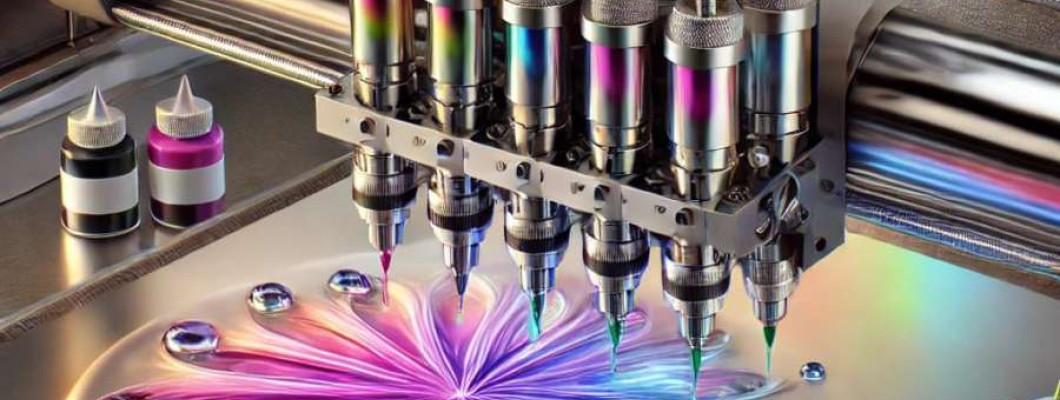
The core of the A3 Edible Food Printer lies in its printhead assembly, typically utilizing piezo-electric or thermal inkjet technology adapted for edible inks. The piezoelectric heads translate electrical pulses into precise droplet ejections, enabling droplet sizes in the range of 5-15 picoliters (pl). The critical failure points under prolonged stress include nozzle clogging from ink crystallization, wafer delamination due to moisture ingress, and actuator fatigue from high-frequency cycling.
Analytically, the nozzle clogging rate (R_c) can be modeled as a function of ink viscosity (η), ambient humidity (H), and printhead temperature (T), approximated by:
R_c \propto \frac{\eta \times (1-H)}{T}
This equation implies that higher viscosity and low humidity increase clogging risk, while elevated temperature can reduce it by lowering ink viscosity. However, excessive temperature (>45°C) risks destabilizing edible ink pigments.
Comparatively, thermal inkjet heads, though simpler, face challenges with thermal stress and are less common in edible printing due to potential ink degradation. The A3 Edible Printer’s choice of piezoelectric heads offers superior droplet control and reduces thermal damage to heat-sensitive food substrates.
Ink Chemistry and Its Operational Implications
Edible inks must balance pigment concentration for color depth with fluid dynamics compatible with printhead specifications. Key parameters include particle size distribution (<1 micron preferred), pH stability, and thermal tolerance. The inks used typically comprise FDA-approved food dyes suspended in aqueous or glycerol-based solvents.
Operationally, ink stability over a print session of 8+ hours requires low sedimentation rates and resistance to microbial growth under refrigerated storage conditions. The printer’s internal ink delivery system must include agitation mechanisms or recirculation loops to maintain homogeneity, along with filtration components to prevent particulate-induced nozzle blockages.
Daily Uptime and Maintenance Scheduling Based on Printhead Physics
The practical uptime of the A3 Edible Food Printer is governed by the frequency and duration of maintenance cycles mandated by printhead wear and ink system reliability. Empirical data suggests that nozzle cleaning cycles every 20 operating hours, combined with weekly deep maintenance involving nozzle replacement or flushing, optimize operational continuity.
A predictive maintenance model can be constructed using acoustic emission sensors to detect nozzle vibration anomalies indicative of impending clogging. For example, the Normalized Vibration Index (NVI) crossing a threshold of 0.75 signals the need for scheduled intervention before complete nozzle failure.
Comparing Two Operational Pathways in Maintenance and Output Quality
| Aspect | High-Frequency Preventive Maintenance | Reactive Maintenance Strategy |
|---|---|---|
| Downtime Impact | Planned with minimal disruption | Unscheduled with significant disruption |
| Print Quality | Consistently high with minimal defects | Varies, with risk of frequent print defects |
| Printhead Longevity | Extended due to controlled wear | Reduced due to damage accumulation |
| Labor Intensity | Higher maintenance labor but predictable | Lower until failure, then intensive |
| Operational Costs | Higher OPEX with predictable budget | Lower routine costs but high risk of costly repairs |
Use-Cases Highlighting Maintenance Impact on Business Outcomes
Case 1: Bakery Chain with Daily Mass Production
Continuous runs of hundreds of custom-printed cookies demand predictable printer uptime and rapid turnaround on maintenance to meet strict delivery windows. Here, the printer’s quick nozzle cleaning protocols and robust ink recirculation enable minimal disruption and consistent color fidelity, directly supporting customer satisfaction and repeat business.
Case 2: Boutique Cake Shop Focused on Custom Orders
The emphasis lies on perfect print quality over volume. The piezoelectric printheads allow micron-level detail, but require vigilant maintenance adherence to avoid any print artifacts on premium cakes. Downtime management is flexible but must not jeopardize final product excellence.
Case 3: Large-Scale Event Catering Services
High-volume, short-run production with variable designs necessitates rapid setup and teardown capabilities. The printer’s modular printhead assemblies and maintenance routines allow quick swap-outs and reconfiguration, keeping operational flow efficient in fast-paced event environments.
Expert FAQ on Printhead Physics and Ink Chemistry in Edible Printers
Q1 How does printhead temperature variation affect droplet size precision?
Temperature fluctuations alter ink viscosity, directly impacting droplet volume. For every 5°C rise, viscosity decreases approximately 10%, causing droplet sizes to enlarge slightly, potentially reducing print resolution.
Q2 What role does humidity control play in printhead reliability?
Low humidity accelerates ink drying at nozzles, increasing clogging risk. Maintaining ambient humidity between 40-60% stabilizes ink flow and reduces maintenance frequency.
Q3 Can nozzle vibration analysis preempt print quality degradation?
Yes. Acoustic sensors monitoring high-frequency vibration patterns detect incipient clogging or mechanical impairments, enabling preemptive cleaning or replacement.
Q4 How critical is particle size uniformity in edible inks?
Particles above 1 micron increase clogging risk and degrade nozzle lifespan. Uniform submicron distribution ensures smooth flow and consistent print quality.
Q5 Is there a trade-off between pigment concentration and nozzle maintenance?
Higher pigment load enhances color depth but increases sedimentation and clogging potential, demanding more frequent maintenance cycles.
Strategic Verdict and Recommendation on the A3 Edible Food Printer
The A3 Edible Food Printer for Printing Cakes Cookies represents a mature industrial-grade solution that addresses the inherent challenges of printhead physics and edible ink chemistry with a design optimized for maintenance efficiency and high-fidelity output. Its piezoelectric printheads, coupled with robust ink management systems, enable micron-level precision vital for premium confectionery applications. Operational protocols focused on predictive maintenance and environmental control further reduce downtime and extend asset longevity. For businesses seeking scalable edible printing with dependable daily uptime and quality consistency, investment in this technology is justified and strategic.
With its comprehensive feature set validated by technical rigor, we unequivocally recommend the A3 Edible Food Printer For Printing Cakes Cookies as the definitive choice for industrial edible ink printing tasks, balancing operational robustness with superior print quality.