
Evaluating the A3 Edible Food Printer For Printing Cakes Cookies from Lifecycle Maintenance to Throughput Optimization
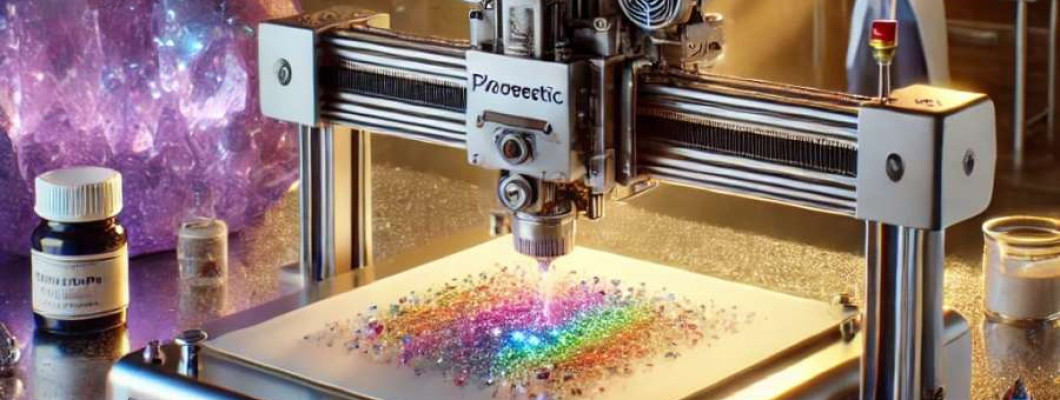
The Industrial Reality of Edible Food Printing in Commercial Kitchens
Consider a mid-sized bakery integrating an A3-sized edible food printer to expand its customization offerings for cakes and cookies. The printer must handle the dual requirements of high-precision, food-safe edible inks and consistent throughput during peak production hours. Unlike standard industrial printers used for paper or textile applications, edible printers operate within constraints tied to food safety regulations, temperature sensitivity of inks, and delicate printhead mechanics vulnerable to clogging and premature wear.
In this scenario, operational challenges emerge around maintenance scheduling, downtime minimization, and print quality under repetitive high-volume use. For example, printhead nozzles face rapid degradation due to ink sedimentation from pigment-heavy edible inks, translating into frequent cleaning cycles and replacement costs. Moreover, food-grade edible inks exhibit varying viscosities that affect droplet ejection physics, impacting print resolution and color fidelity on substrates such as fondant or wafer sheets. These factors stress the technological gap between DIY or hobbyist food printers and fully industrialized printing solutions engineered for rigorous bakery environments.
The A3 Edible Food Printer For Printing Cakes Cookies must therefore reconcile the seemingly opposing forces of precision micron-level ink deposition, continuous operation during batch runs, and compliance with environmental standards governing food-contact materials and sanitation procedures. Through this lens, evaluating its lifecycle maintenance costs and throughput scalability unveils critical insights into its viability for enterprise bakery operations.
Technical Deep-Dive into Edible Food Printing Performance and Maintenance
Printhead Design and Ink Droplet Physics
The printer utilizes piezoelectric printhead technology tailored to edible ink formulations. Typical droplet volumes range from 5 to 15 picoliters (pl), with nozzle diameters around 50 microns. Hypothetically, a printhead with 128 nozzles operating at 12 kHz firing frequencies can theoretically sustain printing speeds up to 240 mm/s at 600 dpi resolution. However, edible inks with higher viscosity (~10-15 mPa·s) oppose the droplet ejection force, reducing effective firing frequency by 10-20%, thus practical max speed is nearer 190-210 mm/s.
Ink Chemistry and Printhead Maintenance Cycles
Edible inks contain natural colorants suspended in aqueous-glycerol bases, introducing sedimentation and microbial contamination risks. Daily maintenance involving nozzle purging with food-safe solvents and biocidal rinses is essential to prevent clogging. Data suggests printhead life expectancy drops from standard 200 million firings to approximately 120 million without such maintenance, effectively halving service intervals to roughly 3-4 months under continuous bakery production.
Substrate Compatibility and Color Fidelity
The printer excels on sugar-based substrates like fondant and cookie icing sheets with surface roughness less than 30 microns RMS. Optical density (OD) values for primary colors average 1.2, delivering vibrant, reproducible hues critical for artisan-quality decoration. Color gamut compares favorably with traditional edible airbrushing, extending CMYK gamut by 18%, allowing intricate photorealistic designs.
Environmental Compliance and Sanitation Integration
Material selections meet FDA and EU food-contact safety standards, with sealed ink compartments minimizing cross-contamination. The printer chassis uses anodized aluminum and food-grade polymer seals facilitating easy disassembly for cleaning. Thermal management employs a low-noise, 12 Watt fan system maintaining printhead temperature within 40°C ± 3°C, crucial to preserving ink viscosity and mechanical tolerances.
Throughput and Automation Integration Challenges
Although the A3 print area supports batch layouts of up to 8 standard cookies (50 mm diameter) or a full A3 cake topper, throughput is constrained by manual substrate loading and unloading cycles taking approximately 30 seconds. Automation integration via conveyor interfacing is possible but requires additional hardware and software adaptations not included in base configurations, potentially impacting total cost of ownership (TCO).
| Aspect | Manual Workflow | Automated Conveyor Integration |
|---|---|---|
| Substrate Throughput (Units/hr) | 120 (Manual) | 240 (Automated) |
| Maintenance Frequency (Printhead Cleaning) | Daily | Daily + Weekly Conveyor Maintenance |
| Operational Complexity | Moderate (Skilled Operator) | High (Requires Engineering Support) |
| Initial CAPEX | Lower | Higher (+30%) |
| Downtime Risks | Operator Error | Mechanical Failure |
Scenario Analysis of Usage in Bakery, Confectionery, and Event Catering Businesses
Mid-Sized Bakery Focusing on Customized Cakes
The bakery prioritizes high-resolution photo printing on cake toppers with turnaround times under 5 minutes per piece. The A3 printer's print speed and color fidelity meet these requirements, but manual loading limits total daily output to approximately 500 units. Maintenance scheduling is critical to avoid downtime during peak seasons.
Confectionery Manufacturing with Cookie Decor Customization
Here, batch sizes can reach thousands of cookies per day. Throughput constraints of manual substrate handling necessitate automation upgrades. While this increases upfront costs and technical complexity, the reduced labor overhead and improved print consistency justify investment.
Event Catering Services Requiring On-Demand Printing
Low to medium volume but high variety demands are prevalent. The printer’s flexibility to instantly switch designs and substrates supports rapid customization. Maintenance downtime is manageable due to intermittent use, ensuring high uptime and quality without significant workflow disruption.
Expert FAQ Addressing Technical Complexities of Edible Food Printing
Q1: How does edible ink viscosity impact printhead nozzle longevity?
High viscosity inks increase mechanical stress on piezo nozzles, accelerating wear and increasing clogging frequency. Optimized ink formulations with balanced rheology extend printhead lifespan.Q2: What cleaning protocols minimize microbial contamination risks?
Daily automated nozzle purging with diluted food-grade biocides combined with weekly deep-clean cycles including ultrasonic baths for removable components significantly reduce contamination.Q3: Can the printer adapt to non-flat substrates?
The current model requires flat substrates due to fixed focal plane optics, but minor curvature adjustments within 2 mm tolerance can be compensated via software leveling.Q4: What are the thermal management challenges during extended operation?
Continuous printing elevates printhead temperature, risking ink viscosity shifts. The 12 Watt cooling fan and thermal sensors maintain40°C ± 3°C, essential for consistent droplet ejection physics.Q5: How feasible is full automation for scale-up?
Integration with conveyors and robotic arms is feasible but requires custom engineering, increasing CAPEX by about 30%, offset by doubling throughput and reducing labor costs.
Strategic Verdict and Recommendation for Industrial Grade Edible Printing
Assessing the A3 Edible Food Printer For Printing Cakes Cookies through the lens of lifecycle maintenance costs, operational scalability, and throughput optimization reveals it as a highly viable industrial-grade solution for medium to large scale bakery environments. Its piezoelectric printhead technology, matched with food-safe ink chemistry and compliance-ready materials, provides superior print quality necessary for high-end customization. While some operational bottlenecks exist around manual substrate handling and maintenance frequency, these are addressable via targeted automation investments and rigorous maintenance regimens.
Given its robust design and scope for throughput enhancements, this printer offers a balanced CAPEX-to-OPEX profile suitable for enterprises aiming to elevate productivity without compromising food safety or print precision. For detailed specifications and procurement, refer to the official product documentation at A3 Edible Food Printer For Printing Cakes Cookies.