
Evaluating the A3 Edible Food Printer For Printing Cakes Cookies Through Operational Bottlenecks and Throughput Challenges
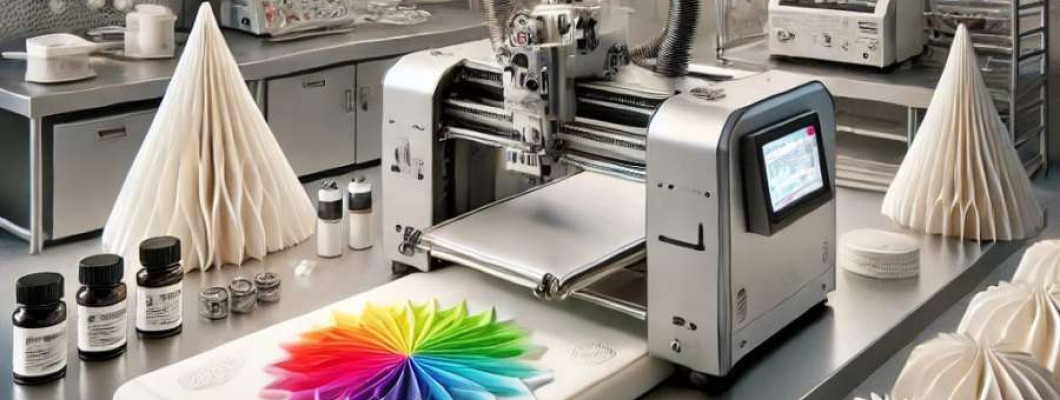
The Industrial Reality of Integrating Edible Food Printers into Commercial Kitchens
In the high-stakes environment of commercial bakeries and confectionery production, the integration of edible food printers introduces a nuanced set of operational challenges and workflow disruptions. The A3 Edible Food Printer For Printing Cakes Cookies targets mid-scale to large artisanal businesses aiming to automate and elevate decoration precision. However, a typical industrial reality scenario highlights constraints around print speed, substrate variability, and consumable replenishment cycles. Production lines often demand rapid turnaround times, with batch sizes ranging from dozens to thousands of units daily, imposing strict time budgets on food printers. Slow print speeds or frequent downtime for replenishing edible inks can cascade into labor bottlenecks and delayed order fulfillment.
Moreover, the physical footprint of the printer within an already space-constrained bakery facility introduces infrastructure alignment challenges. Power draw and ambient heat dissipation must be reconciled with existing equipment to avoid thermal interference and safety risks. The edible inks and substrates also impose sanitation requirements that can complicate maintenance cycles and introduce unexpected downtime.
Scalability assessment must therefore weigh throughput ceiling against operational overhead. High-precision edible printing is not a simple plug-and-play addition—it demands workflow redesign to accommodate its unique output cadence and consumable logistics.
Understanding Throughput and Operational Bottlenecks of the A3 Food Printer
Printhead Mechanics and Throughput Limits
This printer employs a piezoelectric printhead array capable of delivering droplets as small as 4 picoliters (pl) at a native resolution of 600 dpi, operating with four-color CMYK edible inks. The throughput is capped by the printhead's maximum firing frequency and the mechanical carriage's travel velocity, which is approximately 30 mm/s for optimal print quality on food substrates with variable texture compliance.
For a sheet size of A3 (420 mm x 297 mm), a single full-color print pass—assuming 600 dpi resolution—requires roughly 120 seconds. With multi-pass printing to enhance color saturation, total print time per substrate can climb towards 4 minutes per item, or 15 items per hour under continuous operation. This cadence becomes a bottleneck in production lines targeting throughput above 300 pieces per shift.
Ink Consumption and Replenishment Logistics
The printer’s ink reservoirs hold approximately 100 ml of each edible ink color, supporting roughly 250 full A3 prints per refill cycle. With each print using an average of 0.4 ml per color, production managers must plan for frequent ink changes in high-volume scenarios, increasing labor overhead and potential stoppages. Ink viscosity and stability under varying ambient temperatures impact ejection reliability, necessitating controlled environment parameters (temperature ~22-24°C, humidity 40-60%) to avoid nozzle clogging and inconsistent droplet formation.
Substrate Versatility and Print Adhesion Challenges
The printer’s design caters to flat and semi-flat edible substrates such as fondant-covered cakes and sugar paste sheets. However, highly textured or uneven cookie surfaces introduce micro-variations that reduce print fidelity due to nozzle-to-surface distance variations. Typical surface roughness tolerance is within 0.1 mm to maintain sharp image contours. Uneven substrates can induce ink pooling or incomplete drying, leading to smudging and color bleeding, which critically impacts product quality.
Thermal and Power Infrastructure Considerations
Operating power peaks at 150 W, with an average draw around 100 W during active printing phases. Heat dissipation primarily occurs via passive aluminum chassis and internal ventilation fans generating approximately 40 CFM airflow. In dense commercial kitchen racks or enclosures, this thermal output must be managed with adequate ventilation to prevent ambient temperature buildup, which can affect ink viscosity and electronics longevity.
Maintenance and Sanitation Protocols
Daily maintenance includes printhead cleaning cycles, nozzle checks, and ink line purging. Specialized cleaning solutions compatible with food-safe certified ink chemistry are required to prevent microbial growth and cross-contamination. The printer design facilitates easy-access modular printheads, reducing downtime during maintenance but necessitating trained personnel to execute precise cleaning and alignment procedures to maintain micron-level print accuracy.
| Specification | A3 Edible Food Printer | Traditional Airbrush Decoration |
|---|---|---|
| Resolution | 600 dpi (4 pl droplets) | Variable, manual precision |
| Print Speed | 15 items/hour max | Up to 50 items/hour |
| Color Fidelity | CMYK process colors | Hand-mixed color variability |
| Maintenance Downtime | 15 min/day | 5 min/day |
| Labor Intensity | Low after setup | High, artisanal skill |
Scenario Analysis Based on Throughput and Operational Specs
Scenario 1 Mid-Size Bakery Production Run
A mid-sized bakery producing 200 decorated cakes daily can integrate the A3 printer to handle intricate edible images efficiently. The bottleneck lies in print time per cake; scheduling and parallel printing units can mitigate throughput constraints. Ink management protocols must be institutionalized to avoid downtime during rush periods. Overall, the printer increases consistency and reduces reliance on artisanal decorators.
Scenario 2 Small Artisan with Limited Space
A boutique cake decorator with limited physical space and batch sizes of 20-30 items daily benefits from the printer’s precision and color gamut, achieving professional output with minimal labor. The slower print speed is not a detriment, and the maintenance routines can be comfortably integrated within daily workflows.
Scenario 3 Large Scale Commercial Cookie Manufacturer
For large-scale cookie manufacturers aiming for 1000+ pieces daily, the single-unit A3 printer becomes a throughput limiter. Scaling requires multiple synchronized units or alternative high-speed printing technologies. Consumable and maintenance costs escalate with volume, underscoring the need for rigorous lifecycle cost analysis.
Expert FAQ on High-Precision Edible Printing Technologies
How does substrate moisture content affect ink adhesion?
Moisture beyond 10% w/w in substrates causes ink spreading and pigment dispersion, reducing edge sharpness and increasing drying times, which can lead to smudging or color blending artifacts.
Can the printer handle multi-layer edible inks for raised texturing?
The current hardware supports single-layer thin film deposition; multi-layer or 3D texture printing requires additional hardware modifications such as thicker ink formulations and precision layering controls.
What are the failure modes of piezoelectric printheads in this application?
Primary failure points include nozzle clogging due to ink crystallization, mechanical fatigue of piezo elements, and electrical degradation from frequent firing cycles. Preventive maintenance and environmental controls extend lifecycle to approximately 2000 print hours.
How critical is environmental control for consistent color output?
Ink viscosity and droplet formation are highly sensitive to temperature and humidity changes; maintaining stable ambient conditions reduces color variation between batches and prevents print defects.
What is the expected depreciation cycle of this printer in industrial settings?
Given printhead wear and technological obsolescence, a 5-year depreciation cycle is reasonable, with maintenance costs averaging 10% of purchase price annually. Component upgrades can extend usable life but require compatibility validation.
Strategic Verdict and Recommendation
The A3 Edible Food Printer For Printing Cakes Cookies offers a technically sound solution that bridges artisanal quality with automated precision for low to medium volume edible printing applications. While throughput constraints and maintenance cycles impose operational bottlenecks, these are manageable within defined workflows and production scales. Its robust piezoelectric printhead technology delivers micron-level precision and consistent color fidelity required for high-end edible decoration. The printer's integration into commercial kitchen infrastructure demands careful planning of thermal management and consumable logistics.
For businesses focused on quality consistency, labor cost reduction, and moderate batch sizes, this printer is a viable industrial-grade asset. Large-scale manufacturers should consider scaling strategies involving multiple units or complementary technologies. Maintenance protocols must be rigorously implemented to maintain uptime and print quality.
The long-term asset viability combined with stable operating costs supports a positive ROI trajectory under targeted use-cases. For detailed technical and operational specifications, as well as purchase considerations, review the full product offering at the official manufacturer page A3 Edible Food Printer For Printing Cakes Cookies.