
Evaluating the Gap Between DIY and Industrial-Grade for the A4 Roll DTF Printer in Scalable Business Settings
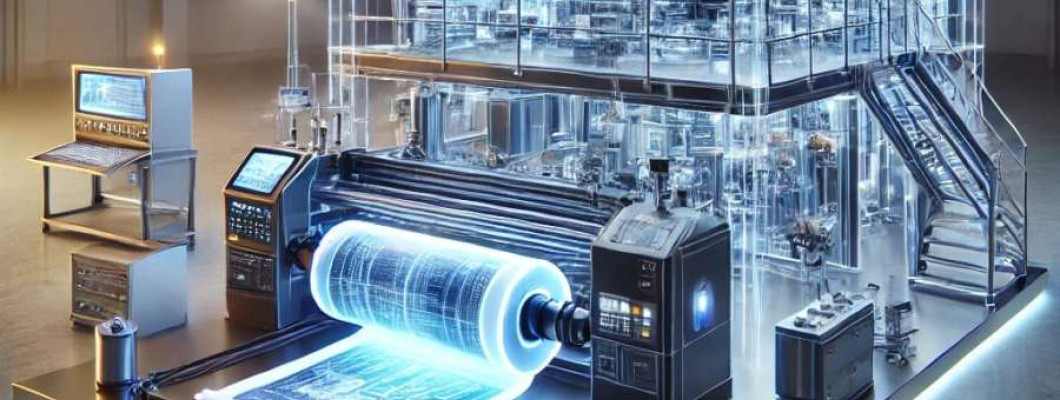
The Industrial Reality of Bridging DIY and Industrial DTF Printing
Textile printing has undergone a rapid transformation with Direct To Film (DTF) technology emerging as a cost-effective alternative to traditional methods. However, the transition from DIY-grade equipment to industrial-capable machines presents a nuanced challenge that directly affects scalable business owners. Consider a mid-sized textile production facility aiming to integrate a new A4 Roll DTF Printer to boost output. The complexity arises in balancing throughput demands, automation readiness, and labor management without compromising on print fidelity or sustainability of operations.
DIY DTF printers typically shine in low-volume or prototyping environments but often reveal operational bottlenecks when tasked with repetitive, high-volume output. Key issues include slower print speeds limited to sub-500 mm/s, inflexible roll handling mechanisms, and frequent manual interventions due to printhead clogging or inconsistent ink application. Conversely, a true industrial-grade A4 Roll DTF Printer offers automated roll feeding, optimized ink flow control, and precision printhead calibration enabling continuous production runs, minimizing downtime.
From the perspective of labor costs, scaling from a DIY setup to an industrial printer also alters workforce requirements. Automation reduces the dependency on highly skilled operators for routine tasks, reallocating human resources towards quality control and maintenance optimization. The resulting operational efficiency gains become critical when throughput targets exceed a few hundred square meters per shift.
Environmental compliance also emerges as a distinguishing factor. Industrial-grade units tend to integrate advanced ventilation and waste ink management systems that ensure adherence to safety and environmental standards—a feature often lacking in entry-level DIY models.
Printhead Technology and Ink System Design
At the core of efficient DTF printing lies the printhead assembly and associated ink chemistry. Industrial-grade machines employ piezoelectric printheads capable of ejecting ink droplets as small as 1.5 picoliters, compared to 3-5 pl typical of consumer-grade units. This micron-level droplet precision directly enhances color depth and sharpness in prints.
By leveraging a multi-nozzle array with independent channel control, industrial printheads maintain high firing frequency up to 30 kHz, facilitating print speeds exceeding 600 mm/s while preserving image integrity. The ink delivery system supplements this by incorporating pressurized reservoirs with temperature and viscosity regulation, preventing common failure modes such as nozzle clogging or inconsistent color gradients.
Automation and Workflow Integration
Automation capacity is a fundamental factor distinguishing industrial-grade A4 Roll DTF Printers. These devices integrate continuous roll feeding mechanisms with tension control systems that maintain substrate alignment within a 0.1 mm tolerance, critical for multi-pass or layered prints. Automated UV curing or powder adhesion steps synchronized with printhead cycles reduce manual interventions, enhancing uptime.
In terms of workflow software, industrial systems generally support scalable batch processing, centralized job queue management, and remote diagnostics. These features enable integration into existing ERP or MES (Manufacturing Execution Systems), streamlining operations from order reception through print and finishing.
Maintenance and Lifecycle Cost Modeling
While DIY machines incur frequent downtime due to printhead replacements or manual cleaning cycles every 4-6 hours, industrial units extend operational windows to 24 hours or more with automated cleaning protocols and robust component engineering. A hypothetical cost model comparing a 3-year lifecycle illustrates a per-square-meter maintenance cost reduction upwards of 35%, factoring in printhead longevity, ink usage efficiency, and labor hours saved.
| Parameter | DIY DTF Printer | Industrial A4 Roll DTF Printer |
|---|---|---|
| Print Speed | 300-450 mm/s | 600-750 mm/s |
| Printhead Droplet Size | 3-5 pl | 1.5-2 pl |
| Automated Roll Feeding | No | Yes (tension controlled) |
| Average Uptime Between Maintenance | 4-6 hours | 24+ hours |
| Integration with ERP/MES | Limited/Manual | Full Support |
| Labor Hours per 1000m² | ~12 hours | ~4 hours |
Thermal and Environmental Compliance
Industrial DTF printing requires precise thermal management since both substrate and ink response vary with temperature fluctuations. Integrated sensors monitor heat within the printhead carriage maintaining ±1°C stability, crucial for avoiding color shifts or drying inconsistencies. Moreover, waste ink is collected via sealed reservoirs linked to extraction systems that comply with occupational safety limits for volatile organic compounds (VOCs), a regulatory aspect often overlooked in smaller DIY setups.
Practical Use Cases Validating the A4 Roll DTF Printer
Case 1: Small Apparel Manufacturer
Scaling production to meet 1000 garments per day, the industrial A4 Roll DTF Printer enables automated substrate feeding and continuous runs, resulting in a 30% increase in throughput with labor costs dropping by 40% due to reduced manual handling.
Case 2: Custom Promotional Goods Enterprise
With frequent job changes, the printer’s precision droplet control and fast turnaround improve color accuracy on diverse substrate textures, expanding product offerings while maintaining low defect rates under 1%.
Case 3: Textile Research Lab
Using the printer’s micron-level control for prototype testing allows validation of new ink formulations and film types with repeatability, reducing R&D cycle time by 25% versus manual printing methods.
Expert FAQ on Industrial A4 Roll DTF Printers
Q1: How does droplet size affect print durability?
Smaller droplets (1.5-2 pl) enable precise layering minimizing ink saturation variance which improves adhesion and wash fastness.
Q2: Can the printer handle varying roll widths without recalibration?
Yes, tension control and software algorithms auto-adjust feed parameters for rolls between 100 mm and 420 mm widths while maintaining print registration within ±0.1 mm.
Q3: What is the typical energy consumption for continuous operation?
Approximately 450-600 Watts depending on curing and heater settings, which can be optimized based on substrate thermal properties.
Q4: Are the printheads interchangeable with other models?
The printer uses proprietary piezoelectric heads engineered for specific ink viscosities, so cross-model swapping is unsupported without risking print quality degradation.
Q5: How does automated cleaning reduce downtime?
Scheduled nozzle purging combined with ultrasonic vibration clears clogs every 8 production hours, eliminating manual cleaning breaks.
Strategic Verdict and Recommendation
There is a clear and measurable distinction between DIY and industrial-grade A4 Roll DTF Printers in throughput, automation, maintenance, and environmental compliance. For scalable business owners aiming to optimize labor costs and increase production volume without sacrificing precision, the industrial A4 Roll DTF Printer stands as a definitive solution. Its integration-ready design and hardware robustness justify investment by delivering sustainable ROI through operational efficiencies and reduced downtime.
Those considering an upgrade should review the technical and economic benefits outlined herein and evaluate the A4 Roll DTF Printer as their industrial printing backbone.