
Evaluating the Gap Between DIY and Industrial-Grade in the A4 Roll DTF Printer for Scalable Businesses
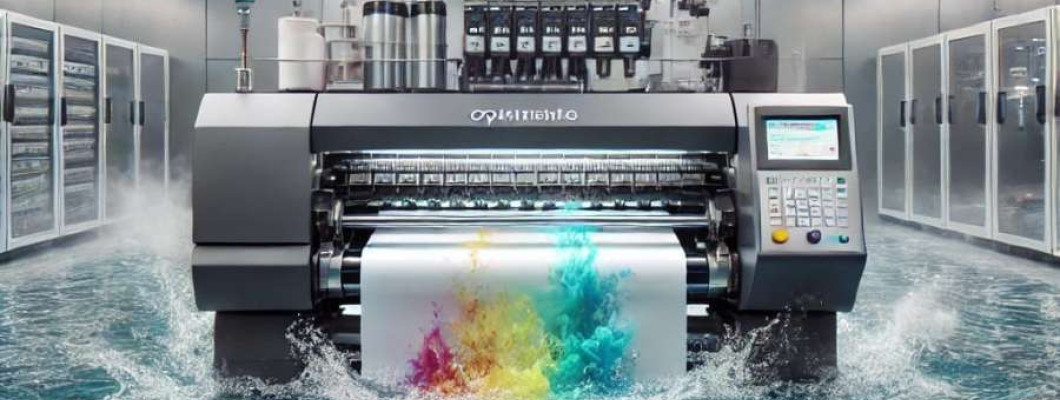
The Industrial Reality of Transitioning from DIY to Industrial-Grade DTF Printing
The A4 Roll DTF Printer emerges as an accessible entry point for small-scale producers aiming to push into higher-output, professional-grade decoration via Direct to Film (DTF) technology. Yet, this transition from entry-level or DIY setups to something capable of consistent, repeatable production introduces a series of complex operational challenges that often remain unaddressed in marketing materials.
Imagine a scalable business owner attempting to integrate an A4 Roll DTF Printer into a workflow designed originally around manual, batch-style textile printing. The core difficulty lies not merely in handling throughput or substrate diversity, but in contending with bottlenecks caused by hardware limitations, variable ink chemistry behavior under continuous operation, and the need for automation-compatible interfaces.
For example, the printhead design suited for smaller runs may degrade under extended usage, resulting in inconsistent droplet placement or partial nozzle clogging—both detrimental to tight production deadlines. Similarly, the limited roll width and slower drying stages influence total throughput per hour, which directly impacts labor cost efficiency and fulfillment timelines. Operationally, if these elements remain unmanaged, the business risks falling back to manual intervention modes that erode ROI and fail to justify the transition from a DIY mindset.
This scenario highlights a fundamental reality: the gap between DIY systems and true industrial-grade printers like the A4 Roll DTF Printer is not a superficial marketing distinction but an operational chasm defined by hardware robustness, process integration capability, and lifecycle reliability.
Technical Deep-Dive Reveals Hardware Constraints and Capacity
Printhead Engineering and Throughput Limits
The A4 Roll DTF Printer typically uses a piezoelectric printhead designed for fine droplet placement at resolutions reaching 1440 dpi. However, its operating duty cycle is often rated for moderate batch volumes (e.g., 20-30 m²/day) before printhead maintenance becomes essential. Considering a 4-pass printing mode, the effective speed bounds are roughly 0.5 m/min, significantly slower than industrial wide-format printers achieving over 2 m/min in comparable modes.
Hypothetically, if a manufacturing line demands an output of 100 m² per 8-hour shift, the A4 Roll DTF would require approximately 7-8 hours of non-stop printing, not counting drying or curing. This illustrates a throughput bottleneck that must be accounted for in capacity planning.
Ink Chemistry and Maintenance Cycles
Unlike solvent or UV inks used in large-scale industrial printers, DTF inks are water-based pigment dispersions with specialized adhesion properties. Consistent nozzle performance requires daily cleaning cycles to prevent pigment sedimentation. Failure to maintain strict cleaning regimens can increase downtime by 15-20%, impacting overall uptime reliability.
Roll Width and Material Handling
The A4 format limits printable width to approximately 210 mm. While this facilitates high-detail, micron-level prints ideal for small-format or specialty items, it restricts productivity when scaling for larger apparel runs or bulk orders. Material feed systems must be capable of handling roll diameters up to 150 mm and thicknesses up to 0.5 mm without skewing. Precision control mechanisms are needed to maintain registration within ±0.1 mm to prevent banding defects.
Drying and Curing Integration Challenges
DTF printing requires a drying stage to fix the printed film before transfer. Integrating industrial drying elements such as infrared or hot air ovens adds complexity to the production line. The A4 Roll DTF Printer’s smaller footprint means external drying stations often must be incorporated, creating bottlenecks if the drying capacity does not match the print output rate.
Comparative Data on Key Variables
| Specification | A4 Roll DTF Printer | Industrial Wide-Format DTF Printer |
|---|---|---|
| Max Media Width | 210 mm | 760 mm+ |
| Max Print Speed | ~0.5 m/min (4-pass) | 2.0+ m/min (4-pass) |
| Printhead Maintenance | Daily Cleaning Required | Automated Cleaning Systems |
| Drying Integration | External Station Needed | Built-in Drying Systems |
| Duty Cycle per Day | 20-30 m² | 100+ m² |
Scenario Analysis of Business Use-Cases
Use-Case 1 Small Boutique Apparel Line
A startup producing limited runs of custom printed t-shirts benefits directly from the A4 Roll DTF Printer’s micron-level precision and substrate versatility. The compact size suits low-footprint workshops, and the print quality supports premium color fidelity. The lower throughput is acceptable due to batch size constraints, and manual drying stations can be scheduled efficiently.
Use-Case 2 Mid-Tier On-Demand Print Shop
A print shop catering to local businesses requires faster turnaround times. Here, the limited width and speed become constraints, requiring multiple machines or layered shifts to meet demand. The mandatory daily maintenance cycles increase labor overhead, limiting ROI. However, the affordable capital expense helps maintain accessibility for expanding operations.
Use-Case 3 Large Production Facility Scaling to Full Automation
For industrial players aiming at mass production, the A4 Roll DTF Printer serves as a prototype or pre-production tool rather than a line solution. Its hardware limits and manual intervention points make it impractical for high-throughput environments requiring integrated drying and automated roll handling. The gap must be bridged using wider-format industrial DTF printers with continuous inline processes.
Expert FAQ on Industrial Operation of the A4 Roll DTF Printer
Q1: How does nozzle clogging frequency compare to industrial systems?
Due to smaller ink reservoirs and simplified cleaning paths, nozzle clogging occurs more frequently, typically requiring daily manual cleaning, versus automated ultrasonic or flush cycles in industrial printers.
Q2: Can the A4 Roll DTF Printer sustain 24/7 operation?
No. Thermal and mechanical stresses, combined with manual maintenance requirements, restrict usage to batch-wise runs with downtime for service.
Q3: Is color consistency reliable over extended print jobs?
Within limited runs, yes. However, pigment sedimentation and environmental variables can cause color drift without strict process controls.
Q4: Does the substrate feed system support thick or specialty films?
Yes, up to 0.5 mm thickness with controlled tension, but substrate skew risk increases with non-standard materials.
Q5: What are common failure points under high workload?
Printhead piezo actuators show wear; paper feeding rollers can slip; and drying bottlenecks cause process interruptions.
Strategic Verdict and Definitive Recommendation
The A4 Roll DTF Printer represents a considered engineering balance between accessibility for small-to-mid sized businesses and industrial-grade print quality. While it does not match the throughput or automation levels of full industrial systems, it provides a critical stepping stone bridging DIY setups and enterprise-grade production.
For scalable business owners who require micron-level precision, substrate versatility, and moderate throughput without heavy investment in infrastructure, the A4 Roll DTF Printer offers a viable industrial-grade solution. Its limitations in speed and maintenance frequency require workflow adaptation, but the capital cost advantage and print quality position it solidly within emerging mid-tier markets.
Purchasing through the official source at A4 Roll DTF Printer ensures direct access to technical support and component authenticity, further securing operational reliability.
In conclusion, while not a full-scale production powerhouse, the A4 Roll DTF Printer fills a unique operational niche and is recommended for businesses pursuing measured scale and quality in DTF printing.