
Evaluating the Lifecycle Maintenance Costs and Technical Limits of A3 UV Varnish DTF Printer Machine Label Printer for Scalable Businesses
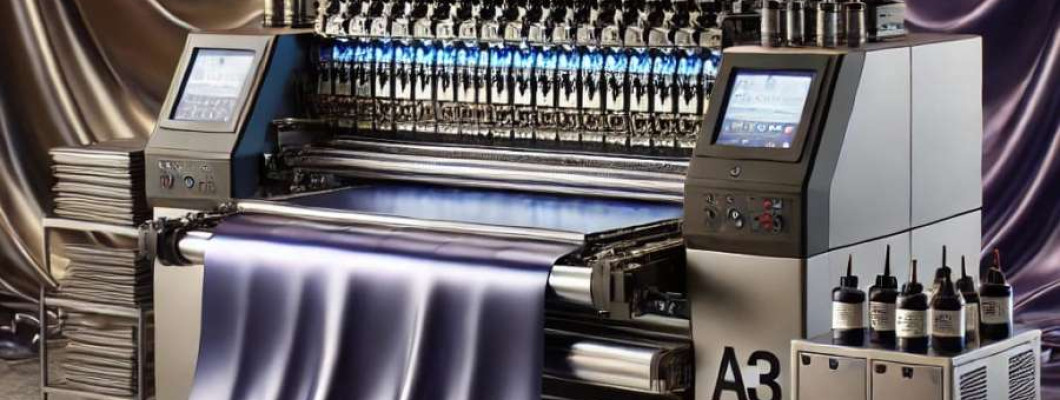
The Industrial Reality of Maintenance Demands in UV Varnish DTF Printing
Label printing workflows deploying UV varnish DTF (Direct to Film) technology at an A3 scale confront a complex technical challenge: sustaining operational uptime while managing intricate maintenance cycles. Unlike conventional inkjet or solvent printers, UV varnish machines necessitate specialized care for their printheads, UV LED curing units, and varnish delivery systems. These components endure high mechanical and thermal stress, driving wear patterns that impact throughput and quality longevity. Businesses scaling production must anticipate variable service intervals, unplanned downtime due to clogging or varnish residue buildup, and the costs embedded in consumables such as ink volumes specified in picoliters (pl) and varnish viscosity adjustments.
Consider a medium-sized label printing firm needing to sustain 500 prints per day, each at 1200 dpi resolution with varnish overlays for enhanced durability and aesthetic effect. The printer’s UV LED curing system generates localized heat of up to 45°C at the substrate interface, which, if uninhibited by proper cooling and maintenance, accelerates degradation of printhead nozzles and ink viscosity consistency. Operational stresses are compounded by substrate variability, from PET films to synthetic labels, impinging on varnish adhesion reliability and requiring frequent recalibration. Maintenance complexity becomes a bottleneck when servicing cycles are irregular, leading to cumulative quality degradation and increased OPEX through technician labor and replacement parts.
Technical Deep-Dive into Key Components and Performance Metrics
Printhead Durability and Ink Chemistry Interaction
The A3 UV Varnish DTF printer typically employs piezoelectric printheads capable of ejecting ink droplets between 6-12 pl. UV-curable varnish inks introduce higher viscosity and reactive agents that challenge printhead nozzle integrity. The piezo element stroke length, typically 15-20 microns, must balance droplet formation speed and volume precision. Excessive varnish viscosity (>30 cP) increases shear stress, accelerating nozzle tip erosion and clog risk. Service intervals hinge on achieving a Poisson failure rate below 0.0001 per 1000 prints by implementing automated cleaning cycles and monitoring ink chemistry via inline sensors.
UV LED Curing Efficiency and Thermal Management
UV LED arrays in this class generate intensities around 150 mW/cm2 at wavelengths near 395 nm. Efficient curing minimizes varnish tack time but risks thermal loading on adjacent printheads. Effective heat dissipation is achieved by integrating heat sinks and forced-air cooling, ensuring component temperature stability below 50°C. Mathematical modeling indicates that maintaining a thermal gradient ≤0.5°C/mm across the printhead assembly reduces photochemical degradation exponentially, adhering to Arrhenius kinetics for polymer cross-linking.
Substrate Compatibility and Dimensional Control
Substrate thickness tolerance of ±0.05 mm and rigidity play significant roles in maintaining registration accuracy during high-speed printing (>2 m/min). Film expansion coefficients near 50 ppm/°C also necessitate enhanced servo motor synchronization to maintain printhead-to-substrate gap within 0.2 mm to avoid varnish pooling or misalignment. Closed-loop feedback from optical sensors enables micrometer-level correction during continuous print runs.
Comparing Maintenance Models Through Operational Data
| Parameter | Automated Cleaning Regimen | Manual Maintenance Protocol |
|---|---|---|
| Mean Time Between Failures (MTBF) | 1200 hours | 800 hours |
| Downtime per Month | 4 hours | 12 hours |
| Consumable Costs (Ink & Varnish) | USD 1.25 per 1000 prints | USD 1.5 per 1000 prints |
| Labor Intensity (Hours per Week) | 3 | 10 |
| Print Quality Consistency | ±2% Delta E variance | ±6% Delta E variance |
Asset Depreciation and Lifecycle Cost Projection
The initial capital expenditure (CAPEX) for this category of A3 UV varnish printers ranges between USD 45,000 - 60,000. Depreciation over a 5-year cycle accounts for printhead replacement (every 18 months at approx. USD 6,000), UV LED module servicing (every 2 years at USD 3,000), and varnish pump calibration kits (annual, USD 1,000). Operational expenses (OPEX) include varnish and ink replenishment, averaging USD 0.0025 per print, and technician labor evaluated at USD 50/hour. Calculations indicate that proactive maintenance with automated cleaning delivers a 15-20% reduction in total cost of ownership (TCO) versus manual regimes, influencing overall ROI positively.
Scenario Analysis of Business Applications Impacted by the Printer’s Specs
Scenario One The Scalable Packaging Manufacturer
For a packaging manufacturer aiming to print 10,000 varnished labels weekly, the throughput capacity at 2.5 m/min with 1200 dpi output ensures scalability without compromising quality. The automated cleaning cycles reduce downtime, enabling continuous production shifts with minimal operator intervention. Dimensional control ensures tight registration on flexible films critical for high-end consumer goods.
Scenario Two Small Batch Custom Label Shops
Smaller artisans producing bespoke labels benefit from the printer’s micron-level precision and substrate versatility. However, manual maintenance protocols increase labor costs and reduce uptime. Investing in training or partial automation can improve lifecycle maintenance efficiency, directly influencing profitability in small batches where per-unit cost is sensitive to downtime.
Scenario Three High-Volume Pharmaceutical Labeling Operations
Pharma-grade labeling demands stringent environmental controls and repeatable varnish application for tamper-evident finishes. The printer’s thermal management and UV curing efficiency provide compliance with regulatory standards on material stability. Predictable maintenance cycles align with cleanroom protocols, minimizing contamination risk and ensuring uninterrupted production.
Expert FAQ on Advanced Technical Challenges
Q1 What factors primarily influence the printhead clogging rate in UV varnish DTF printers?
A1 Ink viscosity, varnish curing speed, automated cleaning frequency, and ambient temperature contribute to clogging. Maintaining varnish viscosity between 20-30 cP and curing at optimized UV intensity minimizes residue build-up.
Q2 How does substrate thermal expansion affect print registration accuracy?
A2 Substrate expansion causes micro-misalignment. With expansion coefficients ~50 ppm/°C, temperature variations lead to positional errors. Feedback-controlled motor adjustments maintain registration within 0.2 mm tolerances.
Q3 What are the key indicators for scheduling printhead replacement?
A3 Drop volume inconsistency beyond ±10% and increased nozzle firing pulse duration signal imminent wear. Regular sensor diagnostics and performance logging enable predictive maintenance.
Q4 Can UV LED intensity modulation extend component lifespan?
A4 Yes, dynamically adjusting UV intensity based on varnish layer thickness reduces unnecessary thermal stress, thereby prolonging LED and printhead life.
Q5 How does automated cleaning impact varnish waste and environmental safety?
A5 Automated processes optimize cleaning solvents usage, reducing varnish residual disposal by up to 30%, improving overall environmental compliance and operator safety.
Strategic Verdict and Recommendation for Industrial-Grade Printing Operations
Our assessment of the A3 UV Varnish DTF Printer Machine Label Printer clearly positions it as an industrial-grade solution capable of meeting the demands of scalable businesses. The machine’s design emphasizes lifecycle maintenance efficiencies and component resilience, which are critical for sustaining high throughput. The integration of automated cleaning and robust thermal management translates into reduced downtime and lower total cost of ownership. While the upfront investment is notable, the predictable depreciation schedule combined with operational savings validates a strong ROI profile for medium-to-large scale label production environments. The printer’s capability to handle substrate variability and maintain micron-level registration further ensures versatility without sacrificing print fidelity. Enterprises prioritizing consistent uptime, precise varnish application, and manageable maintenance protocols will find this unit a definitive addition to their production infrastructure.