
Evaluating the Operational Bottlenecks of the A3 DTG Printer T-shirt Printing Machine for Scalable Apparel Production
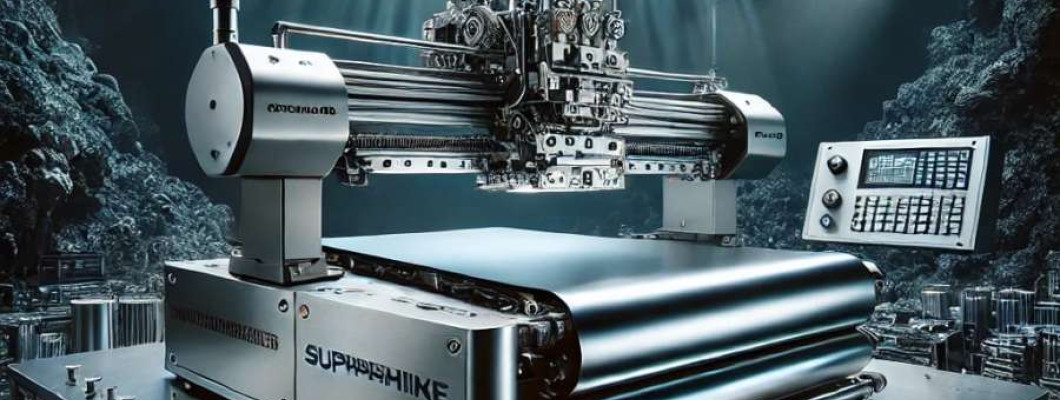
The Industrial Reality of Continuous DTG Printing Workflows
In a high-output garment printing environment, the challenge extends far beyond the initial configuration of direct-to-garment (DTG) printers. Operators must contend with operational bottlenecks that directly constrict throughput, quality consistency, and overall equipment effectiveness (OEE). The A3 DTG Printer T-shirt Printing Machine represents an advanced hardware solution tailored for mid-to-large scale print businesses, but the precise operational limits and workflow constraints merit rigorous technical evaluation.
Consider a scenario with a production line targeting 500 printed garments daily. The printer must maintain high uptime, consistent color fidelity, and rapid job changeover. Thermal printhead maintenance intervals, ink viscosity stability, and substrate handling are critical technical factors imposing throughput ceilings. Misalignment in any of these systems compounds into cumulative downtime, slowing production rates.
Moreover, labor intensity in loading/unloading textiles and pre/post-processing (curing and drying) introduces human factors into bottleneck analysis. In this industrial context, bottlenecks are not isolated issues but interconnected challenges affecting the entire production chain's velocity and reliability. Evaluating these with precision ensures scalable business operations without costly interruptions.
Printhead Heat Dissipation and Thermal Management
Thermal stability in DTG printheads is paramount. The A3 DTG Printer employs piezoelectric printheads rated for continuous operation at nozzle firing frequencies around 20 kHz. At this operational velocity, heat generation within the printhead ceramic substrate reaches approximately 15 W/cm², necessitating active cooling to prevent microbubble formation in ink channels.
A hypothetical thermal model using Fourier heat conduction equations predicts a temperature rise (∆T) in the printhead nozzle plate given by:
∆T = (q'' × L) / k,
where q'' is heat flux (15 W/cm²), L is printhead thickness (~1 mm), and k is thermal conductivity (~1.4 W/m·K for ceramic). This results in a ∆T of approx. 107 °C, thus active heat sinks and forced air cooling reduce this to manageable levels (around 45 °C above ambient), maintaining nozzle integrity.
Comparatively, printers lacking efficient thermal management show diminished nozzle firing uniformity, impacting droplet size consistency and print resolution (measured in dpi). The A3 DTG Printer’s design thus directly addresses a common bottleneck in sustained print runs.
Ink Chemistry and Viscosity Stability Under Continuous Use
Ink formulations in DTG printing exhibit complex rheological behavior. The A3 DTG Printer utilizes aqueous pigment-based inks requiring a narrow viscosity window (8–12 cP at 25 °C) for optimal piezoelectric jetting. Prolonged print cycles cause ink temperature fluctuations that change viscosity through the Arrhenius equation:
η(T) = η_0 × e^(E_a / R T),
where η_0 is reference viscosity, E_a is activation energy (~40 kJ/mol), R is universal gas constant, and T is absolute temperature in Kelvin.
Without stable temperature control, ink viscosity can increase by over 15%, leading to clogging and ejection irregularities. The printer’s integrated ink circulation and temperature regulation systems mitigate these effects, reducing nozzle failures and maintenance downtime significantly.
Substrate Handling and Registration Precision
The physical handling of textiles introduces a mechanical bottleneck through substrate registration accuracy. The A3 DTG Printer employs a platen system with micro-stepper motors enabling positioning repeatability within 0.1 mm. This precision is critical for multi-layer color registration, where misalignment beyond 0.15 mm manifests as visible color fringes and quality degradation.
The system’s feedback loop uses optical sensors to recalibrate position after each print stroke, reducing cumulative error vectors during mass production. This technology diminishes reprint rates caused by misregistration, thereby improving yield and reducing labor cost per unit.
Workflow Integration and Automation Potential
Integration of the A3 DTG Printer into automated apparel production lines faces challenges related to workflow synchronization. The printer’s cycle time per A3 print is approximately 120 seconds at 1440 dpi resolution. Ancillary operations such as pre-treatment spraying and heat pressing require equally calibrated throughput to prevent queuing delays.
Automation with robotic textile feeders and conveyor curing systems shows promise but necessitates precise machine communication protocols (e.g., industrial Ethernet or OPC UA). Currently, the printer supports standard USB and Ethernet interfaces but requires third-party middleware for extensive automation, representing a potential bottleneck in end-to-end integration.
Maintenance Intervals and Realistic Uptime Metrics
Daily maintenance for the A3 DTG Printer includes nozzle cleaning cycles, printhead alignment checks, and ink filter replacements. Manufacturer guidelines suggest a maximum continuous run of 8 hours before a 30-minute maintenance window. Real-world data indicates this limits effective uptime to approximately 75% during a standard 10-hour shift.
Downtime due to wear and ink chemistry degradation adds to this. Over a 12-month lifecycle, consumable replacement and printhead refurbishment result in a total cost of ownership (TCO) that must be factored against throughput gains.
Scenario Analysis of Business Use-Cases Affected by Operational Bottlenecks
Case 1 High-Volume Promotional Apparel Provider
For a business handling up to 1,000 t-shirts daily, the thermal management and substrate registration precision of the A3 DTG Printer directly enable sustained high-quality output. However, without automation integration, human labor costs rise, reducing margin. Mitigating bottlenecks requires investment in complementary automation.
Case 2 Custom Boutique Fashion Label
In smaller volume runs emphasizing color depth and unique substrates, the printer’s ink viscosity stability ensures color fidelity across diverse fabrics. Operational bottlenecks here are mitigated by manageable batch sizes and scheduled maintenance cycles, aligning well with artisan labor workflows.
Case 3 Distributed Print-on-Demand Network
For companies running decentralized printing hubs, the printer's manageable footprint and Ethernet connectivity facilitate deployment. Still, bottlenecks emerge from inconsistent operator training and maintenance discipline, which can degrade throughput without centralized quality control.
Expert FAQ on A3 DTG Printer Operational Challenges
Q1: How does printhead thermal cycling impact long-term nozzle reliability?
A1: Thermal cycling induces microstructural stress in piezoelectric ceramics, accelerating delamination and nozzle blockage over roughly 10,000 thermal cycles, correlating with about 1 year of heavy usage.
Q2: What effect does ink sedimentation have on continuous print quality?
A2: Sedimentation of pigment particles leads to nozzle clogging; the printer’s ink circulation system minimizes sedimentation by maintaining a minimum flow velocity of 1 cm/s in ink channels.
Q3: Can substrate thickness variability affect registration accuracy?
A3: Yes, substrates with thickness tolerance beyond ±0.3 mm challenge platen vacuum hold, reducing positional repeatability below the 0.1 mm specification.
Q4: What are the electrical power demands during peak operation?
A4: Peak power consumption reaches roughly 850 W per print cycle, predominantly from printhead heaters and vacuum pumps, necessitating stable power supply circuits with at least 15% headroom.
Q5: How does ambient humidity influence ink drying time?
A5: Increased humidity (>70% RH) prolongs ink drying up to 40%, requiring longer curing or supplemental drying equipment to maintain throughput.
Strategic Verdict and Recommendation
The A3 DTG Printer T-shirt Printing Machine stands as a robust contender for scalable direct-to-garment production environments demanding precision and consistent uptime. While operational bottlenecks related to thermal management, ink chemistry, and substrate handling impose constraints on continuous throughput, these are well-addressed through the printer’s engineering design.
For scalable business owners targeting automation and labor optimization, the printer’s integration readiness and maintenance profile are manageable with proper workflow engineering. Its printhead technology and substrate registration mechanisms provide a competitive edge in quality control.
In sum, this system represents a viable industrial-grade solution where throughput optimization and quality consistency are paramount. Businesses equipped with the resources to manage ancillary workflow elements will find this DTG printer a critical asset for sustainable growth.