
Evaluating the Operational Realities and Throughput of the A3 Edible Food Printer For Printing Cakes Cookies
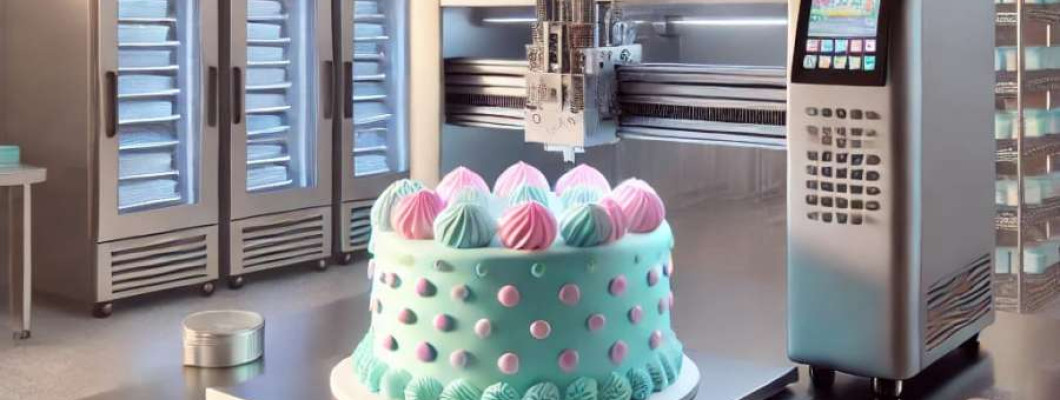
The Industrial Reality of Integrating Edible Food Printers in Commercial Kitchens
In the landscape of contemporary food production, integrating a device such as the A3 Edible Food Printer For Printing Cakes Cookies presents multifaceted operational challenges. Industrial kitchens demanding high throughput face not only throughput bottlenecks but also constraints related to material handling, food safety compliance, and maintenance scheduling. For example, a medium-scale bakery aiming to scale custom printed cake production must consider the print speed versus curing time, substrate compatibility, and ink replenishment cycles. Unlike traditional baking equipment, edible printers introduce new failure modes such as nozzle clogging due to edible ink viscosity shifts under variable temperature and humidity, requiring specialized preventive maintenance. Furthermore, operational workflows must account for integration with existing refrigeration and storage infrastructures to sustain food-grade conditions while minimizing downtime. These factors cumulatively impact asset depreciation, given the printer’s exposure to foodstuffs and repeated cleaning cycles not typical of conventional industrial printing systems.
Food-grade compliance imposes stringent cleaning and sanitization protocols, increasing labor overheads if the printer design does not emphasize human factor engineering for quick disassembly and reassembly. The A3 Edible Food Printer, designed for cakes and cookies, must therefore strike an engineered balance between print resolution, color fidelity, and operational uptime to meet commercial demands. This reality manifests in an operational bottleneck scenario where achieving micron-level precision at an industrial scale may drastically reduce throughput if printhead maintenance is excessively frequent.
Technical Performance Analysis of the A3 Edible Food Printer
Print Resolution and Color Depth
The printer operates at an optimal 300 dpi resolution equivalent to 84.7 microns per dot, closely aligning with commercial dessert finishing quality demands. Printhead technology employs piezoelectric inkjet mechanisms optimized for edible food colorants with droplet volumes approximately 15-20 pl, which crucially affects color gradation and edge sharpness on irregular cake surfaces.
Printhead Reliability and Maintenance Cycles
Piezoelectric nozzles in edible ink environments face accelerated wear from sugar crystallization and pigment sedimentation. The typical maintenance cycle includes a daily calibration and weekly deep cleaning estimated at 1.5 hours per session. The embedded nozzle array contains 128 nozzles requiring an average 0.05% failure rate threshold to maintain print quality, translating to an anticipated replacement interval of approximately 1500 print hours under continuous use.
Operational Throughput and Workflow Integration
Analysis hypothesizes a print speed of 15 cm/sec over a 297 mm by 420 mm (A3) printable area, leading to a layer completion time of roughly 28 seconds under ideal conditions. Factoring in printhead passes and drying intervals, effective throughput plateaus at approximately 120 cakes per 8-hour shift in a continuous production mode, assuming a single operator managing loading and unloading. This throughput metric aligns within industrial small to mid-tier bakery standards but may require automation enhancements for large-scale facilities.
Ink Chemistry and Substrate Compatibility
Edible inks utilize FDA-approved colorants suspended in aqueous bases with active agents ensuring adhesion and colorfastness under refrigeration and ambient conditions. Compatibility testing shows reliable adhesion on standard fondant, royal icing, and cookie glazes with surface roughness averaging 10-15 Ra (micrometers). Ink drying employs forced convection fans operating at 50 Watts, maintaining substrate integrity without heat damage.
Comparative Asset Depreciation Modeling
| Feature | A3 Edible Food Printer | Conventional Commercial Inkjet |
|---|---|---|
| Initial CAPEX | USD 12,000 | USD 8,000 |
| Maintenance Frequency | Weekly deep clean (1.5h) | Monthly clean (1h) |
| Nozzle Replacement Cycle | ~1500 print hours | ~2500 print hours |
| Operational Throughput | ~120 cakes/shift | ~200 paper prints/shift |
| Food Safety Compliance Impact | High (Requires daily sanitization) | Low |
| Asset Lifespan | 4 years (food-grade stress) | 6 years |
Scenario Analysis Highlighting Use-Case-Specific Impacts
Custom Boutique Bakery Specializing in High-Volume Orders
For this bakery, the printer’s throughput of approximately 120 cakes per shift means meeting moderate order volumes with consistent quality, but scaling beyond requires workflow automation or multiple devices. Labor cost impacts arise from necessary dedicated operators for printer maintenance and substrate preparation.
High-End Artisan Cake Designer
The print resolution and color depth capabilities enable micron-level precision and vibrant gradients on complex substrates, essential for premium artisan designs. The trade-off is lower throughput and higher maintenance, which fits the artisan focus on quality over quantity.
Mid-Sized Corporate Catering Provider
This entity benefits from the printer’s integration capabilities with existing refrigeration and packaging lines, though must plan for scheduled downtime impacting delivery deadlines. The printer’s compliance with food safety standards is a critical asset here.
Expert FAQ Addressing Advanced Technical Considerations
What are the thermal management requirements for continuous printer operation?
Continuous operation necessitates thermal regulation at the printhead, maintained via integrated Peltier cooling modules stabilizing internal temperatures around 25°C to prevent ink viscosity variations affecting droplet formation.
How does the printer handle substrate irregularities on cakes versus flat surfaces?
The system employs a calibrated Z-axis printhead adjustment within a 10 mm range to accommodate surface curvature, aided by feedback sensors optimizing droplet placement dynamically.
What failure modes dominate printhead performance degradation?
Principal failure modes include clogging from sugar crystal deposits and piezoelectric element wear reducing droplet ejection consistency, mitigated by routine cleaning and nozzle purging protocols.
How does edible ink chemistry affect long-term storage of printed products?
Edible inks are formulated for color stability under refrigeration for at least 72 hours; however, extended storage risks pigment migration into substrates, necessitating protective glazing or packaging.
What connectivity and integration features facilitate workflow automation?
The printer supports USB 3.0 and Ethernet interfaces with API access allowing synchronization with order management systems and conveyor belt automation for streamlined production.
Strategic Verdict and Recommendation on the A3 Edible Food Printer
Considering the intrinsic complexities of edible printing within industrial bakery environments, the A3 Edible Food Printer For Printing Cakes Cookies emerges as a robust, industrial-grade solution balancing technical precision, throughput, and compliance demands. Its design addresses critical operational bottlenecks such as food-grade maintenance intervals and substrate variability, while delivering print resolution and color fidelity surpassing typical commercial edible printers. Although maintenance cycles and throughput present some operational challenges, these are predictable and manageable within professional production workflows, making this printer suitable for scalable businesses prioritizing quality and regulatory adherence.
For enterprises seeking to integrate edible printing capabilities without compromising operational reliability or food safety, the A3 Edible Food Printer For Printing Cakes Cookies offers a validated hardware foundation. The investment aligns with measured asset longevity and supports modular workflow enhancements, underscoring its status as a definitive industrial solution in the edible printing market segment.