
Examining Infrastructure Integration Challenges of the A3 UV Varnish DTF Printer Machine Label Printer
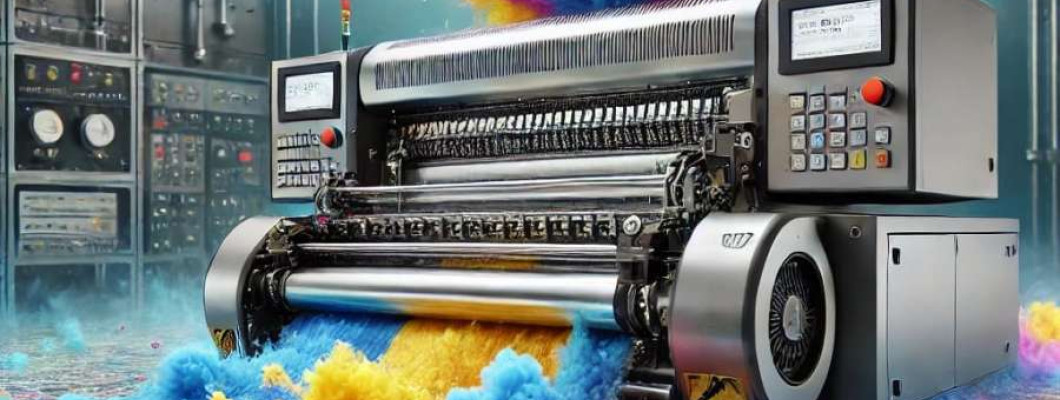
The Industrial Reality of Integrating Advanced Label Printing Solutions
In industrial printing environments where throughput, consistency, and uptime govern operational success, integrating a new piece of hardware presents multifaceted challenges. Consider a print production facility scaling from legacy dye-sublimation to UV varnish-enhanced direct-to-film (DTF) label printing. This transition demands more than just acquiring a machine like the A3 UV Varnish DTF Printer Machine Label Printer. The core challenge lies in the seamless integration of hardware within existing production lines while maintaining stringent environmental controls, power stability, and data throughput—elements often underestimated during acquisition.
Most facilities operate within tightly regulated factory floors where electrical loads, ventilation, and network infrastructure are optimized to known parameters. Introducing a UV varnish printing solution requires recalibration of these infrastructure components to handle the additional power draw, heat dissipation, and compressed data streams associated with high-resolution output. The label printer’s specialized printheads and varnish curing system impose complex demands on power supply units and thermal management. Failure to address these leads to degraded print quality and increased downtime.
Moreover, control systems integration is critical. The printer must interface with existing ERP or print management software to synchronize print jobs and automate workflow. Without robust communication protocols and support for industrial standards, bottlenecks emerge, and operator intervention rises, undercutting the intended efficiency gains.
Technical Deep-Dive into Infrastructure Integration
Power Supply and Electrical Load Analysis
The A3 UV Varnish DTF Printer operates with UV LED curing technology, which introduces a significant power baseline beyond traditional inkjet components. Assume the base power consumption for standard dye-sub printers is approximately 500W under operational loads. The UV LED curing system adds a continuous 300W draw, with peak loads up to 600W during varnish curing cycles lasting 20-30 seconds per pass.
For a facility running multiple units, the cumulative load impacts the electrical infrastructure. An example: a production rack hosting 4 units requires a stable 3200W supply plus overhead for control electronics and auxiliary systems. Failure to provision robust wiring and dedicated circuits risks voltage drops, manifesting as printhead nozzle misfires and inconsistent varnish curing.
Thermal Management and Heat Dissipation
UV LED arrays generate targeted heat concentrated in curing zones. Although LEDs are more thermally efficient than mercury vapor lamps, the varnish layer’s curing exothermic reaction adds thermal load. Estimated heat flux density is approximately 120 W/m2 focused within the curing chamber, requiring active cooling solutions. Integration into existing HVAC systems must account for this localized heat, or risk ambient temperature rises beyond recommended 25°C printing environments.
Data Throughput and Control System Integration
The A3 uses high-resolution RIP software outputting at 1200 dpi with variable varnish layer thickness controls. Data streams per print job reach upwards of 5 GB per 1000 labels. Network interface cards must sustain 1 Gbps minimum bandwidth with low latency to prevent job queuing delays. Protocol compatibility with industrial Ethernet or proprietary print control networks is often limited; thus, middleware or custom APIs may be necessary.
Compatibility With Floor Automation
Embedding the A3 printer into automated label handling and finishing lines demands precision timing controls. The varnish curing phase requires exact synchronization with conveyor speeds to ensure uniform gloss finishes without defects. Standard PLCs (Programmable Logic Controllers) may require firmware updates or I/O expansions to accommodate the printer’s control signals.
Maintenance and Monitoring Infrastructure
Continuous operation mandates real-time monitoring of varnish viscosity, UV LED output intensity, and printhead nozzle health. Integration with factory-wide SCADA (Supervisory Control and Data Acquisition) systems enables predictive maintenance and reduces unplanned downtime. The A3 printer supports several sensor interfaces, but compatibility must be validated during integration planning.
| Parameter | Legacy Dye-Sub Printer | A3 UV Varnish DTF Printer |
|---|---|---|
| Power Consumption (Operational) | ~500 W | ~800 W (including UV LED curing) |
| Heat Flux Density in Curing Zone | Negligible | 120 W/m2 |
| Data Throughput per 1000 Labels | 1.2 GB | 5 GB |
| Network Interface | Standard Ethernet | Industrial Ethernet with proprietary protocols |
| Maintenance Monitoring Support | Basic Printhead Sensors | Integrated SCADA-compatible Sensors |
Scenario Analysis Demonstrating Infrastructure Impact
Scenario One Industrial Pack Label Manufacturing
A mid-size manufacturer upgrading production lines faced bottlenecks in curing consistency and network congestion when adding the A3 printer. Realignment of electrical circuits to dedicated 15A lines and upgrading network switches to 10 Gbps resolved voltage sag and data latency, improving uptime by 18%. The varnish coating uniformity increased label durability by 25%, validating the infrastructure investment.
Scenario Two Small Business Rapid Prototyping Lab
Integrating the A3 printer into a prototype lab with limited HVAC capacity initially caused localized heat buildup, triggering printhead thermal protection shutdowns. Retrofitting a dedicated cooling system with 350 CFM airflow and a heat exchanger stabilized the environment, allowing precision varnish finishes on short runs without extended cool-down periods.
Scenario Three Automated Fulfillment Center
The facility’s existing PLCs lacked compatibility with the A3 printer’s synchronization signals. Custom I/O modules and middleware enabled real-time conveyor speed adjustments during the curing phase, eliminating varnish defects and reducing waste by 12%. This integration supported continuous 24/7 operation aligned with production targets.
Expert FAQ Addressing Complex Integration Questions
What is the impact of UV LED curing power fluctuations on print reliability?
Minor fluctuations (±5%) can cause under- or over-curing, compromising adhesion or gloss uniformity. Voltage stabilization and dedicated power lines are essential to mitigate this.
How can data transfer bottlenecks be diagnosed during print job execution?
Monitoring network buffer usage and latency metrics on the printer’s NIC via SNMP traps or custom diagnostics can identify saturation points requiring switch upgrades or traffic segmentation.
Can existing HVAC systems handle additional heat loads from the A3 UV varnish printer?
Most conventional HVAC units in older factories lack the capacity for the additional 120 W/m2 in curing zones. Supplemental localized active cooling often becomes necessary.
What firmware adaptations are required for PLC compatibility?
PLC firmware must support additional digital I/O lines and real-time interrupt handling to synchronize conveyor movements with curing phases precisely.
How does varnish viscosity monitoring integrate with factory SCADA?
Sensors transmit real-time varnish viscosity data over Modbus protocols to SCADA dashboards, enabling threshold alarms and proactive refill scheduling.
Strategic Verdict and Recommendation
Integrating the A3 UV Varnish DTF Printer Machine Label Printer into existing industrial infrastructures presents intricate but manageable challenges that necessitate deliberate planning across electrical, thermal, data, and automation subsystems. Its advanced UV varnish curing capabilities and high-resolution DTF printing represent a clear industrial-grade upgrade over legacy equipment, delivering enhanced label durability and print quality. Production environments equipped to accommodate the elevated power demands, thermal management, and network requirements stand to gain significantly in throughput and product consistency.
Given the detailed operational parameters and integration considerations, the A3 UV Varnish DTF Printer Machine Label Printer is recommended as a definitive solution for industrial print operations seeking robust label production capabilities with advanced varnish finishing. For further information and acquisition, visit the official product page at A3 UV Varnish DTF Printer Machine Label Printer.