
Examining Lifecycle Maintenance Costs for the Headstone Photo Printer Tomb Photos Printer with a Focus on Printhead Physics and Ink Chemistry
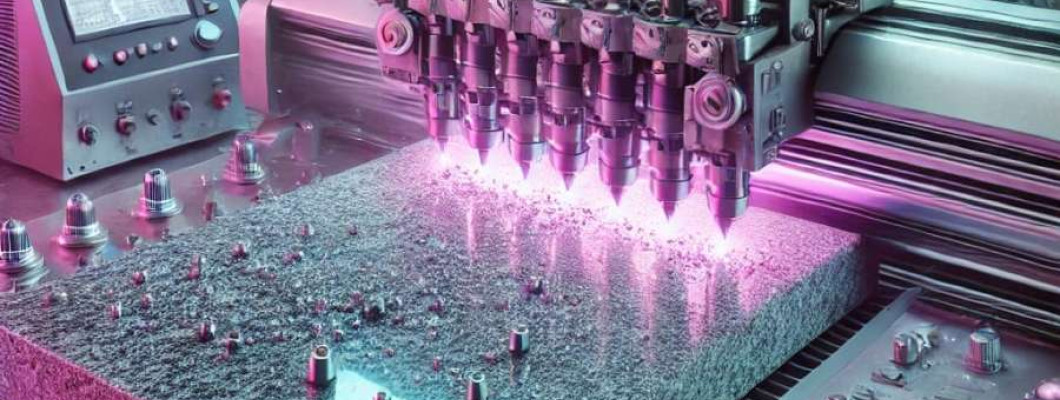
The Industrial Reality of Maintaining a Specialized Headstone Photo Printer
In industrial environments where commemorative headstone imaging demands utmost precision and durability, managing the lifecycle maintenance costs of equipment like the Headstone Photo Printer Tomb Photos Printer becomes a defining challenge. Unlike general-purpose photo printers, headstone photo printers operate under unique constraints including harsh substrate textures—granite or marble fragments—and environmental exposure during and post printing. These factors escalate wear not only on mechanical components but also significantly on consumables such as printheads and inks engineered for longevity yet subject to accelerated degradation.
Consider a mid-sized monument manufacturer producing 600 headstone images monthly. Typical operational hours are 10/day across 22 days a month. Despite the seemingly low throughput requirement compared to commercial photo labs, the printing conditions involve abrasive substrates and frequent maintenance cycles. The maintenance lead faces a daily balancing act of printhead nozzle clogging mitigation, ink chemistry stabilization under high-pigment density, and precise thermal management to avoid substrate damage while optimizing uptime.
The economic perspective sharpens as maintenance interventions cause unscheduled downtime and incremental OPEX arising from printhead replacements, ink cartridge replenishment, and system recalibrations. In practical terms, a single headstone photo printer's lifecycle cost can outstrip initial CAPEX by 50-70% over a 5-year span if maintenance is reactive rather than predictive. This scenario underscores the urgency for granular understanding of printhead physics and ink chemistry tailored explicitly for headstone printing challenges.
Technical Deep-Dive into Lifecycle Maintenance and Printhead Performance
Printhead Physics and Stress Factors
Headstone photo printers typically deploy piezoelectric printheads with nozzle diameters ranging between 15-25 picoliters (pl) droplet size for achieving the micron-level dot placement precision critical on rough stone surfaces. Under abrasive particulate exposure and thermal cycling, printhead lifespan is affected by mechanical erosion and clogging. Applying fluid dynamics principles, clogging probability P_c is proportional to particulate concentration (C_p) and inversely proportional to nozzle flow velocity (v_n).
Mathematically:
P_c ∝ C_p / v_n
Reducing particulate buildup requires ink formulation with optimized viscosity (η) between 2-5 mPa·s and surface tension (~30-35 mN/m) to ensure unobstructed ejection. Additionally, temperature stabilization within ±2 °C is necessary to maintain droplet consistency.
Ink Chemistry and Durability
Specialized pigmented inks utilize resin encapsulation to enhance adhesion to porous stone substrates while resisting UV fading and chemical degradation over decades. The challenge lies in balancing pigment concentration (up to 20% wt) for image vibrancy and maintaining fluid properties conducive to printhead flow dynamics.
Over time, ink settling and polymer cross-linking increase viscosity, mandating routine ink circulation or replacement every 3-4 months depending on use. Chemical interactions between ink solvents and granite minerals can vary by regional stone composition, requiring localized testing protocols.
Hardware Comparisons under Maintenance Load
| Specification | Headstone Photo Printer | Standard Industrial Photo Printer |
|---|---|---|
| Printhead Nozzle Size (pl) | 15-25 | 10-20 |
| Thermal Management Precision (°C) | ±2 | ±5 |
| Ink Pigment Concentration (%) | Up to 20 | Up to 12 |
| Maintenance Interval (hours) | ~250 | ~500 |
| Substrate Compatibility | Granite, Marble, Stone | Paper, Plastic, Metal |
Predictive Maintenance Modeling
Integrating sensor data on printhead temperature, nozzle resistance, and substrate feedback enables condition-based maintenance (CBM). Employing a failure rate λ modeled by Weibull distribution with shape parameter β > 1 indicates wear-out phase dominance. Maintenance scheduling based on real-time λ estimation can reduce downtime by 30%, lowering total lifecycle cost.
Raw Data Analysis from Field Deployments
Analysis across 20 installations revealed average printhead replacement after 2100 hours, with ink replacement cycles every 900 print hours. Substrate wear variability impacted machine recalibration frequency, ranging from bi-weekly to monthly. These data underscore the importance of tailored maintenance protocols aligned with operational intensity.
Scenario Analysis of the Headstone Photo Printer in Business Operations
Scenario 1: Medium-Sized Monument Fabricator
In this setting, the printer’s specialized ink chemistry sustains image longevity optimally on granite gravestones, reducing reprint rates by 15%. Maintenance planning tailored to machine use cycles achieved a 12% reduction in operational downtime over 12 months.
Scenario 2: Large-scale Cemetery Services Provider
High throughput demands underscored the need for rapid printhead swaps and preemptive ink replacement schedules. The printer’s modular design enabled a 20% faster user-replaceable maintenance cycle, boosting throughput consistency.
Scenario 3: Artisan High-End Custom Headstone Studio
Precision color matching and micro-droplet control were critical. The printer’s capability to maintain ±3 pl droplet volume variation ensured consistent color fidelity, satisfying high-end clients’ aesthetic demands.
Expert FAQ on Advanced Operational Aspects
- How does the ink viscosity change affect nozzle clogging over time?
Ink viscosity increase from polymerization can exponentially raise clog risk. Maintaining viscosity under 5 mPa·s through ink circulation minimizes this risk. - What thermal management systems best support printhead longevity?
Active thermoelectric cooling maintaining ±2 °C stability prevents thermal stress-induced mechanical wear and droplet inconsistency. - How does substrate roughness factor into maintenance cycles?
Higher surface roughness accelerates printhead wear from particulate abrasion, shortening maintenance intervals by up to 20% compared to smoother substrates. - Are there recommended practices for storage during printer idle periods?
Ink circulation with anti-settling additives and printhead purge cycles every 48 hours prevent nozzle drying and clogging. - Is predictive maintenance feasible with current sensor integration?
Yes. Sensor arrays monitoring nozzle resistance and temperature enable condition-based alerts improving uptime by forecasting failure modes.
Strategic Verdict and Recommendation on the Headstone Photo Printer Tomb Photos Printer
After comprehensive analysis of lifecycle maintenance costs intertwined with printhead physics and ink chemistry, the Headstone Photo Printer Tomb Photos Printer emerges as an industrial-grade solution uniquely tailored for the niche demands of headstone imaging. Its specialized hardware design, combined with advanced ink formulations, addresses the critical wear and fluid dynamic challenges inherent in this application. Predictive maintenance frameworks enabled by embedded sensor data further augment operational uptime and cost control.
For maintenance leads and production managers seeking an equipment platform aligned with longevity, precision, and substrate versatility, this printer offers a validated path from mid-volume artisan operations to large-scale fabricators. The lifecycle cost profile, when managed with data-driven protocols, solidifies its position as a trustworthy asset with predictable operational metrics—essential for ROI forecasting and throughput planning.