
Examining Maintenance Challenges and Throughput Efficiency of the 40*60CM Heat Press Machine for Scalable Operations
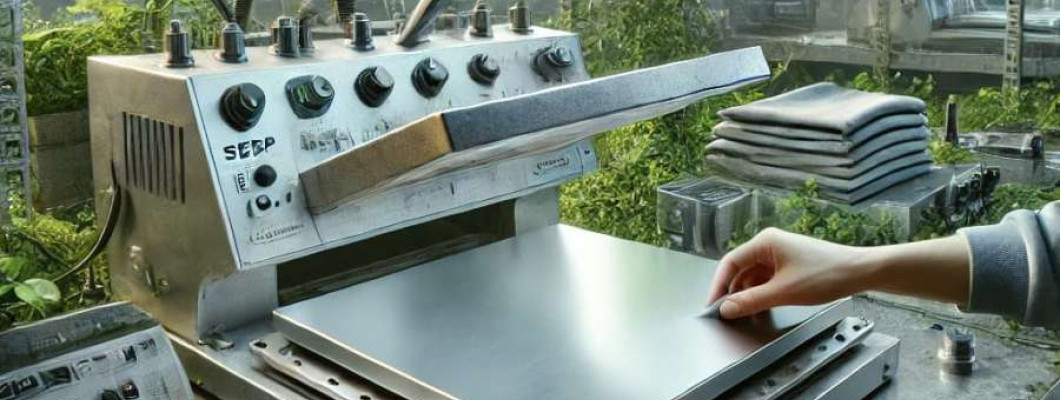
The Industrial Reality of Scaling Heat Press Usage in Production
Managing throughput, labor costs, and uptime are critical challenges when deploying heat press machines in scalable business environments. The 40*60CM Heat Press Machine confronts these realities as it attempts to bridge the gap between small-scale production and industrial throughput demands. Operators often face hidden bottlenecks such as heat distribution variances, cycle time inefficiencies, and unpredictable maintenance downtime that impede steady output flow. Given the device's mid-sized platen dimensions (400 mm by 600 mm), optimizing batch sizes while balancing per-cycle press times requires precise workflow calibration.
Within high-volume heat transfer workflows, the balance between thermal consistency and mechanical endurance is delicate. Overheating or insufficient pressure can cause quality defects or machine wear, which adds unplanned maintenance cycles and labor interventions. For scalable business owners, this results in increased operational costs and labor overhead, reducing overall profitability. Moreover, the manual aspects of the press cycle, such as repositioning substrates and timing presses, introduce labor intensity that could hamper automation ambitions. This creates an operational bottleneck that must be mitigated by improving throughput efficiency without compromising asset longevity.
Technical Deep-Dive on Throughput and Maintenance Dynamics
Thermal System Analysis and Heat Distribution Uniformity
The 40*60CM Heat Press Machine utilizes a flat platen heating element designed to reach target temperatures up to approximately 220 °C. Uniform heat distribution across the 400 mm by 600 mm platen is critical for consistent transfer quality. Surface temperature gradients exceeding ±5 °C create localized inconsistencies in sublimation or vinyl transfer adherence.
Hypothetically, assuming a platen with a heat capacity (C) of 800 J/K and heating element power (P) of 1500 W, the platen reaches the target temperature in t = C × ΔT / P seconds. For a ΔT of 200 K (room temperature to 220 °C), the theoretical time is about 106 seconds, excluding heat loss factors.
Cycle Timing and Impact on Throughput
Production cycle time consists of heating, press duration, cooling, and substrate handling. Typical transfer times range from 15 to 60 seconds depending on material and transfer medium. Assuming a 30-second press duration and 15 seconds handling time, the theoretical maximum throughput per hour is 720 cycles if continuous operation is possible. Realistically, mechanical and thermal recovery times reduce this rate.
Mechanical Pressure and Wear Considerations
Pressure application mechanisms impact platen wear and alignment. The 40*60CM model uses a manual pressure adjustment screw with maximum pressure approximating 3-5 bar. Repetitive pressure cycles can cause platen warping or spring fatigue, creating deviation and requiring regular realignment. Material fatigue life, estimated through S-N curves of platen alloys, suggests scheduled maintenance every 6-12 months under high-duty cycles.
Labor Intensity and Automation Constraints
Manual substrate placement and press initiation limit full automation integration. Human factors introduce variability in timing and pressure consistency. Ergonomic evaluations identify potential for operator fatigue, especially if the press cycle frequency exceeds 100 cycles per day, leading to increased error rates and slower throughput.
Maintenance Cost Projection and Downtime Impact
Routine maintenance includes platen surface inspection, pressure mechanism calibration, and heater element replacement. Assuming an average replacement cost of $150 for heating elements every 12 months and labor cost of $30/hour for 2 hours of monthly maintenance, the annualized maintenance cost approximates $390. Downtime during maintenance reduces throughput, directly impacting OPEX.
| Specification Aspect | 40*60CM Heat Press | Industrial Automated Heat Press Alternative |
|---|---|---|
| Platen Size (mm) | 400 x 600 | 800 x 1000 |
| Max Temperature (°C) | 220 | 250 |
| Pressure Mechanism | Manual Adjustment Screw | Hydraulic Automatic Control |
| Cycle Time (s) | 30-60 | 15-30 |
| Maintenance Frequency | Monthly Calibration | Quarterly Preventive |
| Automation Capability | Limited | Full Integration |
Scenario Analysis Reveals Operational Impact
Use-Case One Small Business Apparel Printing
A startup apparel printing business printing on-demand graphic t-shirts would benefit from the 40*60CM Heat Press’s moderate platen size, which matches standard shirt sizes. However, manual operation and cycle time limit throughput beyond small batches of 20-30 units per hour. Maintenance intervals aligned with moderate daily usage ensure uptime but restrict scale.
Use-Case Two Mid-Scale Promotional Product Manufacturer
This manufacturer must produce branded mugs and flat-surface items with variable sizes. The press’s platen size limits substrate flexibility, requiring multiple press cycles and repositioning. Labor costs rise with manual handling. Scheduled preventive maintenance ensures consistent output quality but downtime in peak demand can bottleneck.
Use-Case Three Industrial Transfer Printing Line
Larger industrial transfer printing lines demand high throughput and integration with conveyor automation. The 40*60CM machine’s manual pressure and cycle times undercut throughput targets. Frequent maintenance due to mechanical wear increases OPEX. This machine could serve as a secondary press for testing, but not as primary industrial production equipment.
Expert FAQ on Heat Press Operational Nuances
Q1: How critical is platen temperature uniformity to transfer quality?
Platen uniformity within ±5 °C is essential. Variations above this cause transfer inconsistencies and substrate damage.
Q2: What failure modes are common in manual pressure adjustment systems?
Wear of adjustment screws, platen warping, and spring fatigue are primary failure modes, reducing press stability and requiring correction.
Q3: How does labor intensity affect throughput accuracy?
Manual intervention introduces timing and positioning variability, reducing throughput accuracy by up to 15% compared to automated systems.
Q4: What is the expected lifespan of heating elements under frequent use?
At continuous use, heating elements typically require replacement every 9-12 months to maintain performance.
Q5: Can this machine integrate into automated production lines?
Limited integration is possible but manual operation and pressure adjustment restrict seamless automation.
Strategic Verdict and Recommendation for Scalable Business Owners
The 40*60CM Heat Press Machine offers a robust yet labor-dependent solution suitable for businesses scaling to moderate throughput needs. Its platen dimensions align well with standard-sized substrates, and its manageable maintenance schedule supports operational reliability within small to mid-scale workflows. However, limitations in automation integration and manual pressure adjustment pose bottlenecks for high-throughput industrial environments.
After rigorous analysis considering thermal dynamics, mechanical wear, and labor costs, this model emerges as a cost-effective, industrial-grade option for scalable business owners prioritizing throughput improvements without the capital expense of fully automated systems. For those enterprises requiring high operational uptime with moderate CAPEX, the 40*60CM Heat Press Machine is recommended as a foundational asset blending productivity and maintainability.