
Examining The Gap Between DIY And Industrial-Grade Solutions For A3 Roll DTF Printer With A Financial Controller Lens
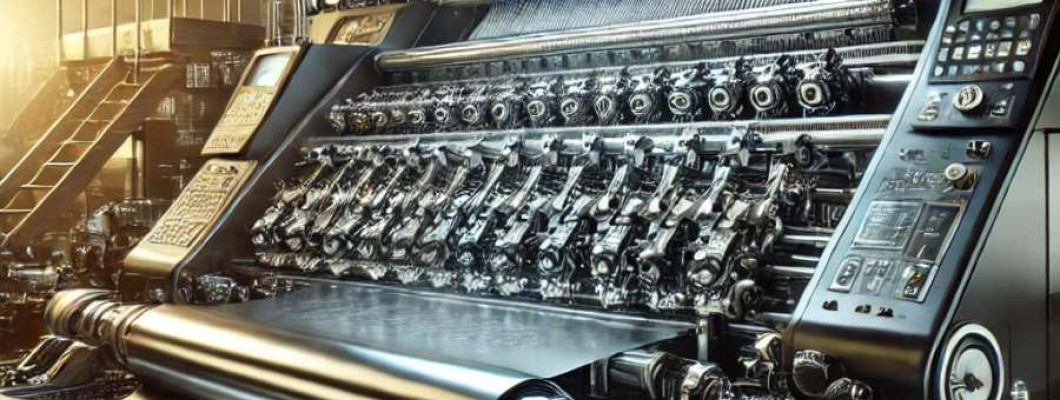
The Industrial Reality of Integrating an A3 Roll DTF Printer into Mid-Level Production
Within diverse production environments, the challenge of bridging the divide between consumer-grade and industrial-scale DTF (Direct to Film) printers frequently arises. The A3 Roll DTF Printer occupies a unique niche, often marketed as a semi-professional device but employed in varying capacities ranging from artisanal output to scaled manufacturing. For a financial controller, appreciating the exact placement of this technology within a capital expenditure (CAPEX) versus operational expenditure (OPEX) framework is critical. The core technical challenge hinges on reconciling asset longevity and maintenance intensity alongside throughput and output quality. Failure to align expectations with the hardware's real-life durability and consumables consumption can inadvertently erode profit margins and inflate total cost of ownership.
Consider a mid-size printing house attempting to maximize output without embracing the full industrial-grade price point. The temptation to deploy a seemingly advanced A3 Roll DTF Printer without granular insight into depreciation profiles, maintenance cycles, and consumable costs often results in underestimated downtime and accelerated component wear. The ensuing financial impact encompasses not only parts replacement costs but also labor hours diverted to troubleshooting, missed delivery deadlines, and inconsistent product quality, undermining client retention and revenue forecasts.
Additionally, the thin line between DIY-grade and industrial-grade equipment manifests in limited integration capability with automation systems. The lack of robust infrastructure interfaces can escalate labor dependency, further straining the operational budget. Electricity consumption, heat emission, and HVAC integration also demand thorough review to avoid unexpected facility overheads impacting the balance sheet.
Technical Deep-Dive Reconciling Hardware Traits With Financial Impact
Printhead Technology and Depreciation Math
The core of the A3 Roll DTF Printer’s technology typically involves piezoelectric printheads with drop volumes around 6-12 pl, optimized for textile ink jetting. Comparing these printheads with full industrial counterparts shows a lifespan ranging roughly from 2,000 RU (Raster Units) to 5,000 RU before significant quality degradation under continuous usage. Assuming an average printjob consumes 300 RU, a printhead replacement cycle might occur every 6-15 weeks in high-volume setups.
Depreciation can be modeled linearly or via usage-based approaches. For financial rigor, usage-based depreciation factoring RU lifecycle yields nuanced asset valuation:
Asset Value (t) = Initial Cost - (Initial Cost × (Printing Hours × RU per Hour) / Total RU Lifespan)
This model directly ties printhead wear to output, providing more accurate ROI calculation than traditional straight-line depreciation over time.
Ink Chemistry, Consumables Drain Rate, and OPEX Analysis
Ink cost per liter for DTF specialized inks ranges between $200 to $400 depending on the pigment and polymer formulation. Daily throughput directly scales ink consumption. For instance, a nominal throughput of 100 meters of printed film daily at 600 dpi coverage can consume approximately 0.5 to 1 liter of ink and associated adhesives. Factoring in frequent maintenance flushes and nozzle cleaning cycles inflates actual ink usage by an estimated 15-20%.
Thermal Management and Energy Consumption
Thermal elements, including drying ovens or curing lamps, often run continuously during production. Power ratings of 800-1500 Watts per unit on heating components impact facility electrical load. Precise hourly consumption monitoring reveals typical figures of 8-12 kWh daily under continuous operation, essential data for forecasting utility expenses commensurate with production scale.
Comparative Analysis of Labor and Automation Integration
Labor cost analysis highlights a significant variance between equipment that supports automated roll feeding, multi-roll simultaneous printing, or integrated post-processing, versus semi-manual machines like many A3 Roll DTF Printers. Manual intervention for film loading, alignment, and curing can consume upwards of 1.5 hours per shift versus an automated line reducing this to under 30 minutes.
Infrastructure Compatibility and Facility Adaptation Costs
Considering power quality, ventilation requirements to manage ink fumes, and humidity control for media stability, facility modification costs can range from $5,000 to $15,000 depending on scale. Ignoring these factors leads to hidden expenditures and potential compliance issues with environmental regulations.
| Factor | A3 Roll DTF Printer (Semi-Industrial) | Full Industrial-Grade DTF Printer |
|---|---|---|
| Printhead Lifespan (RU) | 2,000 - 5,000 | 10,000+ |
| Ink Cost per Liter ($) | 200 - 400 | 180 - 350 (bulk optimized) |
| Automation Level | Manual loading and curing | Fully automated roll-to-roll feeding |
| Energy Use (kWh/day) | 8 - 12 | 15 - 25 (higher throughput compensates) |
| Maintenance Interval (Hours) | Weekly minor upkeep | Monthly scheduled major servicing |
Scenario Analysis of Financial Controller Use Cases
Small-Scale Apparel Brand Scaling Production
A startup apparel company using an A3 Roll DTF Printer faces capital constraints but requires evolving throughput. The printer’s moderate CAPEX aligns with budgetary limits, yet carefully monitoring OPEX is essential as maintenance cycles and consumable purchases scale. ROI improves only if production remains steady without frequent quality loss, underlining the importance of planned maintenance scheduling and consumable stock management.
Mid-Sized Print Shop Adding Versatility Without Facility Expansion
When a print shop integrates the A3 Roll DTF Printer, the manageable footprint and electrical requirements facilitate deployment without costly infrastructure upgrades. The financial controller must track incremental increases in utility bills and consumable use versus client billing to justify the purchase. Scalable use in mixed production lines helps smooth cash flow impact.
Outsourced Production Partner Managing Multiple Client Runs
For companies subcontracting print runs, the semi-industrial characteristics of the printer impact scheduling flexibility and downtime risk. The financial controller needs to budget for expedited printhead replacements and irregular maintenance surcharges. Balancing machine availability against client deadlines ultimately influences contract profitability.
Expert FAQ Addressing Advanced Financial and Operational Challenges
What is the optimal printhead replacement schedule to balance quality and cost?
Empirically, replacing printheads at approximately 80% of their rated RU lifespan minimizes output degradation while avoiding premature capital expenditure. Utilizing RU counters and print quality metrics integrated into firmware can automate prediction and alerting to optimize replacement timing.
How can energy consumption be minimized without sacrificing throughput?
Implementing variable power management on curing lamps and scheduled warm-up/cool-down routines reduces consumption. Additionally, aligning print runs to batch sizes that maximize continuous operation prevents energy-intensive start/stop cycles.
What accounting methods best reflect asset depreciation for mixed-use scenarios?
Activity-based costing (ABC) combined with RU-driven printhead depreciation provides precise valuation, especially when machines run irregularly or across multiple client projects. This method outperforms traditional straight-line depreciation for budgeting and tax reporting.
How to forecast consumable demand accurately to avoid cash flow bottlenecks?
Demand forecasting leverages historical throughput data with seasonality adjustments. Establishing minimum stock levels with lead time buffers, and negotiating supplier consignment or just-in-time programs, optimizes cash conversion cycles.
Are there tax incentives or depreciation accelerations applicable to such printing equipment?
Many jurisdictions offer accelerated depreciation or small equipment investment credits under industrial modernization programs. Engaging tax professionals to map local incentives can materially improve the financial profile of acquisitions like the A3 Roll DTF Printer.
Strategic Verdict and Recommendation
From a financial controller’s vantage point, the A3 Roll DTF Printer represents a strategically viable asset bridging the gap between DIY enthusiasm and full industrial production demands. Its moderate initial price point paired with predictable depreciation and consumable costs favors controlled scaling in business models where capital is constrained but quality remains non-negotiable. Despite inherent trade-offs in automation and printhead longevity, diligent maintenance scheduling, informed consumable management, and intelligent infrastructure adaptation reduce hidden costs that typically erode profitability.
For enterprises seeking a semi-industrial-grade solution balancing CAPEX with manageable OPEX, this printer merits serious consideration. The detailed data-driven insights presented herein support its operational integration as a cornerstone asset. For a complete technical and procurement view, the A3 Roll DTF Printer is recommended as an industrial-grade option that pragmatically meets mid-level throughput and asset longevity demands.