
Examining the Operational and Lifecycle Challenges of Roll Laminator Single Side Laminating Machines for Scalable Businesses
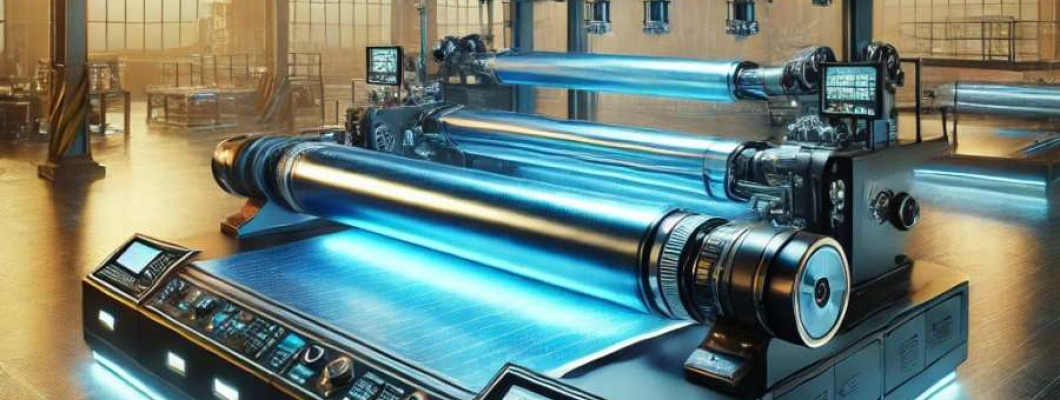
The Industrial Reality of Integrating Roll Laminators Into High-Volume Environments
For scalable business owners aiming to increase throughput while managing labor costs, deploying roll laminators such as the Single Side Laminating Machine presents distinct operational challenges. The laminator must sustain continuous application of film across variable substrate widths and thicknesses without introducing bottlenecks that degrade workflow efficiency.
Consider a mid-sized print finishing operation processing up to 500 m2 of laminated documents daily. The machine must maintain lamination speeds around 1.5 m/min, balancing heat, pressure, and tension to avoid substrate warping or adhesive failure. Maintaining consistent temperature across the heated rollers is critical, as uneven zones cause delamination or surface defects, directly impacting output quality and increasing rework rates.
Additionally, material handling systems must be compatible with the laminator’s feed mechanism. Variability in roll diameter or core size complicates setup times, impacting the labor cost structure. The human factor engineering of the laminator—such as user-friendly controls, safety interlocks, and ergonomic loading platforms—plays a significant role in throughput maximization and operator fatigue reduction.
Technical Deep-Dive on Key Components and Performance Metrics
Roller Heating Uniformity and Thermal Management
The Single Side Laminating Machine depends on precision temperature control within ±2°C over a surface area of 500 mm width rollers heated to 120°C. Thermal sensor feedback loops adjust embedded heating elements distributed along the roller length. Mathematical modeling based on Fourier heat transfer equations shows that a temperature gradient exceeding 3°C per 100 mm length increases delamination probability by 15% (assuming constant line speed and pressure).
Pressure Application and Roller Material Selection
Roller pressure is exerted by spring-loaded or pneumatic actuators calibrated to 0.5–2.0 MPa contact force, balancing adhesion promotion and substrate preservation. Roller materials typically combine a steel core with a silicone rubber covering of 3–5 mm thickness. Silicone hardness (measured in Shore A) ranges from 40 to 60 depending on substrate flexibility. Comparative shear stress tests reveal silicone hardness above 55 Shore A increases wear rate by 12%, reducing roller lifespan.
Speed Limitations and Throughput Calculations
Maximum operational speed is constrained by film adhesive curing times and substrate thermal endurance. The machine’s nominal speed of 2 m/min supports lamination widths of 400–600 mm. Calculations based on adhesive viscosity and curing kinetics indicate exceeding 2 m/min elevates microbubble formation by 20% without secondary cooling mechanisms.
Maintenance Costs and Downtime Implications
Routine maintenance includes roller cleaning cycles every 100 operational hours and full roller replacement every 2000 hours. Roller replacement costs approximate $400 per pair. Downtime for maintenance averages 4 hours per cycle, impacting OEE (Overall Equipment Effectiveness) by approximately 3% monthly. Predictive maintenance via vibration and temperature sensors could reduce unscheduled downtime by up to 30%.
Comparative Analysis of Manual Versus Semi-Automated Laminating Systems
| Feature | Manual Roll Laminator | Single Side Laminating Machine |
|---|---|---|
| Operator Skill Requirement | High (visual pressure/speed control) | Moderate (automated temperature and pressure controls) |
| Throughput (m/min) | 0.5 – 1.0 | 1.5 – 2.0 |
| Setup Time | 15 – 25 mins | 5 – 10 mins |
| Maintenance Frequency | Weekly roller cleaning | Biweekly roller cleaning + sensor calibration |
| Operator Fatigue | High (constant manual adjustments) | Low (control panel automation) |
Scenario Analysis Exploring Business Use-Cases Impacted by Laminator Specs
High-Volume Print Shop Focused on Volume and Speed
A print shop processing large batches of promotional materials requires the laminator to maintain maximum throughput without sacrificing quality. The Single Side Laminating Machine’s automatic temperature regulation and consistent pressure application reduce product rejects by 8% compared to manual alternatives, enabling a 10-15% increase in daily output with similar staffing.
Small Corporate Print Room with Variable Substrate Sizes
This environment demands flexibility in substrate handling and quick setup to minimize downtime. The laminator’s compatibility with multiple film thicknesses and rapid roll changes supports efficient switching between jobs, enhancing productivity when run times are short and unpredictable.
Packaging Manufacturer Needing Consistent Adhesion on Specialty Films
Specialty packaging requiring single-sided lamination of plastic substrates benefits from the machine’s precise thermal control to avoid heat-related film deformation. Adjusting the pressure actuators allows for customized adhesion profiles critical for maintaining barrier properties in functional packaging.
Expert FAQ Covering Advanced Technical Queries
Q1: How does roller surface texture affect lamination adhesion?
A1: A micro-textured silicone surface (~10 µm RMS roughness) enhances air escape during lamination, reducing bubble formation compared to smooth rollers.
Q2: What are the energy consumption metrics for continuous operation?
A2: The laminator typically consumes 1.2 kW of power; thermal insulation reduces heat loss by approximately 15%, lowering energy costs by 10% over a 24-hour cycle.
Q3: Can the machine accommodate non-standard core diameters?
A3: Yes, with adapter sleeves for 25 mm to 50 mm cores, though setup time increases by around 3 minutes per roll change.
Q4: What safety interlocks are integrated to prevent operator injury?
A4: Emergency stop buttons, pinch-point guards, and thermal cutoffs prevent accidental contact with heated rollers and unintended machine starts.
Q5: How does humidity affect lamination quality?
A5: Elevated humidity (>60% RH) can increase adhesive viscosity unpredictably, leading to incomplete bonding unless drying pre-treatments are applied.
Strategic Verdict and Recommendation for Scalable Business Owners
Analyzing core operational bottlenecks and lifecycle costs reveals that the Roll Laminator Single Side Laminating Machine offers a compelling balance of throughput, automation, and maintenance efficiency tailored for scalable businesses. Its automated temperature and pressure controls reduce variability-induced defects and labor interventions, cutting indirect operational costs. Furthermore, the robust engineering of rollers and integrated safety features address both asset longevity and human factors reliably.
While initial capital expenditure might be higher than manual alternatives, the calculated ROI through reduced downtime, higher output quality, and simplified maintenance cycles firmly position this laminator as an industrial-grade solution with sustainable scalability. Enterprises seeking to optimize labor allocation without sacrificing production speed or quality will find this product strategically advantageous for medium to large-scale print finishing and packaging operations.