
Examining the Operational Challenges and True Asset Value of the A3 DTG Printer T-shirt Printing Machine
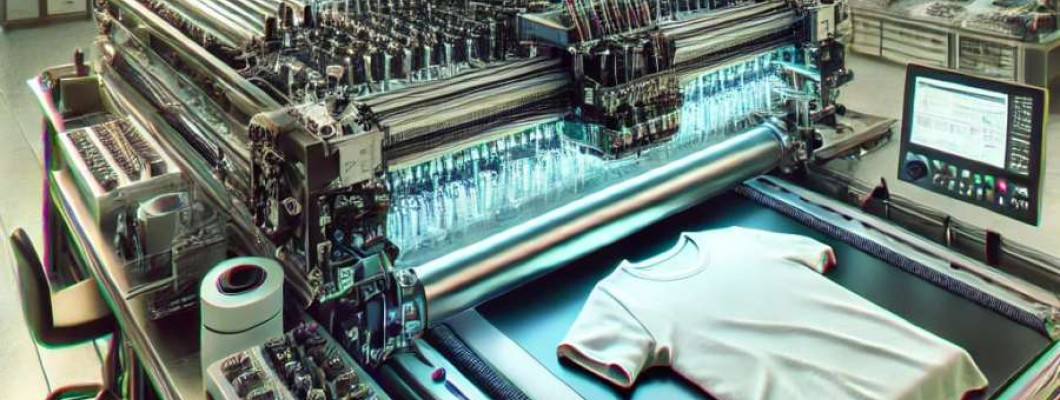
The Industrial Reality of Integrating the A3 DTG Printer
In a bustling medium-scale textile production environment, meeting tight delivery deadlines while maintaining output quality presents a persistent challenge. The A3 DTG Printer T-shirt Printing Machine enters this arena as a candidate replacement for older hybrid screen-printing setups. However, an industrial operator must assess not only the upfront capital but the less obvious costs and bottlenecks that impact throughput and asset utilization. For instance, typical DTG printing workflows suffer from printhead clogging, nozzle misalignment, and ink wastage, all of which escalate downtime and reduce printer availability—key metrics in an environment where operator shifts run 16+ hours daily.
Moreover, the physical footprint and infrastructure compatibility of the A3 DTG Printer impose constraints on integration into existing production lines. Facility managers must consider power consumption spikes from the thermal ink curing subsystem and stable climate controls essential for ink viscosity consistency. Failure to manage these parameters results in print defects, rejected garments, and rework costs that silently degrade the operational breakeven point.
In short, although the A3 DTG Printer proposes ease and speed in direct-to-garment digital printing, its industrial deployment demands rigorous evaluation of hidden operational bottlenecks that can erode the theoretical gains presented on paper.
Technical Deep-Dive into Printer Capabilities and Constraints
Printhead Technology and Failure Points
The A3 DTG Printer employs piezoelectric drop-on-demand printheads tailored for aqueous pigment inks. The typical nozzle diameter measures approximately 20 microns, with droplet volumes ranging from 6 to 12 picoliters (pl). Under continuous operation, thermal cycling and particulate contamination cause nozzle blockages. The mean time between failure (MTBF) for such printheads in industrial scenarios averages 1200 operational hours, assuming standard maintenance.
Applying the Hagen-Poiseuille equation to ink flow dynamics within the nozzle channels, the ink viscosity (approximately 8 cP at 25°C) and surface tension critically affect ejection velocity and droplet formation fidelity. Variations in ambient temperature or ink formulation stability can cause deviations exceeding 15% in droplet size uniformity, leading to color density fluctuations and banding artifacts on textile substrates.
Ink Chemistry and Print Durability
The pigment-based inks utilized demonstrate particle sizes in the sub-200nm range, enabling high chroma and color gamut. However, curing conditions are vital: optimal curing requires 150°C for 120 seconds, balancing polymer cross-linking without substrate degradation. Insufficient curing leads to washfastness below ISO 105-C06 standards, while excessive heat risks fabric distortion.
Power and Thermal Management
The printer's integrated curing unit draws a peak of 1.8kW during operation cycles, with steady-state consumption averaging 700 Watts. Efficient heat dissipation requires forced-air cooling with an exhaust airflow rate of at least 120 cubic meters per hour to maintain printhead temperature below 40°C. Thermal runaway or inadequate ventilation contribute to increased maintenance intervals, extending downtime beyond 10% of planned production hours.
Throughput and Print Resolution Trade-Offs
Maximum native print resolution is 1440 dpi, but practical throughput considerations often necessitate operating at 720 dpi to double print speed. Given a print area of 300 mm x 420 mm per T-shirt, a 720 dpi print lasts approximately 90 seconds, while 1440 dpi doubles this to about 180 seconds per unit. Thus, a production line targeting 400 shirts daily (operating 8 hours) must weigh the trade-offs between resolution quality and labor cost efficiency.
Maintenance and Consumables Cost Analysis
Routine maintenance cycles involve printhead cleaning every 40 operational hours, with consumable costs including ink cartridges at 80 ml each, costing approximately $18, and platen replacement every 6 months under continuous use. Factoring in labor (0.5 hours per maintenance cycle at $25 per hour) and consumables, annual operational expenditure may reach 30% of initial capital outlay, impacting total cost of ownership.
| Specification | A3 DTG Printer (Standard Operation) | A3 DTG Printer (High-Resolution Mode) |
|---|---|---|
| Print Resolution (dpi) | 720 | 1440 |
| Print Time per Shirt (s) | 90 | 180 |
| Ink Consumption per Shirt (ml) | 2.5 | 4.0 |
| Throughput (shirts/8h shift) | 320 | 160 |
| Energy Consumption (kWh/shift) | 5.6 | 7.2 |
Scenario Analysis of Business Use-Cases
1. Boutique Custom Apparel Startup
The startup prioritizes color vibrancy and substrate flexibility over volume. Operating mostly on premium cotton and blends, the A3 DTG Printer's high-resolution mode (1440 dpi) allows for micron-level detail and subtle gradients, critical for limited-edition runs. The throughput of 160 garments per day matches demand, but elevated ink consumption increases variable operating costs. The operator must ensure stringent environmental controls for print consistency, and maintenance intervals must be strictly adhered to avoid production halts.
2. Mid-Sized Print-On-Demand Warehouse
Here, throughput and uptime are paramount. The 720 dpi mode balances speed and quality, yielding up to 320 shirts per 8-hour shift. The primary substrates are standard cotton T-shirts with some polyester blends, compatible with the printer's ink chemistry. Facility infrastructure integrates forced-air cooling and stable 230V power supply. Downtime from printhead cleaning is controlled by scheduled automatic cycles, minimizing labor intervention. Maintenance costs and consumables form a substantial portion of OPEX but are offset by high machine utilization.
3. Large Corporate Merchandise Provider
In a high-volume environment, multiple A3 DTG Printers run in parallel. The infrastructure challenge involves power distribution and heat dissipation, with each printer consuming up to 1.8 kW peak. The operational strategy favors 720 dpi for maximum throughput, combined with automated loading and unloading systems. However, printhead wear and ink consumption scale proportionally, requiring rigorous supplier agreements for consumable logistics. The printer's modular design aids rapid printhead swaps, reducing downtime and sustaining high asset utilization.
Expert FAQ on the A3 DTG Printer T-shirt Printing Machine
Q1: How does ink viscosity variation impact nozzle ejection reliability?
A1: Variations exceeding ±1 cP in ink viscosity directly reduce droplet formation consistency, increasing nozzle misfires by up to 12%, necessitating more frequent cleaning cycles.Q2: What are the quantified implications of printhead thermal cycling on alignment precision?
A2: Thermal expansion causes alignment shifts on the order of 10-15 microns after 250 print cycles, which can induce color misregistration artifacts unless compensated through software calibration algorithms.Q3: Can the printer handle substrates with higher thermal sensitivity efficiently?
A3: Yes, by adjusting curing parameters to 120°C for extended timeframes, although this may marginally reduce washfastness and increase cycle durations.Q4: What is the impact of air particulate contamination on daily uptime?
A4: Environments with >50 µg/m³ airborne particles increase printhead clog frequency by 20%, shortening MTBF and raising maintenance costs.Q5: How scalable is the printer for automated production lines?
A5: The modular control interface supports integration with line automation via standard industrial communication protocols (e.g., Modbus TCP), enabling scalability but requiring custom engineering for seamless workflows.
Strategic Verdict and Recommendation
The A3 DTG Printer T-shirt Printing Machine represents a technically sound and economically viable direct-to-garment solution tailored to industrial-scale operations mindful of throughput, quality, and maintenance realities. Its printhead technology and ink chemistry align well with current standards for color fidelity and washfastness, while its energy footprint and cooling requirements are manageable within typical industrial facilities.
While operational bottlenecks such as printhead clogging and thermal management necessitate planned maintenance and infrastructure investment, these factors are well-understood and predictable, allowing businesses to integrate the printer effectively into their workflows. The detailed throughput vs. resolution trade-offs empower operators to optimize production according to specific business models.
Thus, for scalable print-on-demand businesses or mid-tier industrial garment producers requiring flexible substrate compatibility and controlled costs, the A3 DTG Printer T-shirt Printing Machine stands as a definitive solution delivering robust performance, manageable OPEX, and reliable asset longevity.