
Exploring Infrastructure Integration Challenges of the A3 Roll DTF Printer T-shirt Printing Machine for Scalable Business Owners
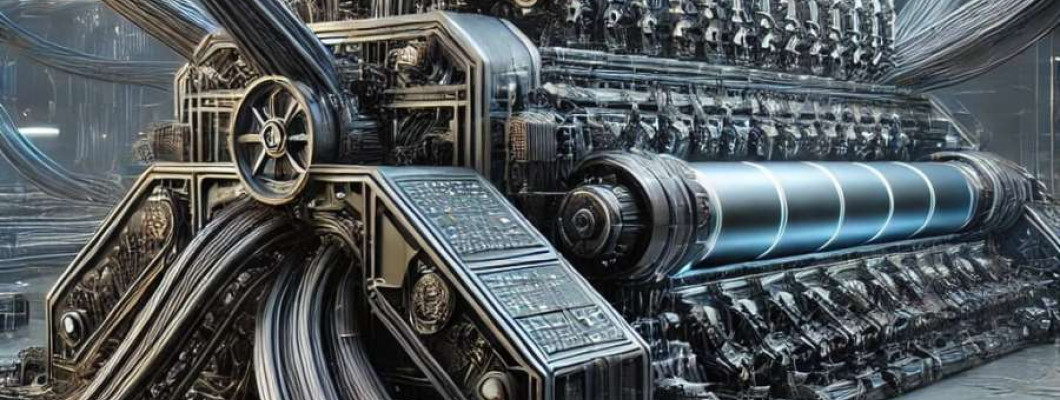
The Industrial Reality of Integrating an A3 Roll DTF Printer into High-Volume Production
For scalable business owners focused on throughput, automation, and labor costs, the integration of the A3 Roll DTF Printer T-shirt Printing Machine into existing enterprise workflows illuminates a range of nuanced infrastructure challenges. Within an industrial production environment aiming for rapid turnaround, the printer’s continuous roll feed system and Direct-to-Film (DTF) technology necessitate reconfiguration of adjacent processes such as pre-treatment, drying, and heat pressing stations to maintain synchronization and prevent bottlenecks.
Beyond the mechanical considerations, electrical power stability, cooling requirements, and networked control infrastructure emerge as critical constraints. The printer’s reliance on precise thermal and motion control demands integration with robust uninterruptible power supplies (UPS) and real-time monitoring systems to mitigate downtime risk. Moreover, spatial planning within print bays must accommodate the printer’s footprint and ancillary equipment while optimizing operator ergonomics and material flow.
At scale, the challenge intensifies as the printer’s operational cadence—defined by continuous roll width, print speed, and ink curing times—must harmonize with automated roll handling robots or conveyor systems to maintain seamless throughput. Any mismatch between printer output and post-print finishing capacities risks creating production queues, negating the benefits of automation.
From the IT infrastructure perspective, network integration for job queuing, firmware updates, and diagnostic telemetry requires compatibility with existing industrial control software and cybersecurity protocols, especially for enterprises with strict data governance policies.
Technical Deep-Dive into Infrastructure Integration
Understanding Power and Thermal Management Requirements
The A3 Roll DTF Printer’s heating elements, stepper motors, and UV curing LED arrays generally consume between 800 and 1200 Watts during peak operation. To estimate cooling load, consider the heat dissipation Q calculated by Q = IV (Current (I) × Voltage (V)) minus the thermally converted work. Typically, the printer’s enclosure must sustain internal temperatures below 40°C to prevent thermal drift that compromises print precision, necessitating a minimum of 250 CFM (cubic feet per minute) forced air extraction or equivalent liquid cooling solutions in high ambient temperature facilities.
Print Throughput Versus Line Balancing
With a maximum print speed ranging from 1.5 to 3 m/min at 600 dpi resolution, throughput calculations indicate a maximum of approximately 180-360 square meters per 8-hour shift. Assuming post-print curing and drying require an additional 2-3 minutes per meter of printed film, synchronization with downstream finishing becomes crucial.
Network Integration and Firmware Compatibility
The printer supports standard TCP/IP protocols and USB 3.0 for local control. Network latency impacts job queuing efficiency, with optimal integration requiring latency under 50 ms for remote diagnostics. Firmware updates utilize signed code packages to maintain cybersecurity standards, compatible with Industrial Control Systems (ICS) environments.
Physical Layout and Material Handling
Physical dimensions of approximately 1.5 m length, 0.8 m width, and 1.2 m height require dedicated floor space with at least 0.5 m clearance on all sides for maintenance access. Roll handling mechanisms necessitate reinforcement of floor surfaces rated to support continuous dynamic loads of 50 kg or more, especially when integrated with automated roll loaders.
Comparative Table of Manual Versus Automated Integration Approaches
| Aspect | Manual Integration | Automated Integration |
|---|---|---|
| Throughput (m²/hr) | Up to 20 | Up to 45 |
| Labor Requirement | 2-3 operators per shift | 1 operator per shift plus robotics technician |
| Power Consumption (Watts) | 900 nominal | 1200 peak (including automation) |
| Downtime Risk | Medium (human error) | Low (predictive maintenance) |
| Initial Setup Cost | Low | High (robotics and control integration) |
Scenario Analysis for Scalable Business Implementation
Scenario 1: Small-Scale Startup Scaling to Mid-Volume Production
Initially deploying the printer in a manually operated configuration allows for limited capital expenditure but constrains throughput to approximately 20 m² per hour. As order volume increases, workflow bottlenecks appear at drying stations, suggesting the need for modular automation and dedicated environmental controls to sustain quality and output.
Scenario 2: Mid-Sized Apparel Manufacturer Integrating Full Automation
By integrating conveyorized material handling and automated post-print curing, the manufacturer optimizes throughput toward the upper capacity limit of the printer. Networked controls enable real-time monitoring of ink consumption and printhead status, reducing unplanned downtime and waste. The infrastructure investment pays off by lowering labor costs and increasing output consistency.
Scenario 3: High-Volume Outsourcer with Multi-Printer Farms
Here, the challenge shifts to managing multiple printers in a rack-dense layout with centralized control rooms. Cooling infrastructure and power distribution become critical, as does predictive maintenance software leveraging telemetry data to schedule service windows without production impact. The A3 Roll DTF Printer’s modular design supports easy replacement of printheads and drive motors, improving uptime metrics.
Expert FAQ on Integration Challenges and Solutions
Q1: How does the printer handle voltage fluctuations typical in industrial environments?
A1: The A3 Roll DTF Printer includes an internal voltage regulator tolerating ±10% voltage swings; however, industrial UPS systems are recommended to maintain print quality and protect control electronics.Q2: What are the failure modes of printhead assemblies under continuous roll operation?
A2: Common failure modes include nozzle clogging from ink sedimentation and mechanical wear of piezoelectric actuators; routine ultrasonic cleaning cycles and filament replacement every 1,500 operational hours mitigate these risks.Q3: Can the printer integrate with MES (Manufacturing Execution Systems)?
A3: Yes, it supports OPC-UA protocols enabling direct integration for job tracking, inventory management, and downtime analytics.Q4: What is the recommended maintenance schedule to maximize uptime?
A4: Daily printhead and ink system inspections combined with monthly calibration and semi-annual hardware audits maintain consistent operation.Q5: How scalable is the printer’s software for multiple device management?
A5: The bundled software supports simultaneous control of up to 10 printers from a single workstation with detailed user logs and automated error reporting.
Strategic Verdict and Recommendation
For scalable business owners navigating the complexities of industrial apparel printing, the A3 Roll DTF Printer T-shirt Printing Machine represents a reliable, industrial-grade solution adept at addressing infrastructure integration challenges. Its robust power and thermal management, modular design facilitating automation, and advanced network compatibility establish it as a future-proof asset for scaling operations without sacrificing precision or uptime.
While the initial setup and integration effort require detailed planning and investment, the operational efficiencies and throughput gains justify this commitment. Therefore, businesses seeking to expand production capacity with a technology platform built for sustainable growth should strongly consider adopting the A3 Roll DTF Printer T-shirt Printing Machine as the cornerstone of their print infrastructure.