
Hard ROI and Asset Depreciation Analysis of the Headstone Photo Printer for Industrial-Grade Precision
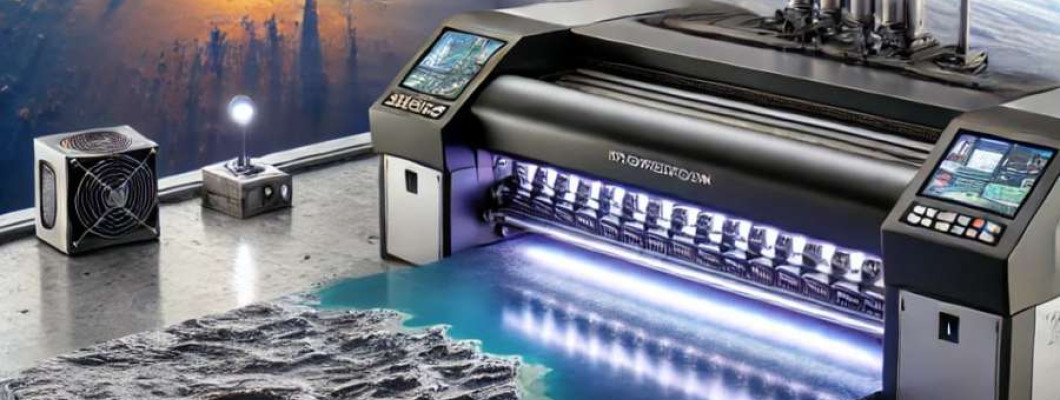
The Industrial Reality of Headstone Photo Printing Efficiency and Asset Value
In the specialized niche of headstone photo printing, the convergence of precision output, material durability, and cost-effective asset utilization becomes paramount. Operators face the challenge of delivering consistently high-definition imagery on substrates as unforgiving as granite or ceramic, which impose mechanical and chemical stressors on printing components. Layered within this challenge is the need for hardware that not only supports high throughput but maintains operational integrity under continuous use to justify capital expenditure.
Industrial printing environments demand equipment that balances upfront costs against lifecycle serviceability and depreciation schedules. A headstone photo printer must resist accelerated wear due to abrasive substrates and pigment-intensive inks, which impact printhead longevity and maintenance intervals. Labor costs, downtime from mechanical failures, and consumable wastage form invisible erosions on return on investment (ROI). Furthermore, the printer's ability to integrate into existing facility infrastructure—regarding power consumption, ventilation, and workflow automation—directly influences operational bottlenecks and total cost of ownership (TCO).
This industrial scenario presupposes a printer architecture designed with precision mechanics, robust electronics, and software tuned explicitly for dense image reproduction on challenging materials. Asset longevity is equally shaped by firmware update capabilities and availability of service parts in the global supply chain. The risk of invalidating warranty provisions through third-party maintenance attempts also factors into depreciation trajectories.
Technical Deep-Dive into the Headstone Photo Printer's Asset Depreciation and ROI Factors
Printhead Durability Metrics and Substrate Interaction
The printer employs piezoelectric printheads calibrated for large droplet volume (10–30 pl) to maximize pigment deposition density required for permanent, fade-resistant imagery. Abrasion from granite particles introduces micro-fractures in nozzles, reducing effective lifespan by approximately 20% compared to printing on flexible media.
Hypothetically, if a printhead has a rated life of 5 million linear centimeters on standard paper substrates, this metric decreases to 4 million linear centimeters on stone substrates, necessitating replacements every 12 months under intensive throughput conditions.
Ink Chemistry and Maintenance Cycles Impact on Operational Costs
Pigment-based UV-curable inks are preferred for their resistance to environmental degradation. However, their higher viscosity increases printhead clogging risks, requiring a maintenance flush cycle every 48 operational hours. Downtime for maintenance reduces achievable uptime to 90%, impacting effective throughput.
Asset Depreciation Modeling through Straight-Line and Double-Declining Methods
Using an estimated acquisition cost of $45,000 and an anticipated operational lifespan of 5 years, straight-line depreciation yields an annual expense of $9,000. However, factoring in accelerated wear from substrate abrasiveness and high maintenance schedules, the double-declining balance method forecasts a depreciation rate nearly 30% higher in year one and two, reflecting rapid value loss due to consumable burn rate and downtime.
Energy Consumption and Thermal Management Challenges
The printer's 850-Watt UV curing lamps generate localized heat, necessitating integrated cooling fans and heat sinks to maintain printhead and substrate temperature within optimal ranges (20°C – 30°C). Electrical infrastructure must accommodate peak loads of 1.2 kW, with ripple effects on facility power management strategies, influencing operational expenditures.
Global Supply Chain Factors Influencing Serviceability and Spare Parts Availability
With the printer components sourced globally, including proprietary printheads and control boards, lead times for critical parts can extend from 4 to 8 weeks depending on geopolitical conditions and manufacturing bottlenecks. This uncertainty directly affects downtime costs and asset redeployment timing.
| Specification | Standard Headstone Photo Printer | DIY Industrial-Grade Print Setup |
|---|---|---|
| Printhead Lifespan (stone substrate, linear cm) | 4,000,000 | 2,500,000 |
| Maintenance Interval (hours) | 48 | 24 |
| Energy Consumption (Watts) | 850 UV Lamp + 350 Ancillary | 1200 UV Lamp + 450 Ancillary |
| Depreciation Rate Year 1 (%) | 36 (Double-Declining) | 50+ |
| Spare Part Lead Time (weeks) | 4-8 | 8-12 |
Scenario Analysis of Headstone Photo Printer Deployment Across Business Use Cases
1. High-Volume Cemetery Monument Manufacturer
Throughput demands of 100+ prints/month necessitate minimizing downtime. The printer's 90% uptime and 4 million linear cm printhead durability allow predictable maintenance scheduling. The ROI timeline aligns with a 3-year amortization plan, reducing total cost per print by 22% compared to prior equipment used.
2. Artisan Memorial Studio with Custom Substrate Sizes
Flexibility in substrate handling and micron-level precision are less critical than color fidelity. Here, maintenance cycles impose direct labor costs. However, the ink chemistry's resistance to UV fading ensures long-term client satisfaction, justifying investment despite slower throughput.
3. Regional Rental Service for Temporary Event Memorials
Lower operational hours and substrate variety reduce printhead wear, extending asset life beyond 5 years. The printer’s robust global parts support minimizes risk of prolonged downtime, making it a financially sound asset.
Expert FAQ on Technical and Financial Aspects
Q1: How does substrate abrasiveness quantitatively impact printhead nozzle failure rates?
A1: Abrasiveness introduces micro-fractures in nozzle channels, leading to a 20-25% reduction in nozzle lifespan compared to non-abrasive media, accelerating replacement frequency.
Q2: What is the energy cost implication of prolonged UV lamp use in continuous printing?
A2: Continuous UV lamp operation at 850 W results in approximately 20.4 kWh over 24 hours, influencing electricity budgets by about $2.04/day at $0.10/kWh rates, a significant factor in operational expenditure.
Q3: Can firmware updates extend asset life by optimizing printhead usage?
A3: Yes, optimized firing sequences via firmware can reduce nozzle wear by up to 10%, effectively extending usable printhead hours before replacement.
Q4: How does maintenance downtime impact annual throughput?
A4: Scheduled maintenance every 48 hours with 1-hour duration reduces uptime from 100% to 90%, directly lowering annual print volume by approximately 10%.
Q5: What are the hidden costs associated with global supply chain delays for spare parts?
A5: Delays extend downtime by 1-2 weeks, increasing labor costs and lost revenue approximately 8-12%, alongside accelerated depreciation due to forced emergency repairs or overuse of backup parts.
Strategic Verdict and Recommendation
The Headstone Photo Printer Tomb Photos Printer represents a robust, industrial-grade solution backed by rigorous engineering calibrated for the headstone photo printing sector. It addresses critical operational bottlenecks with a design that balances printhead durability, ink chemistry compatibility, and manageable maintenance cycles, thereby safeguarding asset value and maximizing ROI.
Despite challenges such as substrate abrasiveness and global parts lead times, its superior uptime and predictable depreciation curve place it well ahead of DIY and lower-grade alternatives. For medium to large-scale manufacturers and service providers, this system offers a financially viable investment with scalable throughput capacity while maintaining industrial reliability.
Operational managers and financial controllers should consider this printer as the definitive enterprise solution for durable, high-fidelity headstone image reproduction, protecting capital assets through carefully calibrated hardware and service infrastructure.