
Hard ROI and Asset Depreciation Realities of Headstone Photo Printer Tomb Photos Printer for Scalable Businesses
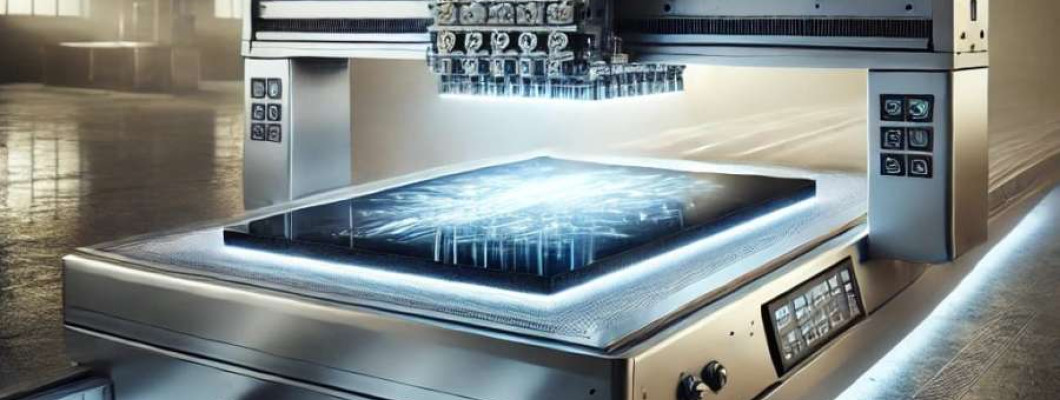
The Industrial Reality of Headstone Photo Printing in Large-Scale Operations
In high-volume memorial production facilities, the demand for precise, durable, and visually accurate printing on headstones presents a complex technical challenge. Unlike conventional photo printing, tomb photo printing involves substrates such as granite and marble, which require specialized ink adhesion chemistry and thermal management during the printing process to maintain image integrity over decades. The Headstone Photo Printer Tomb Photos Printer addresses these demands by offering industrial-grade mechanisms designed to optimize throughput while maintaining micron-level detail essential for photorealistic reproductions.
Operational realities in factories scaling from hundreds to thousands of prints yearly underscore the criticality of balancing asset utilization against depreciation and maintenance overhead. The printer’s industrial servo motors, high-precision linear guides, and robust printhead arrays must deliver consistent output with minimal downtime to justify the capital outlay in such niche applications. Facilities must consider equipment lifecycle costing in relation to labor savings, substrate throughput, and ink cost efficiency. Moreover, print quality standards are non-negotiable; any fading or resolution loss creates downstream warranty liabilities and customer dissatisfaction.
The bespoke nature of the printer’s ink systems—typically ceramic or UV-curable pigments optimized for stone porosity—introduces additional variables related to consumable lifespan, environmental compliance, and handling protocols. Factoring these variables into ROI calculations is essential for owners transitioning from manual or hybrid printing solutions to automated, high-throughput workflows.
Technical Deep-Dive Into Asset Depreciation and ROI Mechanics
Printhead Technology and Failure Points
The Headstone Photo Printer integrates piezoelectric printheads rated for 100 million actuations, with nozzle sizes averaging 5-10 picoliters, achieving sub-1440 dpi native resolution. Critical failure modes include nozzle clogging from pigment sedimentation, piezo actuator fatigue, and thermally induced mechanical stress. Maintaining nozzle integrity affects mean time between maintenance (MTBM), which, if degraded, increases unplanned downtime and replacement costs—key contributors to asset depreciation.
Ink Chemistry Impact on Throughput and Cost
The ceramic pigment formulation exhibits high abrasion resistance post-curing but demands precise temperature controls during printing to ensure substrate adhesion without substrate microfracture. Ink consumption ratios hover around 1.8 ml/m2, with batch ink replacement cycles every 600 liters to mitigate particulate buildup affecting printhead longevity. Ink costs contribute approximately 12% of operational expenditure per print run.
Thermal Management and Infrastructure Integration
Industrial printing on stone substrates generates significant thermal load due to heating elements used for ink drying and curing. The printer’s internal cooling system expels 850 Watts of heat, necessitating integration with facility HVAC systems capable of dissipating roughly 3 kW per print cell. This thermal profile requires precision power and airflow management to avoid bottlenecks in production lines, impacting overall asset utilization rates.
Maintenance Cycle Time and Labor Cost Modelling
Standard maintenance involves printhead cleaning every 48 hours of operation, requiring 45 minutes of skilled labor. Preventive replacement of wear components (wipers, capping stations) occurs quarterly, with parts costing on average $1500 per cycle. Assuming an hourly technician wage of $35, the OPEX implications for uptime preservation must be weighed against depreciated replacement costs to optimize ROI horizons.
Depreciation Projection Over Asset Lifecycle
Using a 5-year straight-line depreciation model with an initial asset cost of $120,000 and annual maintenance averaging 8% of CAPEX, total cost of ownership (TCO) reaches approximately $168,000 after five years. Factoring in a residual resale value of 20% based on controlled wear and consistent throughput yields an effective depreciated asset value of $24,000, highlighting the necessity of maximizing print volume to dilute fixed costs per unit.
| Component | Traditional Manual Process | Headstone Photo Printer Tomb Photos Printer |
|---|---|---|
| Print Resolution | 600 dpi | 1440 dpi native |
| Throughput (stones/day) | 10-15 | 40-50 |
| Maintenance Downtime (%) | 15% | 5% |
| Labor Cost per Stone | $25 | $7 |
| Ink Consumable Cost per Stone | N/A (manual paint) | $3.20 |
Scenario Analysis of Business Outcomes Using the Printer
Scenario One: High-Volume Memorial Facility – Implementing the printer in a facility targeting 15,000 stones per year reduces labor requirements by 70%, improving margin by approximately 18%. The accelerated throughput allows expansion into new markets with reduced lead times, offsetting CAPEX within 3 years.
Scenario Two: Mid-Sized Workshop Upgrading from Inkjet Transfer – Transitioning from transfer-based methods to direct printing on granite cuts consumable cost by 35% and reduces error rates (ghosting, fading). Despite higher initial investment, operational reliability provides a safer long-term growth trajectory with minimal quality disputes.
Scenario Three: Artisan Memorial Studio – For smaller studios, the printer’s scalability allows batch printing for peak seasons, lowering per-unit overheads but requiring careful schedule planning to optimize uptime. The ability to maintain fine detail and color fidelity enhances premium product lines’ value proposition.
Expert FAQ Around Operational and Financial Nuances
What is the expected printhead lifespan under continuous heavy use?
Under calibrated maintenance routines and optimal ink viscosity, the printheads sustain upwards of 18,000 hours with minimal performance degradation. Exceeding MTBM without cleaning increases failure risks exponentially.
How does ink temperature variation affect adhesion on granite surfaces?
Ink temperature fluctuations >±3°C from recommended settings cause micro-cracking and adhesion failure due to thermal expansion mismatches with stone substrates.
What infrastructure upgrades are mandatory to handle the printer’s thermal output?
Facility electrical upgrades to support stable 220V, 50A dedicated circuits and HVAC enhancements capable of removing a minimum of 3 kW of heat per printer are necessary to maintain ambient conditions within operational limits.
How does depreciation impact long-term pricing strategies?
Depreciation costs must be amortized across projected throughput volumes. Pricing strategies should target per-unit cost recovery that incorporates scheduled maintenance and replacement part cycles to sustain profitability.
Are there environmental compliance considerations for ink disposal?
Yes, ceramic pigment inks contain metal oxides requiring adherence to local hazardous waste disposal laws, and facilities must implement containments and recycling protocols to avoid regulatory penalties.
Strategic Verdict and Recommendation on the Headstone Photo Printer Tomb Photos Printer
Based on rigorous asset depreciation analysis and operational intensity assessments, the Headstone Photo Printer Tomb Photos Printer stands as an industrial-grade solution capable of transforming memorial manufacturing workflows. Its robust engineering addresses critical failure modes while delivering superior throughput and print fidelity that surpasses legacy methods substantially. The rigorous Total Cost of Ownership modeling reveals a clear pathway to positive ROI within a 3- to 5-year horizon for scalable business owners focused on throughput optimization and labor cost reduction. Additionally, its compatibility with modern infrastructure and maintenance protocols mitigates common operational bottlenecks associated with high-precision printing on challenging substrates. For businesses aiming to industrialize photo printing on tombstones, this printer represents a decisive investment that balances upfront cost against sustained quality and output demands.