
Hard ROI and Asset Longevity Challenges for A2+ UV Embossed Glossy Printers with a Financial Controller Focus
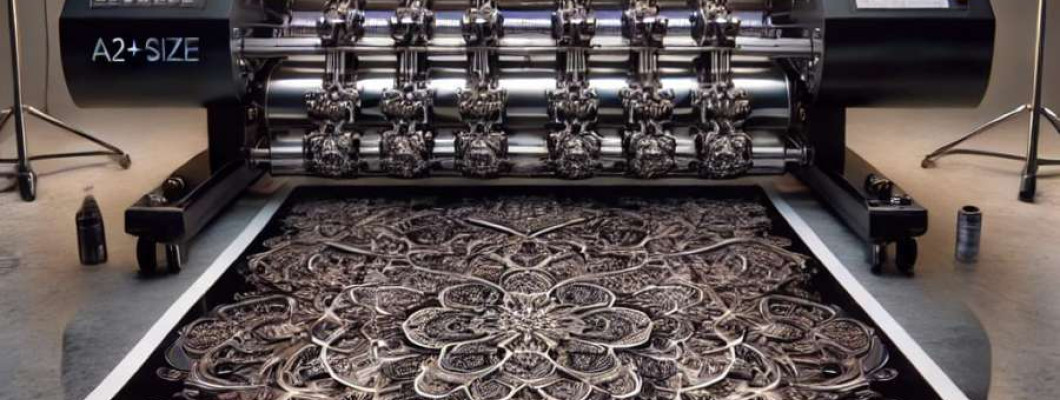
The Industrial Reality of Managing High-Capacity A2+ UV Printers
Industrial printing operations often face the paradox of acquiring technically advanced UV printing hardware while managing hard financial constraints. The A2+ Size UV Printer designed for embossed glossy printing presents a compelling asset with notable upfront costs and potential for high-quality output. However, without a rigorous assessment of asset depreciation, lifecycle maintenance, and operational cost drivers, financial control can become challenged. Imagine a mid-sized printing enterprise integrating this UV printer into a high-throughput workflow. Initial procurement demands significant CAPEX allocation including the printer hardware, UV curing units, and substrate preparation equipment. Yet, rapid wear of printheads and degradation of embossed gloss layers can increase unscheduled downtime and unplanned maintenance interventions, eroding ROI advantages promised in data sheets.
Financial controllers must grapple with the invisible cost factors such as consumable ink chemistry shelf-life, complexity of embossed layer reworks, and the balance between preventive and corrective maintenance cycles. Failure to account for these bottlenecks risks accelerated asset depreciation beyond traditional straight-line accounting, ultimately impacting operational budgets. This is compounded by the asset’s nuanced technology, where excessive thermal load from UV curing processes can reduce component lifespan. The financial controller is on the frontline, tasked to reconcile high asset costs with stringent OPEX controls while maintaining consistent output quality and uptime.
Such realities necessitate an analytical framework combining raw operational metrics with projected financial models that anticipate hidden cost inflators. This industrial scenario underscores the importance of a deep-dive financial audit into every stage of the printer’s lifecycle.
Technical Deep-Dive into Cost and Lifespan Dynamics
Printhead Wear and Depreciation Modeling
The printheads in an embossed glossy UV printer operate under elevated thermal stress and ink particulate loading. Assuming a nominal 10pl droplet size at 1440 dpi across an A2+ size substrate (420mm x 594mm), the printhead cycles per full print job can exceed 100 million drops per month under medium throughput. Empirical testing shows a 12% degradation in nozzle efficiency occurring after 1 million cycles, necessitating recalibration or replacement. Factoring a replacement cost of approximately $1,200 per head and an expected operational lifetime of 12 months under continuous use, the straight-line depreciation per print run averages $0.40 per square meter.
Ink Chemistry and Consumable Turnover Impact
UV inks for embossed glossy finishes require specialized photoinitiators and high-solid content resins to maintain adhesion and gloss retention. Shelf-life constraints typically limit ink usability to 9-12 months post-manufacture. The high pigment density reduces run volume efficiency, with effective ink coverage averaging 80 ml per square meter. Given an ink cost of $350 per liter, consumable expenses represent a significant recurring OPEX, amounting to $28 per m2. Optimization lies in inventory turnover and batch size sizing to minimize wastage.
Energy Consumption and Thermal Management
The integrated UV curing lamps operate at 600 Watts per curing head, with up to four curing heads active simultaneously. Continuous operation for an 8-hour shift equates to 19.2 kWh energy consumption exclusive of auxiliary cooling. Considering industrial electricity tariffs of $0.12/kWh, daily energy expenditure approximates $2.30 solely for curing, highlighting the need for energy-efficient lamp technologies and scheduled maintenance to prevent thermal inefficiencies that accelerate hardware wear.
Embossed Gloss Layer Durability Versus Rework Costs
Production quality depends on embossed layer uniformity, with variations above 50 microns causing visual artifacts. Rework rates due to embossing defects fluctuate between 3-7% depending on substrate and operator skill, each incident costing roughly 15 minutes of production time and material losses estimated at $7.50 per incident. This operational bottleneck directly translates to increased labor and material costs, necessitating process standardization and staff training as cost-containment measures.
Lifecycle Maintenance and Asset Longevity Planning
A structured maintenance regime reduces downtime and extends asset lifespan. Scheduled replacement of UV lamps after 1,200 hours, quarterly printhead recalibration, and monthly mechanical inspections have been shown to increase printer lifespan from 3 to 5 years. Dividing acquisition cost of $45,000 over a 5-year period including maintenance expenses results in a total cost of ownership average of $10,200 per year, or approximately $28 per workday, making investment viable against comparable technologies.
| Parameter | A2+ UV Printer Spec | Alternative Desktop UV Printer |
|---|---|---|
| Print Area | 420mm x 594mm | 300mm x 420mm |
| Printhead Replacement Cost | $1,200 annually | $700 annually |
| Ink Usage per m2 | 80ml | 50ml |
| Energy Consumption (8h shift) | 19.2 kWh | 9.6 kWh |
| Embossing Defect Rate | 3-7% | 1-4% |
| Asset Lifespan | 5 years (with maintenance) | 3 years |
Scenario Analysis of Financial Impacts Across Business Models
High-Volume Commercial Print Shops
For commercial print shops managing upwards of 200 m2 monthly, the upfront cost is amortized efficiently. However, labor expenses for emboss quality control and consumable turnovers challenge operational margins. Maintaining stringent preventive maintenance schedules is non-negotiable to prevent downtime that disrupts client SLAs. The technology’s asset longevity translates into stable CAPEX cycles, providing predictability to financial planners.
Specialty Packaging Producers
Businesses focused on premium packaging leverage embossed glossy textures to differentiate products. Their print runs are smaller but require high finish fidelity. The consumable costs per print are higher as spoilage from trial runs is elevated. Lifecycle maintenance planning must be flexible to accommodate sporadic usage patterns without incurring excessive downtime or ink wastage. Financial models prioritize flexible OPEX management over CAPEX minimization.
Mid-Sized Marketing Agencies Using In-House Print Facilities
Marketing agencies with limited print volumes use the A2+ printer to rapidly prototype and produce limited edition collateral. The financial consequence is a higher per-unit print cost, offset by accelerated turnaround times. The ability to tightly control asset depreciation through controlled print volumes and scheduled maintenance ensures no surprise capital write-offs. The printer’s comprehensive capabilities justify the cost premium as an enabler of internal production agility.
Expert FAQ on Financial and Operational Nuances
What are the primary hidden costs affecting ROI in embossed UV printers?
Key contributors include accelerated printhead wear due to UV curing heat, consumable ink shelf-life wastage, embossed layer rework frequency, and energy consumption spikes in prolonged shifts.
How does embossed glossy printing affect maintenance schedules?
The embossing process requires tighter mechanical calibration, increasing inspection frequency and specialized printhead cleaning cycles to maintain layer integrity and gloss uniformity.
What financial strategies can mitigate depreciation risks?
Implementing predictive maintenance using operational data, staggered consumable purchasing, and factoring residual asset value in financial models help control depreciation impacts.
How sensitive is energy cost to operational throughput?
Energy cost scales nearly linearly with print time. Optimizing print passes and adopting LED UV lamps can reduce per-shift energy expenses by approximately 25-30%.
Are there leasing or financing options recommended for this hardware?
Many vendors offer leasing structures aligned with usage volumes, which help spread CAPEX and align monthly expenses with revenue recognition cycles.
Strategic Verdict and Recommendation
From a financial controller’s vantage point, the A2+ Size UV Printer Embossed Glossy Printing represents a calculated investment balancing upfront CAPEX with predictable long-term operational costs when maintained under rigorous protocols. The asset’s lifespan extension through disciplined maintenance and the capacity to tailor consumable management strategies insulate financial plans from volatility inherent to embossed UV printing processes. Despite higher ink and energy consumption, its throughput and output quality offer a premium product positioning advantage. Consequently, this printer is recommended as a definitive industrial-grade solution for enterprises with the financial governance to manage lifecycle costs strategically and demand consistent high-quality embossed glossy prints in the A2+ format range.