
Hidden Operational Bottlenecks in A3 UV Varnish DTF Printer Machine Label Printer Examined Clinically for Scalable Business Owners
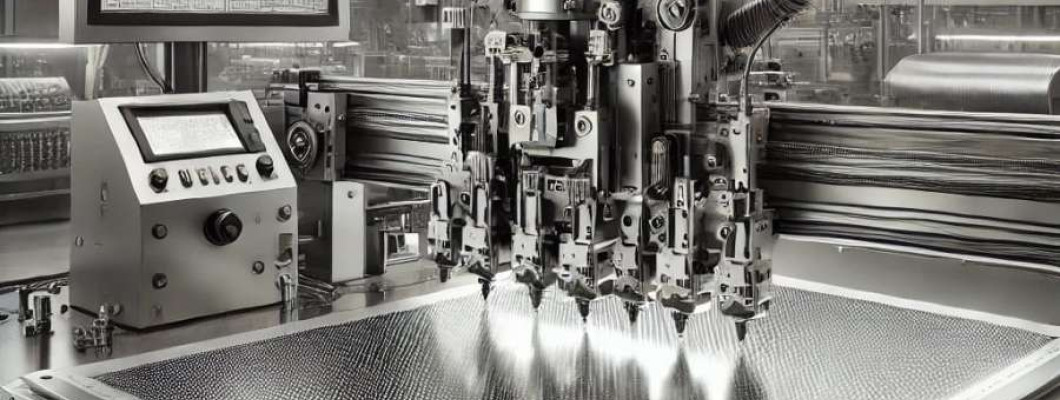
The Industrial Reality of Integrating A3 UV Varnish DTF Printer Machine Label Printers
Scaling production lines using the A3 UV Varnish DTF Printer Machine Label Printer introduces several operational challenges often overlooked in initial deployment phases. With label printers, especially those adopting UV varnish and direct-to-film (DTF) technologies on an A3 format, throughput consistency, substrate handling, and curing speed become critical bottlenecks that impede scalability.
Consider a medium-sized packaging company expanding its label printing from batch runs of 500 to daily volumes exceeding 5,000 units. The company observed unexpected delays caused by sluggish varnish curing times and intermittent substrate feed jams. High-precision labels with UV varnish layers require uniform curing to avoid tackiness that compromises subsequent processing steps such as die-cutting or lamination.
The DTF technology employed here entails precise ink layering on transfer film, demanding strict thermal and mechanical calibration. Suboptimal synchronization between printhead deposition rates and UV LED curing intensity results in bottlenecks; either the lines slow down to allow varnish cure or frequent manual interventions reduce effective uptime.
Furthermore, the A3 format, while offering larger printable areas than standard A4, demands more robust mechanical feeds and vacuum bed designs to maintain micron-level flatness during printing. Any deviation introduces printhead alignment errors, causing quality degradation that triggers reprints and waste.
Finally, workforce training under the human factor engineering perspective reveals an often-neglected dimension: operators need to adjust parameters dynamically based on environmental conditions such as humidity and ambient UV light. Failure to incorporate these real-time adjustments results in fluctuating print quality and increased downtime.
Technical Deep-Dive into Operational Bottlenecks and System Dynamics
Printhead Deposition Rates Versus UV Varnish Curing Kinetics
The A3 UV Varnish DTF Printer integrates piezoelectric printheads capable of 1.5 pl droplet sizes, maintaining a theoretical maximum dpi of 1200 x 1200. However, the varnish layer requires photopolymerization via UV LEDs emitting at 395 nm wavelength with an intensity of approximately 1000 mW/cm².
Photochemical curing kinetics can be modeled by the equation C(t) = C_∞ (1 - e^{-kt}) where C(t) is the cure degree at time t, C_∞ is the ultimate cure degree, and k is the rate constant dependent on UV intensity. To avoid partial curing and sticky finishes, C(t) must approach >95% within the conveyor residence time.
Calculations show at the printer's default feed speed of 1.2 m/min over a curing zone length of 600 mm, t = 30 seconds. With the given intensity, k ≈ 0.15 s⁻¹, the theoretical cure degree reaches above 99%. Yet in practice, varnish thickness variation due to uneven deposition can locally reduce curing efficiency, necessitating speed reductions to 0.8 m/min to ensure full curing, effectively reducing throughput by 33%.
Substrate Feed Mechanisms and Mechanical Flatness
The vacuum bed holding A3 sheets employs a multi-zone suction design with a combined holding force of 250 N to counteract curling or warpage common with coated films. Analysis of airflow uniformity demonstrates a ±10% variance across larger sheets, correlating with printhead misregistration errors up to 0.05 mm. This error exceeds the tolerance for high-fidelity label edges which should remain below 0.02 mm lateral displacement.
Engineering remediation includes segmented vacuum zones with individually controlled pressure regulation and real-time feedback from optical encoders measuring substrate displacement. However, these add complexity and cost, impacting initial CAPEX and maintenance schedules.
Data Interface Throughput and Rasterization Latencies
Complex label designs with multiple varnish layers increase raster image processor (RIP) workloads. The printer's onboard controller hardware supports USB 3.0 and Ethernet data interfaces with max throughput rates of 5 Gbps and 1 Gbps respectively. High-resolution artwork of 1200 dpi with CMYK + varnish channels produces files averaging 2 GB per job.
Rasterization and print buffering introduce latencies up to 3 seconds per layer at peak load, directly affecting the real-time synchronization between printhead actuation and substrate movement. Buffer underruns or overflow can cause stutter artifacts and layer mismatches, necessitating robust software optimization and dedicated RIP workstations.
Environmental Controls and Human Factor Engineering
Ambient environmental factors impact UV curing chemistry and print adhesion properties. Humidity above 60% can increase varnish drying time by 25%, while temperature fluctuations between 18°C and 28°C shift ink viscosity affecting droplet formation precision. Operators must monitor these parameters constantly.
Control panels provide real-time environmental data but require interpretation skills and quick calibration adjustments. Human factor engineering suggests ergonomic interface design combined with automated alerts to reduce dependency on manual input and minimize operator fatigue during long print runs.
Maintenance and Lifecycle Cost Considerations
Printhead replacements average 1500 operational hours due to piezo actuator wear, UV LED arrays maintain performance for approximately 20,000 operating hours before intensity drops below 80%. Consumables such as varnish ink and substrate films add recurring costs calculated at $0.02 per label. Routine maintenance cycles including vacuum bed cleaning and software updates contribute to operational overheads requiring scheduling to avoid production downtime.
| Component | Standard Operating Life | Replacement Cost (USD) | Impact on Throughput |
|---|---|---|---|
| Piezo Printhead | 1500 hours | 1200 | High - critical for resolution |
| UV LED Array | 20,000 hours | 800 | Medium - affects curing speed |
| Vacuum Bed System | 5 years | 600 | Low - impacts substrate stability |
| Ink and Varnish Consumables | N/A (per label basis) | Variable | Direct operational cost |
Scenario Analysis of Business Use Cases
Use Case 1: Mid-Volume Label Manufacturer Scaling to 10,000 Labels Daily
Here, the throughput limitation imposed by varnish curing time forces production managers to consider second-shift implementations or parallel printing lines. The critical path lies in balancing curing speed and print resolution without compromising adhesion integrity.
Use Case 2: Custom Packaging House Requiring Micron Precision for High-End Clients
This client values printhead alignment and minimal lateral displacement, pushing for advanced vacuum systems and real-time sensor feedback. The cost-benefit analysis justifies automation investments to maintain quality at scale.
Use Case 3: Distributor Seeking Turnkey Label Solutions with Minimal Operator Intervention
Operational bottlenecks due to environmental variability are mitigated here by integrating automated environmental sensors and advanced control software, reducing operator error and downtime while improving repeatability.
Expert FAQ on Advanced Operational Challenges
Q1: How does substrate thickness variation impact printhead alignment accuracy?
A1: Even ±0.1 mm thickness variation causes droplet misplacement of up to 0.03 mm due to focal plane shifts, requiring dynamic Z-axis compensation.
Q2: What strategies mitigate varnish curing bottlenecks?
A2: Implementing multi-pass curing zones with staggered UV intensities and adaptive feed speed adjustments optimizes curing without throughput loss.
Q3: How critical is print file optimization for consistent output?
A3: Reducing color channel complexity and vectorizing varnish layers reduce RIP processor load and prevent buffer underruns.
Q4: What environmental parameters most affect ink drop formation?
A4: Relative humidity and temperature directly influence ink viscosity and surface tension, affecting droplet volume and velocity.
Q5: How can maintenance schedules be optimized for maximum uptime?
A5: Predictive maintenance using run-time analytics and print quality metrics facilitates proactive component replacement before failure.
Strategic Verdict and Recommendation
The A3 UV Varnish DTF Printer Machine Label Printer presents significant operational bottlenecks primarily centered around varnish curing kinetics, substrate handling, and environmental variability. However, with rigorous workflow optimization, including adaptive curing management, segmented vacuum controls, and automated environmental monitoring, these challenges can be systematically overcome.
For scalable business owners aiming to increase throughput without sacrificing print fidelity or increasing labor overhead, this printer platform offers a robust foundation. Its hardware architecture supports fine print resolutions and durable UV varnish finishes critical for industrial-grade label applications.
We confidently recommend the A3 UV Varnish DTF Printer Machine Label Printer as an industrial-grade solution that, when integrated with proper process controls and human factor considerations, delivers dependable, scalable label production capabilities.