
Hidden Operational Bottlenecks in Spot A4 LED UV Printer Cylinder Printing and How They Shape Industrial Output
The Industrial Reality of Cylinder Printing Challenges
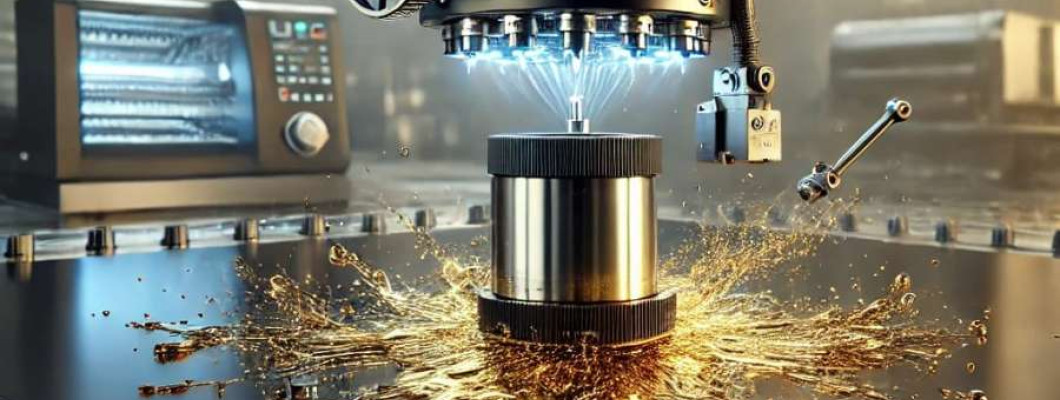
Cylinder printing in industrial applications represents a niche but critical segment of specialized printing technology. The need for high-precision, repeatable, and reliable printing on cylindrical substrates—commonly found in packaging, promotional items, and specialized industrial components—places stringent demands on both the hardware and operational workflows. The Spot A4 LED UV Printer Cylinder Printing solution is intended to meet these demands, yet to understand its industrial viability, one must investigate the hidden operational bottlenecks that influence throughput, downtime, and output quality.
A common scenario in high-throughput cylinder printing lines revolves around the synchronization of substrate rotation with LED UV curing and ink deposition. Even minimal timing mismatches or micro-vibrations can propagate as print defects or cause mechanical stress over time. Additionally, the LED UV curing process itself, while energy efficient, introduces thermal gradients that challenge material integrity and dimensional stability. Operational bottlenecks emerge from these thermal and mechanical interactions that can lead to increased maintenance frequency and variable print quality.
Further compounding these challenges is the relatively small A4 format footprint of this printer, which requires rapid substrate changeovers and precise alignment systems to maintain continuous production lines. Such precision often taxes servo motor systems and sensor feedback loops designed to handle cylindrical objects, raising questions about the printer's true industrial-grade robustness.
Technical Deep-Dive into Spot A4 LED UV Cylinder Printer
1. Mechanical Synchronization and Rotational Accuracy
Maintaining concentric rotation accuracy within ±0.02 mm at speeds up to 1 m/s is critical. The printer’s stepper motor and rotary encoder setup must minimize runout errors to avoid pixel blur or ink misplacement. The equation for maximum allowable runout (r) can be approximated by r < (pixel size/2) to prevent visible defects. Assuming a pixel size of 40 microns (dpi ~ 600), r must be < 20 microns, a challenging precision threshold in an industrial setting.
2. LED UV Curing Thermal Management
LED arrays generate localized thermal spikes reaching 60-75°C during continuous operation. Given the thermal conductivity (k) of typical substrates like PET (0.15 W/m·K), temperature gradients (∆T) across thin cylindrical walls cause expansion variations calculated by ΔL = α·L·ΔT, where α is the coefficient of thermal expansion (~70 x10^-6 /°C for PET). Accumulated dimensional shifts can disrupt print registration, underscoring the criticality of integrated cooling systems within the printer head assembly.
3. Ink Chemistry and Viscosity Consistency
UV-curable inks used must maintain viscosity within a narrow window (typically 100-120 cP at operating temperature) to ensure droplet formation consistency. Variability in ink rheology impacts droplet volume (pl) and impairs color uniformity. The printer’s ink delivery system relies on piezoelectric printheads calibrated for droplet volumes in the 7-12 pl range; deviations lead to print artifacts and increased waste.
4. Substrate Versatility and Handling Systems
The printer facilitates various cylindrical substrates from 20 mm to 80 mm diameter and lengths up to 300 mm. The mechanical holding fixtures employ pneumatic clamps with force precision of ±0.1 N to avoid substrate deformation. However, changing substrate types requires recalibration of alignment sensors and printhead distance, which introduces setup downtime—a significant hidden operational cost.
5. Automation and Workflow Integration Constraints
While the printer features automated printhead cleaning cycles, these introduce a recurring operational pause. The time budget for each cleaning averages 45 seconds per 8-hour operation cycle, cumulatively resulting in over 15 minutes downtime daily. Additionally, the narrow A4 printing area limits the volume of large-scale production runs without frequent media reloads or multi-stage printing setups.
Comparative Table of Key Specs and Hidden Operational Implications
| Feature | Spot A4 LED UV Printer Cylinder Printing | Traditional Cylinder Printer (Thermal UV) |
|---|---|---|
| Print Area Diameter Range | 20-80 mm | 25-100 mm |
| Rotational Accuracy | ±0.02 mm | ±0.05 mm |
| Ink Droplet Volume | 7-12 pl | 10-15 pl |
| LED UV Peak Curing Temp | 60-75 °C | 85-95 °C |
| Automated Cleaning Cycle Duration | 45 seconds per 8 hours | 90 seconds per 8 hours |
| Substrate Changeover Time | ~5 minutes | ~8 minutes |
Scenario Analysis of Operational Impact
1. Mid-Size Packaging Manufacturer Scaling Production
For a packaging company producing cylindrical containers in batches of 1,000 units daily, the tight rotational accuracy of the Spot A4 printer translates to less than 5% reject rates due to misalignment—compared to 12-15% on thermal UV systems. However, the shorter substrate changeover time adds operational agility, enabling rapid shifts across multiple SKU lines.
2. Custom Promotional Product SME Focusing on Color Depth
The smaller droplet volume capability provides enhanced color gradients and fine detail on promotional items with complex wraps. Nevertheless, the thermal gradients from LED curing necessitate strict substrate temperature control to avoid distortion in non-rigid materials, demanding more attentive environmental controls in the print area.
3. Industrial Component Marking Facility Requiring Uptime
In a factory setting with 24/7 operations, the cumulative effect of printhead cleaning cycles and substrate recalibrations impacts throughput. However, the reduced cleaning downtime compared to traditional UV printers and the lower operating temperatures contribute positively to maintenance scheduling and component lifespan.
Expert FAQ on Intricacies of Spot A4 LED UV Cylinder Printing
Q1 What are the critical failure modes for the rotary encoder in this printer?
Rotary encoders can encounter signal noise and mechanical wear, leading to angular position errors. Regular calibration and shielding against electromagnetic interference are essential to maintain precision within ±0.02 mm runout tolerance.
Q2 How does the LED UV curing spectrum affect ink polymerization kinetics?
The LED spectrum typically centers around 395-405 nm, optimized for rapid polymerization without over-curing. Deviations in wavelength intensity reduce cross-linking efficiency, affecting adhesion and durability.
Q3 Can the system handle inks with high pigment load without clogging?
Yes, but ink particles must be within sub-micron size distributions. The piezoelectric heads tolerate viscosities up to 120 cP; exceeding this risks nozzle clogging and requires frequent cleaning cycles.
Q4 How does substrate thermal expansion influence print registration over long runs?
Dimensional shifts compound with substrate temperature fluctuations, causing micro-misalignment. This necessitates real-time feedback systems or environmental conditioning for accuracy during long production cycles.
Q5 What maintenance strategies minimize downtime from ink drying and residue buildup?
Frequent short cleaning cycles, combined with solvent-assisted flushes during scheduled breaks, optimize nozzle health. Monitoring ink viscosity and ambient humidity is also essential.
Strategic Verdict and Recommendation
Through careful examination of hidden operational bottlenecks, the Spot A4 LED UV Printer Cylinder Printing emerges as a technically sound, industrial-grade solution tailored for mid-to-high volume cylinder printing applications. Its precision mechanics, optimized LED UV curing profile, and advanced ink delivery system collectively reduce downtime and improve throughput when properly integrated into robust workflows.
The operational nuances — including controlled thermal management and timely automated cleaning — do not represent insurmountable barriers but necessitate rigorous process discipline and environmental monitoring. Given its comparative advantages over traditional thermal UV printers, including lower peak curing temperatures and faster substrate changeovers, this printer offers a tangible competitive edge in sectors demanding precision and flexibility.
To explore further technical specifications and integration possibilities, consider reviewing the official product details at Spot A4 LED UV Printer Cylinder Printing. Industrial stakeholders focused on minimizing hidden bottlenecks while maximizing throughput and print fidelity will find this solution well suited to current manufacturing challenges.