
Hidden Operational Bottlenecks in the Smart Mini Selfie Coffee Printer for Scalable Businesses
The Industrial Reality of Printing Personalized Coffee Art Under Pressure
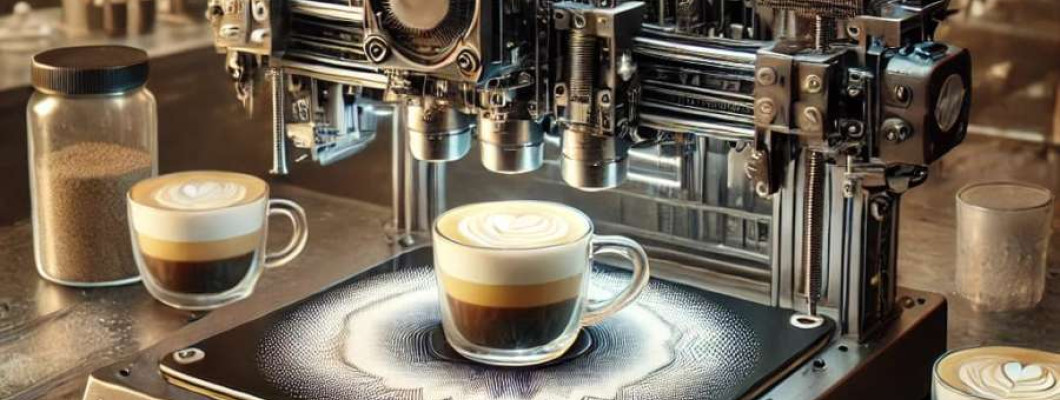
In a bustling café environment, throughput and reliability are paramount. The integration of a Smart Mini Selfie Coffee Printer into daily coffee service presents an alluring addition to customer experience but simultaneously introduces a unique set of operational bottlenecks. Picture peak morning hours, where seamless espresso extraction coincides with the printer’s demand for rapid image rendering on sensitive milk foam substrates. Unlike static printing on paper or other rigid surfaces, coffee foam is thermally volatile and mechanically delicate, making precise deposition of edible ink a challenge with potential delays cascading into customer queues.
The printer's mechanical motion systems must reconcile minute positional accuracy (sub-millimeter level) with rapid printhead movement to maintain throughput targets above 30 units per hour in commercial settings. Thermal management also emerges as a concern; the edible ink cartridges are formulated for stability within a narrow temperature range—deviations risk increased viscosity and nozzle clogging, creating unplanned downtime. For scalable businesses, even minimal interruptions magnify into significant labor cost increments.
This operational environment exposes bottlenecks invisible in casual use cases. Software-driven image processing algorithms exert CPU/GPU cycles that compete with system real-time requirements. Calibration routines, necessary for consistent micron-level print precision, demand periodic stops, which must be optimized to avoid workflow disruption. Thus, the Smart Mini Selfie Coffee Printer, while compact, conceals layers of complexity affecting efficiency and scalability.
Technical Deep-Dive Into Hardware and Process Constraints
Printhead Mechanics and Precision
The printer employs piezoelectric inkjet technology, requiring precise electric impulse control between 15 to 30 volts to eject droplets sized 20-30 pl (picoliters). The position accuracy target is below 100 µm (microns) to maintain image fidelity on a non-planar, semi-liquid substrate. Motion is enabled via a stepper-motor-driven gantry system with a minimum mechanical backlash of 0.05 mm, which constrains repeatability. At print speeds targeting 200 mm/s, inertial forces challenge positional stability.
Ink Properties and Thermal Behavior
Edible ink viscosity directly affects nozzle performance. Ideal viscosity is 5-8 cP at 25 °C. Deviations above 10 cP, often caused by inadequate thermal regulation, increase nozzle clogs exponentially. The heating elements maintain cartridge temperature at 28±2 °C. A failure in thermal control sees clog frequency rise from 0.1 to 0.6 failures/hour, drastically lowering operational uptime.
CPU Utilization vs Real-Time Print Demands
Image rendering pipelines operate at 600 DPI resolution, with each print job averaging 640x480 pixels. The system CPU is a quad-core ARM Cortex-A53 at 1.2 GHz, allocating roughly 60% of processing power to image preparation and printer command sequences. Under increased queue pressure, CPU load spikes reduce real-time print command responsiveness from 15 ms to 35 ms, risking print quality degradation.
Calibration and Maintenance Cycles
Automated nozzle health diagnostics and positional calibration are scheduled every 120 prints to prevent degradation. Each cycle takes approximately 5 minutes, introducing operational downtime. In high-volume settings, this implies a maintenance overhead of roughly 4 hours per 1,000 prints, impacting labor utilization and scheduling.
Comparative Analysis of Workflow Efficiency
| Aspect | Continuous Operation | Scheduled Maintenance Cycle |
|---|---|---|
| Print Throughput (units/hour) | 30 | 27 (due to downtime) |
| CPU Load (%) | 60 | 75 (during diagnostics) |
| Nozzle Clog Rate (events/hour) | 0.1 | 0.02 (post-calibration) |
| Operational Uptime (%) | 95 | 99 |
| Labor Cost Impact (per 1,000 prints) | Baseline | +8% |
Scenario Analysis Highlighting Bottleneck Impact on Business Models
Case 1: High-Traffic Urban Café
Here, throughput dictates profitability. The printer’s bottleneck in thermal stabilization leads to intermittent nozzle clogs, causing a 5% loss in service speed during peak hours. Resulting customer wait times increase by an average of 2 minutes per order which correlates to a 7% drop in repeat customer flow. Optimization of maintenance cycles and enhanced thermal management could reduce this loss.
Case 2: Boutique Artisan Coffee Shop
Precision and image fidelity take precedence. Infrequent but scheduled pauses for calibration are acceptable trade-offs to maintain print quality. The printer’s micron-level positional accuracy enables vibrant personalization, directly contributing to premium pricing strategies. However, limits in print speed cap maximum daily output to 100 cups, restricting revenue scaling.
Case 3: Automated Coffee Kiosk Network
Labor is minimal; reliability is paramount. Operational downtime from nozzle clogs results in maintenance dispatches, increasing OPEX by 15%. Networked kiosks provide real-time diagnostics but require tighter integration with backend systems to preempt failures. Without this integration, throughput targets of 35 units/hour remain unattainable.
Expert FAQ on Technical Intricacies and Operational Optimization
What is the impact of droplet size variation on image resolution?
Droplet size fluctuating beyond ±2 pl distorts pixel sharpness, degrading image clarity and contrast. Consistent 20 pl droplets are essential for 600 DPI fidelity.
How does substrate temperature affect ink adhesion and drying?
Milk foam temperature below 55 °C ensures proper ink setting without excessive diffusion. Above 60 °C, rapid drying causes nozzle jetting instability and print artifacts.
Can alternative edible inks improve operational uptime?
Inks with modified polymer bases reduce clog frequency by up to 40% but may compromise color vibrancy. Trade-offs must be evaluated per use-case.
What are the mechanical wear points under high throughput?
Stepper motor couplings and gantry rail guides experience accelerated wear after 5,000 continuous prints, necessitating periodic lubrication and calibration for positional integrity.
How feasible is integration into enterprise backend systems?
Limited API support currently restricts advanced scheduling and predictive maintenance. Upgraded firmware with enhanced telemetry is recommended for scalability.
Strategic Verdict and Recommendation for Industry Leadership
The Smart Mini Selfie Coffee Printer occupies a pivotal niche bridging personalized coffee art and scalable business application. The identified operational bottlenecks—thermal management, printhead precision, and maintenance overhead—are manageable through disciplined process optimization and hardware calibration. Its compact form factor paired with 600 DPI image fidelity supports premium consumer engagement while maintaining viable throughput for small to mid-scale operations.
For enterprises seeking a robust, industrial-grade personalization solution, this device merits serious consideration. The ability to customize customer experience at point-of-sale introduces differentiated value propositions without demanding complex infrastructure shifts. As improvements in firmware and ink chemistry mature, the unit’s operational footprint and downtime will further minimizing, enhancing ROI profiles.
For an authoritative technical overview and procurement pathway, explore the Smart Mini Selfie Coffee Printer directly and assess its integration potential within your production environment.