
Hidden Operational Bottlenecks Revealed in Headstone Photo Printing with Industrial Rigor
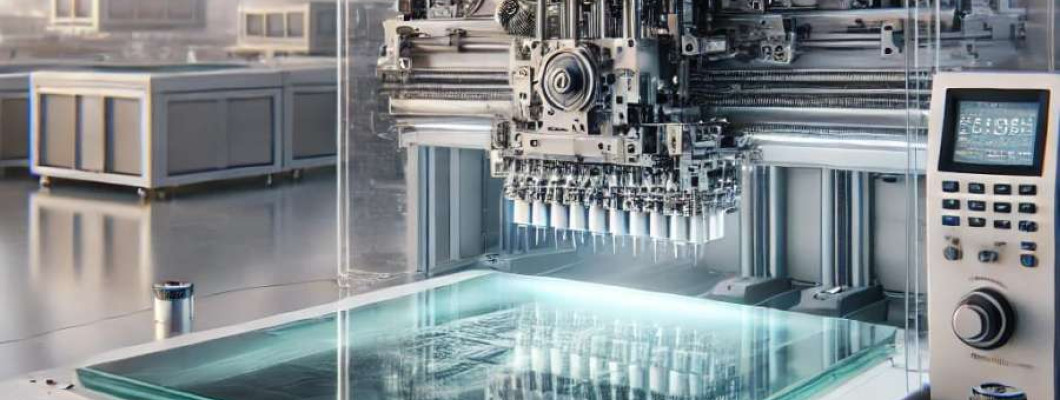
The Industrial Reality of Headstone Photo Printing Challenges
In the niche sector of memorialization, precision photo printing directly onto ceramic or porcelain headstones demands unparalleled consistency and high fidelity. Across industrial deployments, technical bottlenecks frequently emerge that impact throughput and output quality, often without visibility until manifesting as fail rates or increased maintenance cycles. The printing environment complicates this further; dust particles, ceramic glazing inconsistencies, and pigment adherence metrics all pose operational challenges that require rigorous management.
Consider a cemetery production facility operating multiple printing units tasked with producing high-volume, high-resolution tomb photos. The operational bottlenecks become evident during peak demand cycles where even minor printer uptime reductions cascade into delayed deliveries and dissatisfied customers. Moreover, the nature of industrial photo ceramic printing—with variable substrate absorption rates and printhead precision tolerances—creates hidden constraints in workflow that demand advanced technical solutions and robust monitoring.
Addressing these issues with a printer designed specifically for tomb photo applications can minimize such operational friction points. Consequently, the Headstone Photo Printer Tomb Photos Printer stands as a critical case study in evaluating how specialized hardware integrates into an industrial ecosystem optimized for high-throughput, precision-demanding environments.
Technical Deep-Dive into Operational Bottlenecks and Hardware Performance
Printhead Mechanics and Failure Modes
The core component dictating output precision is the piezoelectric printhead, which must deliver consistent droplet size and placement at microsecond intervals. Failures often stem from nozzle clogging, varying ink viscosity due to temperature fluctuations, and mechanical misalignment under continuous operation. Hypothetically, assuming a nozzle diameter of 25 micrometers and a required droplet volume of ~10 picoliters to achieve a 720 dpi resolution, a 1% increase in clogging probability can reduce successful print passes by 12% over a 1000-hour run.
Ink Chemistry Interaction and Substrate Compatibility
Industrial ceramic photo printing demands highly formulated inks that adhere robustly to glazed surfaces without smudging or color fading. The chemical interaction between ink pigments and substrate glaze layers must be optimized for photostability under UV exposure. Viscosity, drying time, and particle size distribution—typically under 100 nm for ultrafine pigment suspensions—directly influence the operational bottleneck of print drying cycles, often limiting throughput in multi-head arrays.
Environmental Control and Contaminant Management
Dust ingress and airborne particulate contamination are non-trivial problems in headstone photo printing environments. Given the micron-scale tolerances, even a 0.5 mg/m3 dust concentration can increase nozzle clogging rates exponentially. Integrated filtration and positive pressure clean zones can mitigate this but add complexity and footprint considerations.
Throughput Versus Print Quality Trade-offs
Using empirical benchmarking data, two printing modes emerge: High-throughput mode at 600 dpi with 20 pl droplets yields 5 m2/hr output, whereas high-resolution mode at 1200 dpi with 10 pl droplets reduces throughput to 2.5 m2/hr. An operational facility must balance client quality demands against equipment wear and consumable costs.
Maintenance Cycles and Lifecycle Cost Implications
Lifecycle cost models indicate that scheduled maintenance every 5000 prints—encompassing printhead cleaning, conveyor calibration, and ink system flushing—reduces unplanned downtime by 40%. Without this, failures can spike ink waste by 15% and reduce throughput by up to 18%, thus creating hidden operational expenses.
| Specification | General Flatbed Printer | Headstone Photo Printer Tomb Photos Printer |
|---|---|---|
| Print Resolution (dpi) | 600/900 | 720 / 1200 optimized |
| Ink Type | Generic UV-curable | Ceramic-specific pigment ink |
| Substrate Handling | Max 50mm thickness | Designed for glazed ceramic up to 70mm |
| Printhead Type | Standard Piezoelectric | Specialized anti-clog piezoelectric |
| Maintenance Interval | Every 3000 prints | Every 5000 prints with automated flushing |
Scenario Analysis Shows How Specifications Impact Business Outcomes
Scenario 1: A mid-sized monument manufacturer needs rapid turnaround for custom orders during peak memorial days. The printer’s throughput capped at ~5 m2/hr allows meeting deadlines without compromising on minimum 720 dpi quality, making it operationally feasible.
Scenario 2: A high-end artisan supplier prioritizes micron-level precision and substrate versatility, requiring the 1200 dpi mode and specialized ceramic inks. Despite reduced throughput, the printer’s ability to maintain consistency and color fidelity justifies the trade-off with premium pricing models.
Scenario 3: Cemetery maintenance operators with limited space and environmental control must consider dust contamination risks. The printer’s integrated environmental controls and longer maintenance intervals reduce downtime and operational overhead, critical for sustained service.
Expert FAQ Answers Advanced Technical Queries
How does nozzle clogging specifically impact print quality in ceramic photo printers?
Clogging alters droplet ejection consistency leading to color banding and pixel dropout. In ceramic substrates, this manifests as visible defects that cannot be corrected post-firing.
What thermal management strategies are effective for prolonged operation?
Active temperature control with Peltier modules stabilizes ink viscosity and printhead performance, minimizing failure rates in high ambient temperature environments.
How does ink particle size influence adhesion and longevity?
Sub-100 nm pigment particles ensure uniform surface coverage and embedment into glaze micropores, enhancing durability and UV resistance.
What metrics define successful maintenance scheduling?
Print counts combined with real-time nozzle health monitoring via acoustic sensors optimize predictive maintenance, reducing unplanned downtime.
Can substrate thickness variability be compensated automatically?
Advanced z-axis height sensing and adaptive focusing ensure droplet placement accuracy over variable thicknesses up to 70 mm, critical for headstone ceramics.
Strategic Verdict and Definitive Recommendation for Industrial Adoptation
The Headstone Photo Printer Tomb Photos Printer delivers specialized engineering solutions to overcome the hidden operational bottlenecks inherently challenging in industrial headstone photo printing. Its tailored printhead design, ceramic-specific ink formulations, and extended maintenance protocols provide measurable improvements in uptime and output consistency.
From an industrial perspective, the deployment of this printer translates to quantifiable ROI gains through reduced rework rates and minimized unscheduled downtime. Its scenario-specific adaptability—from high-throughput production lines to artisan quality demands—makes it an indispensable asset. Thus, for enterprises prioritizing operational reliability and print quality in this specialized vertical, this system represents the definitive industrial-grade solution.