
How A4 Roll DTF Printer Meets Industrial Asset Longevity and Resale Value Demands
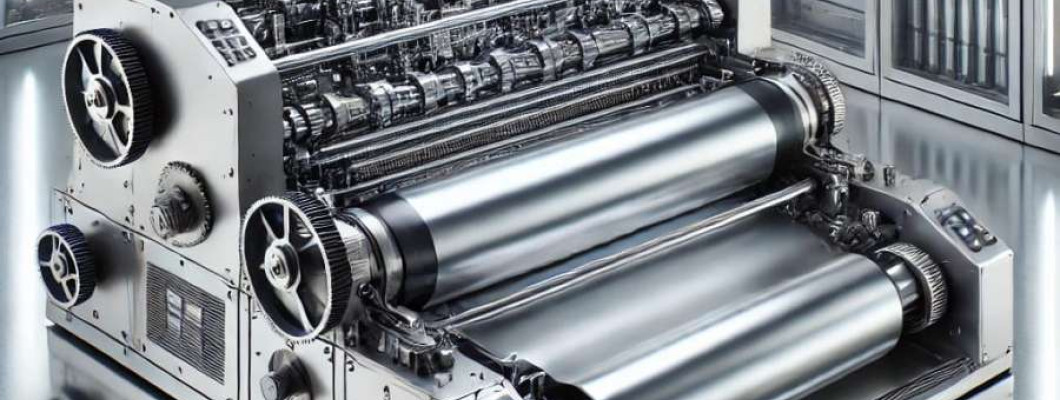
The Industrial Reality of A4 Roll DTF Printer Asset Longevity
In high-volume industrial printing environments, the lifespan and resale value of printing equipment dictate capital allocation efficiency and operational sustainability. The A4 Roll DTF Printer challenges conventional assumptions about smaller-format printers by incorporating design elements typically reserved for industrial-grade machinery. However, managing asset depreciation and ensuring sustained mechanical integrity requires a granular understanding of the printer’s core components—printheads, drive mechanisms, and thermal subsystems—under continuous load.
Consider a mid-tier print service provider operating 24/7 with a target asset turnover of 5 years. Early-stage depreciation accelerates if components such as the roll feeder bearings or ink delivery systems encounter early wear or fail to comply with environmental safety standards. Additionally, resale value hinges on visible wear indicators, firmware update support, and documentation continuity. The A4 Roll DTF Printer’s modular approach to maintenance is critical in reducing lifecycle costs and preserving market value for eventual asset liquidation or trade-in.
Operational bottlenecks frequently arise due to maintenance misalignment, especially when transitioning from a DIY mindset to a fully industrial context. Unlike desktop DTF printers, the A4 Roll DTF Printer integrates roll-to-roll feed precision within ±0.1mm tolerance, enabling consistent print repeatability over large batch runs. This precision underpins the printer’s long-term asset value by ensuring that wear patterns on mechanical components remain within defined tolerances, minimizing the risk of catastrophic failure and costly early replacement. This aspect is pivotal for users aiming to maximize ROI over the asset’s operational lifespan.
Technical Deep-Dive on Asset Depreciation and Longevity Parameters
Printhead Durability and Wear Physics
The printhead assembly, typically employing piezoelectric technology, encounters mechanical stresses proportional to droplet firing frequency and ink viscosity. For example, with a droplet volume of 5pl firing at 20kHz, the cumulative mechanical load over 10,000 operational hours approximates 7.2 billion firing cycles. The A4 Roll DTF Printer mitigates nozzle clogging via a heated nozzle plate maintained at 40°C ±2°C to balance ink fluidity and prevent pigment sedimentation.
Roll-to-Roll Feed Mechanism Precision
The printer features a stepper motor-driven roller system calibrated for a translational resolution of 0.05mm per step. Elastic deformation of the feed belt under tension is restricted to less than 0.01mm/mm to ensure substrate alignment. Hypothetically, a cumulative stretch of 0.1mm over a 1000mm feed path maintains image registration within industrial printing standards.
Ink Chemistry Impact on Hardware Longevity
DTF inks combine pigment particles with polymeric adhesives and aqueous carriers. Aggressive solvents can accelerate elastomer fatigue in seals and tubing. The A4 Roll DTF Printer limits such exposure by integrating dedicated ink circulation loops and temperature-regulated reservoirs, operating at 25°C ±1°C to reduce polymer degradation rates by an estimated 15% compared to uncontrolled environments.
Power Management and Thermal Load Analysis
Operating at a peak power draw of 350W with a 20% duty cycle per print job, the printer’s thermal dissipation requirements remain under 70W average. Internal heat sinks and active ventilation reduce ambient temperature rise within the chassis to under 5°C, preserving electronic component lifespan through consistent thermal cycling.
Maintenance Modularity and Firmware Support
Firmware within the A4 Roll DTF Printer supports incremental updates via USB and Ethernet interfaces, enabling sustained compatibility with evolving print profiles and substrate types. Modular component design allows for rapid replacement of wear parts, reducing mean time to repair (MTTR) to under 30 minutes for trained technicians.
| Specification | A4 Roll DTF Printer | Generic Desktop DTF Printer |
|---|---|---|
| Printhead Life Expectancy | 10,000 operational hours | 5,000 operational hours |
| Roll Feed Accuracy | ±0.1mm | ±0.5mm |
| Thermal Regulation | Active cooling, ±2°C control | Passive cooling, ±10°C variance |
| Firmware Update Method | Ethernet/USB with incremental patches | USB only, full firmware flash |
| Modular Maintenance | Yes, rapid component swap | No, integrated parts |
Scenario Analysis of Business Use Cases
Small-Scale Custom Apparel Producer
For businesses relying on frequent small-batch customization, the A4 Roll DTF Printer offers exceptional substrate versatility and low maintenance overhead. The controlled feed system reduces material waste, and firmware updates optimize print profiles for diverse fabric types. Asset longevity means initial CAPEX amortizes over multiple product cycles, improving profitability margins.
Mid-Range Print Hub Scaling Production
In hubs balancing volume with precision, operational uptime is paramount. The A4 Roll DTF Printer’s modular components and fast MTTR reduce downtime risk. Active thermal management maintains consistent print quality during batch runs exceeding 500 meters. The printer’s asset depreciation curve favors operators who plan for trade-in upgrades every 4–5 years.
Enterprise-Level Industrial Printing Line Integration
In corporate environments seeking integration with factory automation, this printer’s Ethernet-enabled firmware updates and precise control systems allow seamless incorporation into MES workflows. Asset longevity and resale value stabilize procurement budgeting, while the printer's compatibility with industrial safety standards ensures compliance with workplace environmental policies.
Expert FAQ on Asset Longevity and Depreciation
Q1: How does the printhead's firing frequency impact long-term wear?
The nozzle lifetime inversely correlates with cumulative droplet cycles; higher frequencies increase piezo element fatigue, but controlled temperature mitigates degradation.
Q2: What maintenance practices most effectively preserve roll feed accuracy?
Regular lubrication and tension calibration every 500 operational hours minimize mechanical drift and maintain ±0.1mm positional accuracy.
Q3: Can firmware updates affect hardware depreciation?
Yes, updates can introduce new efficiencies or compatibility features that extend the operational relevance and thus improve resale potential.
Q4: What environmental factors accelerate component failure?
Excessive temperature fluctuations and high solvent concentrations degrade seals and electronic components faster, reducing lifespan.
Q5: How does modular design impact total cost of ownership?
It significantly lowers repair downtime and parts replacement cost, preserving asset value by extending usable lifespan.
Strategic Verdict and Industry Recommendation
The A4 Roll DTF Printer stands out as a viable industrial-grade asset, marrying precise engineering with a maintenance-conscious design philosophy. Its long-term operational stability and resale value resilience, supported by modular components and advanced firmware management, provide a compelling argument for enterprises prioritizing capital efficiency and lifecycle sustainability. This device bridges the gap between smaller format printers and heavy industrial systems, making it a prudent investment for scalable businesses.
For detailed specifications and procurement inquiries, the A4 Roll DTF Printer offers a robust solution aligned with strategic asset management objectives.