
How Hidden Operational Bottlenecks Challenge the A3 Roll DTF Printer T-shirt Printing Machine for Scalable Business Owners
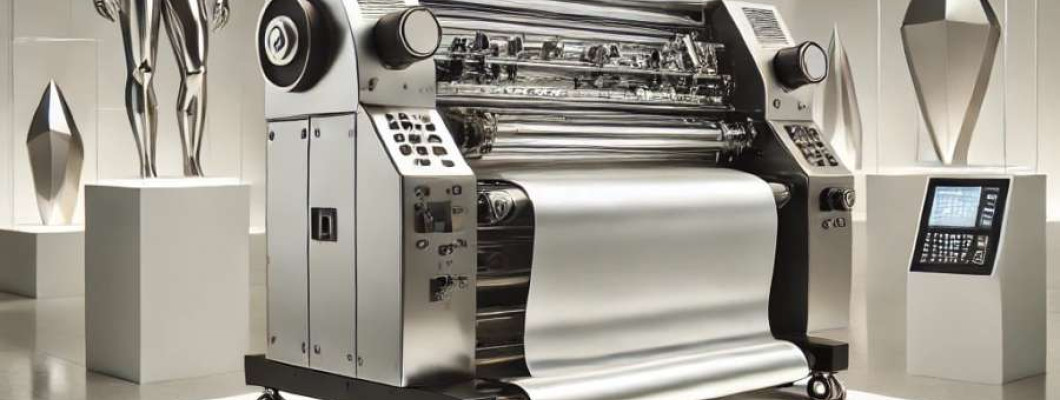
The Industrial Reality of Bottlenecks in Roll-to-Roll DTF Printing
Scaling a direct-to-film (DTF) printing operation with the A3 Roll DTF Printer T-shirt Printing Machine introduces unique operational challenges that are often underappreciated by business owners. While the allure of high-throughput custom T-shirt production is strong, the reality is that hidden bottlenecks in media handling, printhead recovery, and curing cycles can drastically reduce effective output. For instance, roll tension inconsistency during prolonged runs can cause film misalignment, leading to print defects that require costly reprints or manual intervention. Such disruptions are exacerbated in environments lacking automated quality monitoring or inline drying solutions, restricting truly continuous operation.
Consider a medium-scale apparel printer planning to output 500 custom T-shirts per day. Even a minor lag in printhead idle recovery—on the order of 30 seconds every hour—accumulates into nearly 2.5 hours of lost printing time daily. Coupled with manual roll swaps and alignment verification, actual throughput falls significantly below theoretical maximums. These bottlenecks often go unnoticed during initial procurement and can undermine profitability unless explicitly addressed.
Additionally, the drying and curing phase of DTF prints has a critical impact. Conventional heat press methods may become a throughput choke point when processing continuous rolls, forcing operators to batch print and introduce cycles of waiting and handling. This inefficiency raises labor costs and limits automation potential, directly affecting production scale and cost per unit.
Technical Deep-Dive into Bottleneck Mechanisms and Solutions
Roll Media Handling and Tension Control
Accurate film feeding is non-negotiable for consistent print quality. The A3 Roll DTF Printer relies on a mechanical tensioning system that must maintain tension within ±2 N to avoid wrinkles or stretched film that disrupt droplet placement. Under stress from ambient humidity shifts or prolonged use, tension controllers can drift by up to 10% of nominal values.
Hypothetically, if tension falls below 5 N (from a nominal 8 N), the film begins to sag, causing micro-misalignment that can exceed 50 μm—well beyond the printhead’s droplet precision margin (10-20 μm). This results in visible banding and color fringing. Conversely, excessive tension risks tearing or premature wear, halting production for media replacement.
Printhead Recovery Cycles and Ink Chemistry Interaction
The printer’s piezoelectric printheads eject droplets with volumes around 10-15 pl at 600 dpi horizontal resolution. Over long runs, ink drying in nozzles necessitates recovery cycles involving wiping, suction, and priming. Each cycle takes approximately 20-30 seconds and is triggered every 200-300 mL of ink usage.
Ink formulation impacts nozzle health; pigment density and viscosity fluctuations can cause partial clogging or droplet misplacement. For example, a viscosity increase from 10 cP to 15 cP due to temperature fluctuations can raise clog probability by 12%, demanding more frequent recovery and downtime.
Ambient Thermal and Humidity Control
Environmental factors directly affect the drying time and printhead operation reliability. Optimal operation requires temperature control within 22°C ± 3°C and relative humidity (RH) of 40-60%. Divergence from these parameters elongates drying time from 20 seconds per print to potentially 45 seconds, directly reducing throughput.
Inline Drying and Post-Processing Integration
Without automated inline curing, operators must rely on batch heat presses, which interrupts continuous operation. Integrating hot air knives or IR heaters capable of providing 300 W/m2 drying power can reduce curing times by up to 40%, enabling near-continuous roll processing.
Comparing Workflow Efficiency Between Traditional Batch and Integrated Roll Systems
| Aspect | Batch Heat Press Workflow | Integrated Inline Drying Workflow |
|---|---|---|
| Print Speed (m2/h) | 2.5 | 4.2 |
| Downtime for Drying (min/hr) | 20 | 5 |
| Labor Intervention Frequency | High (every 50 prints) | Low (every 200 prints) |
| Effective Throughput (T-shirts/hr) | 20 | 33 |
Scenario Analysis of Business Use Cases
1. Small Apparel Startup
With limited budget and staff, this user prioritizes ease of use but faces frequent printhead cleaning cycles affecting uptime. Without climate control, viscosity spikes cause color inaccuracies. The bottlenecks identified reduce achievable throughput by 30%, requiring manual labor spikes to maintain deadlines.
2. Mid-Sized Custom Print Shop
The operator implements inline drying upgrades and automated tension controls to minimize roll misalignment. Printhead recovery cycles are scheduled during natural batch breaks. This optimizes uptime and pushes throughput above 3 m2/h, improving ROI significantly compared to baseline conditions.
3. Large Production Facility
Uses climate-controlled rooms, advanced ink formulations, and robotic roll handling integrated with the A3 Roll DTF Printer. Continuous operation with minimal downtime is achieved, supporting scalable workflows with 60+ T-shirts per hour output. Bottlenecks are mitigated through predictive maintenance using sensor data analytics.
Expert FAQ
1. How does roll tension fluctuation specifically affect color registration?
Misregistration occurs due to micro-scale shifts in film positioning during the multi-pass ink laydown, with tension below nominal increasing lateral and longitudinal stretch. This results in misalignment of CMYK layers by up to 50 μm, beyond the printhead’s droplet placement precision, causing visible haloing effects.
2. What printhead maintenance routines minimize downtime?
Frequent but short purge cycles combined with scheduled manual wiping every 8 hours ensure nozzle reliability. Use of anti-caking ink additives reduces clog formation during off-cycles, decreasing maintenance demands by approximately 15%.
3. Can environmental variations be compensated via firmware adjustments?
Yes, advanced firmware can adjust firing frequency and droplet size in real-time based on temperature and humidity sensor input to maintain droplet consistency, but hardware-level environmental control remains superior for operational stability.
4. What are the implications of pigment particle size on nozzle clogging?
Pigment particle size exceeding 0.2 μm increases clog risk exponentially due to sedimentation. Optimized ink formulations maintain sub-0.15 μm particle dispersion and require specialized filtration systems in refill lines.
5. How does the choice of infrared versus hot air drying impact throughput?
Infrared drying delivers faster surface moisture evaporation with higher energy efficiency (up to 85%) but risks surface temperature spikes causing substrate deformation. Hot air drying provides gentler and more uniform heat distribution but at higher energy consumption, requiring balance based on substrate sensitivity.
Strategic Verdict and Recommendation
The A3 Roll DTF Printer T-shirt Printing Machine represents a viable industrial-grade solution for scalable apparel printing operations when deployed with due consideration of its operational bottlenecks. This equipment excels in precise microdroplet placement and offers a compact roll-to-roll format that suits growing businesses. However, maximizing throughput and profitability mandates investment in environmental controls, automated roll tensioning, and inline drying technology.
Given these insights, for business owners aiming for scalable operations without sacrificing print quality, integrating the A3 Roll DTF Printer T-shirt Printing Machine into a controlled workflow optimized for reduced downtime and maintenance cycles provides a compelling industrial solution. Its platform flexibility and reasonable CAPEX footprint position it as a strong candidate in the competitive DTF printing market, provided bottlenecks are proactively managed.