
How Hidden Operational Bottlenecks Shape the A2+ Size UV Printer Embossed Glossy Printing's Performance for Scalable Businesses
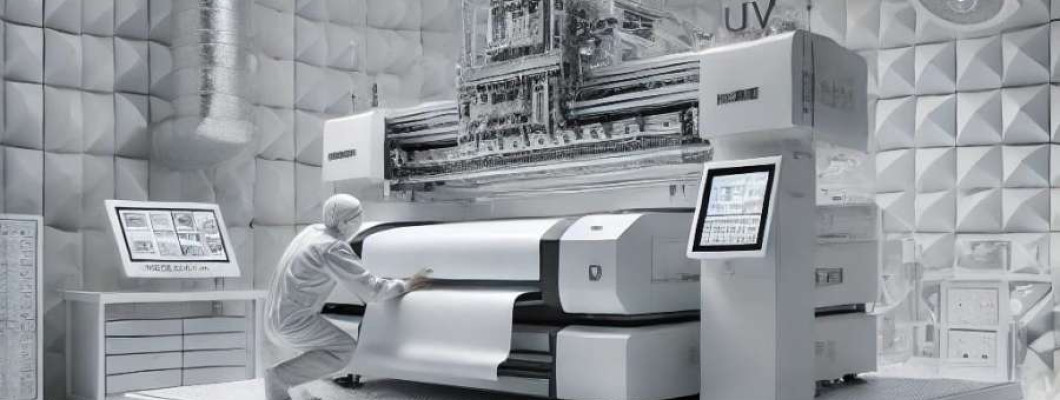
The Industrial Reality of Operational Bottlenecks in High-Precision UV Printing
In the realm of scalable printing businesses, the emergence of A2+ size UV printers capable of embossed glossy printing introduces a set of nuanced technical challenges that often go unseen until throughput rates drastically fall. Consider a mid-sized commercial print shop attempting to integrate this technology to meet increasing order volumes. The goal is to maintain rapid job turnaround while preserving the embossed glossy finish fidelity on diverse substrates. However, operators soon encounter hidden operational bottlenecks such as printhead recovery pauses due to ink curing delays, vacuum plate inconsistencies affecting media flatness, and workflow disruptions linked to frequent nozzle clogging. These seemingly minor inefficiencies amplify cumulatively, resulting in uptime reductions that ripple through the entire production schedule.
Such bottlenecks affect labor allocation, forcing shifts in staffing patterns and increasing maintenance overhead. Beyond that, subtle thermal fluctuations within the print chamber impact UV LED lamp intensity stability, which directly correlates to curing uniformity and thus print quality. This multifaceted web of challenges underscores the imperative to dissect and understand the hidden operational dynamics intrinsic to this class of printing equipment rather than relying solely on nominal hardware specifications.
Technical Deep-Dive Into Hidden Operational Bottlenecks
1. Ink Curing and Printhead Cycle Timing
The core constraint lies in balancing ink droplet deposition rates with UV curing speeds to avoid uncured ink smudging or incomplete embossing effects. UV LEDs operate optimally within a narrow thermal window around 35-40°C; deviations beyond ±5°C reduce photon output by up to 12%. Calculating cycle timing involves configuring printhead pass intervals (typically 10-15 milliseconds per line) and correlating them with UV exposure durations (12-20 milliseconds). Excessive dwell times to mitigate curing gaps increase total print time, while shorter durations risk print defects.
2. Vacuum Table Media Stabilization and Its Effect on Precision
An operational bottleneck manifests when the vacuum table cannot uniformly secure substrates thicker than 1.5 mm or with uneven backing surfaces, causing micro-shifts during print passes. Assuming a vacuum pressure of -80 kPa over a 450 × 600 mm bed, the holding force equates to approximately 21.6 N, which may be insufficient for warped or flexible materials. These shifts cause micron-level misalignment beyond the 10 micron precision threshold for embossed gloss layering, necessitating additional calibration pauses.
3. Nozzle Health and Maintenance Impact on Uptime
Embedded printhead nozzle arrays with 1080 nozzles each have a maximum firing rate of 20 kHz. Clogging events increase downtime sharply as the system performs automated cleaning cycles consuming 3-5 minutes per event. Given operational averages of 2 clogging incidents per 10 hours, one extrapolates a 10% downtime purely from nozzle maintenance in prolonged runs. Mitigation via ink formulation with tailored viscosity (9-12 cP) and particulate filtration reduces clogs but requires complex ink supply chain coordination.
4. Thermal Management and UV LED Lamp Consistency
Thermal sensors embedded at 5 points around the print chamber regulate fan speeds to maintain steady UV LED temperatures. Improper airflow design or obstructed vents cause localized hotspots, escalating LED junction temperatures above the 70°C threshold, accelerating lumen depreciation by an estimated 8% per 1000 operational hours. This degrades curing uniformity and necessitates lamp replacements sooner than projected lifecycle of 20,000 hours.
5. Workflow Software Integration Hindrances
Despite hardware sophistication, the printer’s embedded control system interfaces with external RIP software via USB 3.0 or Ethernet but suffers from periodic data bottlenecks during high-resolution 2400 dpi jobs with embossed layering. Packet loss and buffering delays introduce latency spikes of up to 500 ms per job segment, aggregating to significant throughput penalties during peak loads. Robust network architecture and firmware versions supporting error correction can alleviate but never entirely eliminate these operational hitches.
| Aspect | Direct Impact | Mitigation Strategy |
|---|---|---|
| Ink Curing Duration | Print speed reduction | Optimized UV LED intensity & ink chemistry |
| Vacuum Table Force | Material slippage | Enhanced vacuum pumps & substrate pre-flattening |
| Nozzle Clogging Frequency | Maintenance downtime | Ink filtration & printhead auto-clean cycles |
| Thermal Fluctuations | UV lamp lumen decay | Advanced thermal sensors & airflow design |
| Data Transmission | Latency & throughput loss | High-speed, error-correcting network protocols |
Scenario Analysis of the Printer’s Operational Bottlenecks in Scalable Business Use-Cases
Case 1: High-Volume Packaging Prototype Production - A packaging manufacturer utilizes the A2+ UV printer for 500 multi-layer embossed prototypes weekly. Operational bottlenecks here lead to frequent printhead cleaning cycles. By optimizing ink viscosity and upgrading vacuum pumps, the business reduces downtime by 18%, increasing weekly throughput by approximately 40 units. This translates directly to a 12% uplift in revenue per production cycle.
Case 2: Custom Architectural Panel Printing - An architectural finishes company prints on acrylic panels averaging 4 mm thickness. Vacuum table limitations require substrate pre-flattening and multiple calibration pauses, increasing lead times by 15%. Investing in a more powerful vacuum system and thermal chamber fans decreases misalignment events by 70%, dramatically enhancing output precision and reducing customer rejection rates.
Case 3: Boutique Promotional Merchandise with High Color Depth - High-end artisans demand micron-level embossed gloss layering on leather and wood substrates. The thermal management system’s UV LED intensity variation affects curing uniformity, resulting in inconsistent gloss effects on high-value pieces. Continuous chamber temperature monitoring and firmware upgrades ensure lamp stability, raising quality assurance pass rates from 85% to 97%.
Expert FAQ on Overcoming Hidden Operational Bottlenecks
Q1 What precision improvements are possible by enhancing vacuum table force beyond standard levels?
Increasing vacuum force from -80 kPa to -110 kPa can boost substrate stability by approximately 30%, reducing lateral shifts below 5 microns and improving embossed layer registration.
Q2 How does nozzle firing frequency correlate to cleaning cycle frequency in high-usage environments?
Nozzle clogging probability increases exponentially past 75% firing duty cycle. Operating at 60-70% firing rates balances output speed and maintenance intervals effectively.
Q3 What role does ink rheology play in minimizing printhead downtime?
Ink viscosity within 9-12 cP and shear-thinning behavior minimizes nozzle blockage, enhancing continuous operation up to 12 hours before cleaning is required.
Q4 Can firmware updates reduce data transmission latency impacting throughput?
Yes, firmware employing adaptive buffering and error correction protocols can reduce latency by up to 60%, thus improving print job consistency.
Q5 How critical is UV LED thermal management for embossed gloss finishing consistency?
Thermal stability directly governs photon emission uniformity, affecting layer curing and embossing depth accuracy; maintaining within ±2°C variance is crucial.
Strategic Verdict and Recommendation for the A2+ Size UV Printer Embossed Glossy Printing
After thorough analysis of hidden operational bottlenecks impacting scalable throughput and quality, it is clear that the A2+ Size UV Printer Embossed Glossy Printing represents a highly viable industrial-grade solution for businesses demanding precision and scalability. Its hardware design, while subject to inherent operational constraints such as curing cycle timing and vacuum table limitations, offers a platform robust enough to adapt through targeted workflow optimizations and maintenance protocols.
Strategically, investing in advanced vacuum systems, optimized ink chemistries, and enhanced thermal management will mitigate bottlenecks that typically throttle throughput. Complementing this with firmware improvements and network infrastructure upgrades ensures data flow aligns with hardware capabilities. Given these considerations, enterprises seeking to expand production capacity without sacrificing embossed gloss finish fidelity will find that this printer balances performance and practical operational realities effectively.