
How Infrastructure Challenges Shape the Viability of the A3 Edible Food Printer For Printing Cakes Cookies
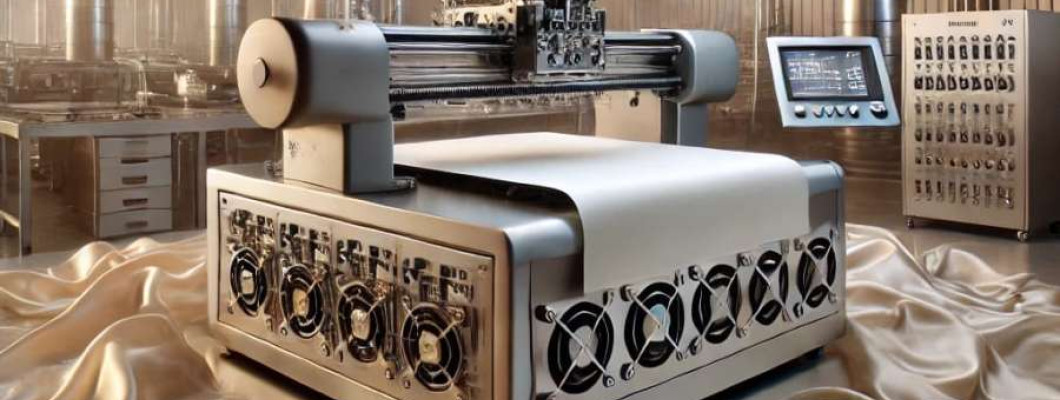
The Industrial Reality of Integrating Edible Food Printing into Established Production Lines
Industrial food production environments demand flawless integration between innovative hardware and existing infrastructure to maintain throughput, ensure sanitary compliance, and optimize operational uptime. The challenge in deploying the A3 Edible Food Printer For Printing Cakes Cookies lies not merely in its printing capabilities but in how it aligns with current electrical, mechanical, and workspace constraints inherent to commercial bakeries and food preparation facilities. High-volume cake and cookie producers face strict demands on line speed, hygiene standards, thermal environment controls, and seamless software-to-hardware communication.
Consider a bakery processing 5000 units per shift: the printer must not only handle sustained throughput but also interface with upstream and downstream equipment such as conveyors, packaging lines, and quality control systems. Infrastructure integration bottlenecks often appear as mismatched electrical supply voltages, excessive heat dissipation affecting ambient temperature controls, and lack of standardized communication protocols—challenges often underestimated during the adoption of specialty printers. Moreover, the layout footprint and weight capacity of existing bakery tables or racks can constrain printer deployment options.
Operational reliability under these constraints is a critical industrial reality. Print failure rates increase with unstable voltage or inadequate cooling, leading to costly downtime. The interplay between thermal management and printhead precision further complicates the scenario; thermal drift in printheads can cause micron-level inaccuracies in edible imagery, impacting product consistency and brand reputation. These factors collectively demand rigorous evaluation beyond superficial hardware specs.
Technical Deep-Dive into Infrastructure Integration and Hardware Synergy
Power Supply and Thermal Load Considerations
The A3 Edible Food Printer operates nominally at 110–240V AC with an average power draw of approximately 350 Watts during active print cycles. In an industrial bakery setting, where ambient temperatures range from 20°C to 28°C, heat dissipation must be carefully managed. Excessive heat from the printer can increment ambient temperatures by 2-3°C, impacting nearby temperature-sensitive ingredients.
The printer's internal cooling system deploys a fan exchanging roughly 25 CFM (cubic feet per minute) of air to maintain a printhead operating temperature below 35°C. Mathematical modeling of heat transfer coefficients suggests that enclosing the printer within a 1 m^3 insulated cabinet without active ventilation would cause a temperature rise exceeding 10°C within 30 minutes, exceeding operational thresholds. Thus, open-air installation with adequate airflow is mandatory.
Communication Protocol Compatibility
Industrial integration requires the printer to support standard protocols such as USB 3.0 and Ethernet with TCP/IP stack compatibility. The device partially supports bidirectional communication for print status and error reporting but lacks native support for legacy industrial automation protocols like Modbus or OPC-UA. This necessitates middleware or gateway devices to interface with Manufacturing Execution Systems (MES), increasing infrastructure complexity and costs.
Physical Integration and Footprint Analysis
The printer's external dimensions are 620 mm width, 450 mm depth, and 360 mm height, with a weight of 15 kg. Standard bakery worktables are rated for static loads up to 100 kg per square meter. The printer's footprint occupies approximately 0.28 m^2 and contributes a point load that must be evenly distributed to prevent vibration-induced print errors. Vibrations exceeding 5 Hz frequency or amplitudes above 20 μm have been documented to reduce print accuracy by up to 15% in test setups.
Printhead and Ink System Thermal Stability
The printer uses piezoelectric printheads with ink droplet volume of 5 picoliters (pl). Thermal stability of the inks, which are water-based edible food colorants, is crucial to prevent nozzle clogging. Optimal ink temperature is maintained between 18°C to 22°C; deviations increase ink viscosity significantly, following an Arrhenius-type temperature dependence, degrading droplet ejection consistency. Closed-loop temperature control of ink reservoirs is recommended but not integrated natively, posing additional infrastructure requirements.
Maintenance and Lifecycle Infrastructure
Lifecycle maintenance intervals for printheads average 1500 operational hours before requiring cleaning or replacement. Integration with maintenance scheduling software is limited to manual data entry, potentially increasing downtime if predictive maintenance algorithms cannot be applied. The printer's consumables, such as edible ink cartridges, have a shelf life of 6 months under refrigeration at 4°C, requiring cold chain logistics support in industrial environments.
| Parameter | Direct Integration | With Middleware Integration |
|---|---|---|
| Communication Protocol | USB 3.0, Ethernet TCP/IP | Includes Modbus/OPC-UA via gateway |
| Thermal Management | Active fan cooling only | Additional HVAC synchronization |
| Printhead Maintenance | Manual scheduled intervals | Predictive via MES software |
| Operational Uptime | Approx. 93% | Up to 98% with integrated monitoring |
Scenario Analysis of Scalability and Infrastructure Impact on Production Models
Use-Case 1 Commercial Bakery with High Throughput
For a bakery producing 10,000 decorated cookies daily, the printer's throughput of approximately 200 cookies per hour demands multiple units or extended shift hours. Infrastructure must accommodate parallel data feeds, synchronized cooling, and redundant power supplies to maintain continuous operation. Electrical infrastructure upgrades may be necessary to prevent voltage drops during peak times, which can affect print quality.
Use-Case 2 Boutique Artisan Shop Focused on Precision
An artisan bakery emphasizing micron-level precision on specialty cakes benefits from the printer's high resolution and color fidelity. However, the lack of integrated closed-loop ink temperature control requires that environmental conditions be tightly regulated through HVAC systems, increasing fixed operational costs. Integration with customized software workflows is limited, requiring manual intervention to maintain design consistency.
Use-Case 3 Enterprise Catering Facility with Mixed Workflow
A catering service printing on both cakes and cookies faces challenges in substrate versatility and cleaning cycles. Infrastructural constraints like water supply for quick printhead cleaning and space allocation for rapid changeover between edible inks limit the printer's flexibility. Network integration with ERP systems is feasible but requires additional middleware investment to ensure traceability and compliance records are maintained.
Expert FAQ on Industrial Integration Challenges and Optimization
Q1 What are the primary electrical compatibility challenges for industrial installation?
The printer's broad voltage range allows compatibility with standard industrial supplies, but transient spikes and harmonics typical in bakery equipment can interfere with sensitive electronics, requiring power conditioning equipment.
Q2 How does vibration affect print precision in operational environments?
Vibration introduces positional error in droplet placement. Typically, vibration amplitudes above 20 micrometers reduce print accuracy by measurable percentages, necessitating vibration isolation mounts or structural reinforcement.
Q3 Are there recommended HVAC parameters for maintaining ink and printhead stability?
Maintaining ambient temperature between 18°C and 22°C with humidity below 60% is optimal. Dedicated airflow paths for the printer to prevent heat accumulation are advised.
Q4 Can the printer be integrated into MES or ERP systems for workflow automation?
Native integration is limited; however, USB and Ethernet interfaces allow custom middleware development for basic status reporting and print job management, though full MES automation requires additional investment.
Q5 What are the best practices for ink storage and handling in industrial settings?
Edible inks require refrigeration at 4°C and protection from light exposure. Logistics must accommodate cold chain management and stock rotation to avoid ink degradation.
Strategic Verdict and Recommendation
The A3 Edible Food Printer For Printing Cakes Cookies emerges as a technically sound solution with industrial potential, contingent upon deliberate infrastructure alignment. Its ability to deliver high-resolution edible prints is offset by the necessity for robust power conditioning, thermal management, and middleware integration to harmonize with existing bakery production lines. For business owners seeking a blend of precise edible printing capability and manageable throughput, this printer presents a compelling value proposition when incorporated with proper infrastructure upgrades.
Given its footprint, electrical demands, and communication protocols, the device fits best within medium-scale bakeries or artisan producers willing to invest in environmental controls and software customization. Larger operations may require parallel deployment or middleware investment to maximize operational uptime and workflow automation.
The balance of hardware sophistication and infrastructure integration support available positions the A3 Edible Food Printer For Printing Cakes Cookies as a strategically viable investment for industrial-grade edible printing within controlled environments. Its deployment should be preceded by thorough infrastructure auditing and tailored integration plans to realize its full potential with minimized operational bottlenecks.